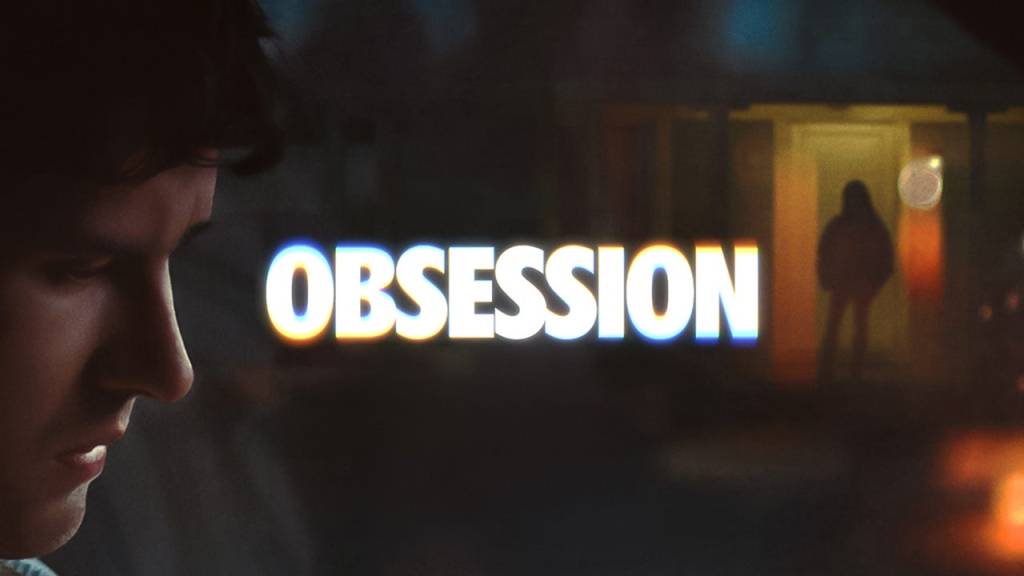
As I mentioned in my recent review of Backrooms, I’m trying to cram in as many new horror films as I can before the end of the year, and of course that meant finally checking out the ridiculously profitable and culturally ubiquitous film Obsession (which at this writing is the highest-grossing horror film of 2026 and the fifth highest-grossing horror film of all time). Like Backrooms, Obsession was made by a YouTuber; in this case, Curry Barker, half of the sketch comedy duo known as That’s a Bad Idea. Also like Backrooms, Obsession absolutely dominated the box office, raking in an astonishing $522 million on a budget of just $750,000. The success of these two movies in particular really gives me hope that we’ll see lots and lots more new young filmmakers coming up with fun, fucked-up, and original horror movies in the near future.
Taking the well-worn “Monkey’s Paw” trope of a wish going terribly, spectacularly wrong and using it to examine the toxicity of obsessive relationships as well as the inherent horror in a “nice guy” completely robbing his love interest of her autonomy for his own selfish ends, Obsession is a darkly funny but also legitimately disturbing film that works as well as it does because it relies far more on the performances of its actors and the nerve-jangling nature of its framing and editing than it does on gore or jump scares. Don’t get me wrong, it gets pretty gross at times, and all the stuff with Sandy the cat upset me so much that I almost wanted to stop watching (hey, I love cats, sue me), but this is a film that earns its scares honestly and has a fantastic undercurrent of discomfort and dread running through it the entire time.
I would also be remiss if I didn’t single out the incredible star turn by Inde Navarrette as Nikki, who is funny and likeable and unstable and terrifying in equal measure and is the number one reason why this movie is scary. What’s particularly impressive is that she doesn’t need elaborate makeup or an obviously monstrous appearance to make the character unsettling; much of the horror comes from subtle changes in her expression or body language, and she’s especially good at switching between exaggerated romantic enthusiasm and genuinely frightening behavior, sometimes within the same scene. That unpredictability is where much of the film’s tension comes from, and the actress just nails every moment she’s on screen. Seriously, in my opinion, her performance is up there with Toni Collette in Hereditary or Isabelle Adjani in Possession; she’s sensational, and it’s mind-blowing that she’s only been in a couple of movies and series before this.
So our protagonist is Baron “Bear” Bailey (Michael Johnston), a socially awkward young man who works at a music store and spends most of his waking hours pining after Nikki (Inde Navarrette), a longtime friend and coworker. Bear isn’t exactly a master of romantic communication: he’s shy, insecure, and frustratingly bad at expressing his feelings. Unfortunately for everyone involved, he has also built up a rather elaborate fantasy in which Nikki is the great love of his life. There’s just one minor problem: Nikki doesn’t seem particularly interested in him that way (though there’s enough ambiguity there to keep things interesting and fuel fan speculation).
The two are part of a close-knit circle of friends that includes Ian (Cooper Tomlinson) and Sarah (Megan Lawless), who also both work at the music store (which is also owned by Sarah’s dad). They hang out, go to trivia nights, and generally behave like ordinary young adults whose biggest problems should involve relationships, jobs, and figuring out what to do with their lives.
Bear, however, is consumed by his feelings for Nikki. Despite having known her for years, he can’t quite bring himself to tell her how he feels, largely because he’s terrified of rejection and potentially destroying their friendship. And that’s where things start going drastically wrong.
While visiting a shop selling crystals and mystical novelties (to replace a necklace that Nikki lost), Bear encounters an unusual little item called the One Wish Willow. It’s a deceptively simple object that supposedly grants a single wish when broken.
Now, anyone with even a passing familiarity with horror movies knows that mysterious objects promising to grant wishes are probably best left on the shelf. But Bear is desperate, and desperate people in horror movies rarely make sensible purchasing decisions. After another awkward romantic setback, Bear breaks the Willow and wishes that Nikki would love him more than anyone or anything else in the world. And unfortunately for him and everyone else in this movie, it works.
Almost immediately, Nikki’s attitude toward Bear changes dramatically. Suddenly, she’s affectionate, passionate, and completely devoted to him. The girl he’s been dreaming about for years appears to have finally realized that he’s the one she wants. For a brief moment, Bear seems to have gotten his happily-ever-after, and there’s a cute, brief montage of the two of them doing sweet couple things; the calm before the storm, as it turns out.
Because Nikki’s transformation is a little too dramatic, as her newfound affection quickly becomes overwhelming. She wants to spend every possible moment with Bear, showers him with attention, and displays an increasingly worrying inability to do anything on her own, or tolerate anything that might come between them. At first, her behavior could almost be mistaken for a hyper-exaggerated version of the honeymoon phase of a relationship. She’s clingy, excessively lovey-dovey, and perhaps a bit too enthusiastic about their sudden romance.
But it soon becomes apparent that something is very, very wrong. Nikki’s personality begins to change in ways that go far beyond ordinary jealousy. Her actions grow increasingly erratic, her emotions become terrifyingly unpredictable, and her devotion to Bear takes on an alarming, almost inhuman quality. Even more unnerving are the occasional moments when Nikki seems confused or frightened by her own behavior, as though some part of her recognizes that something terrible is happening but has no control over it.
Bear initially tries to convince himself that everything is fine. After all, isn’t this exactly what he wanted? But as Nikki’s behavior grows more bizarre and their friends begin noticing that something is seriously amiss, Bear is forced to confront the possibility that his seemingly harmless wish has unleashed something he doesn’t understand. And the most frightening part is that he has absolutely no idea how to undo what he’s done.
From there, the film descends into an escalating nightmare of psychological manipulation, gruesome violence, and increasingly desperate attempts to regain control of a situation that has spiraled far beyond anything Bear could have imagined. I won’t spoil anything else, because Obsession is definitely a movie whose increasingly twisted developments are better experienced than explained. But suffice it to say, the honeymoon is well and truly over.
One of the things I think worked best about the movie is how effectively it shifts our perception of its central characters. When we first meet Bear, for example, he’s presented as a fairly typical awkward romantic lead. He’s the sort of character we’ve seen in countless comedies: the lovable loser who can’t quite work up the nerve to tell the girl of his dreams how he feels.
And, initially, it’s easy to sympathize with him. Michael Johnston does a good job of making Bear seem painfully ordinary. He’s nervous, insecure, and so hopelessly infatuated with Nikki that he can barely function around her. His romantic difficulties are played for laughs, and there’s something familiar about his reluctance to risk an established friendship by admitting he wants something more.
But the longer the movie goes on, the less sympathetic Bear becomes, because when you really think about it, his wish is pretty horrible. He doesn’t wish for Nikki to notice him, or for an opportunity to prove himself, or even for the courage to tell her how he feels. He wishes for her to love him, effectively removing her ability to make that decision for herself.
Bear isn’t necessarily a malicious person when the story begins. But he is selfish, and his inability to recognize the selfishness of his actions becomes increasingly difficult to overlook. He wants Nikki, and he wants her on his terms. Unfortunately, he gets exactly that. And it turns out that having someone completely devoted to you isn’t nearly as appealing when that devotion becomes the only thing they’re capable of feeling, and when the person you fell in love with is not really that same person anymore.
Bear’s initial behavior is recognizable because we’ve seen variations of it so many times in popular culture: he’s the awkward guy who believes that his devotion to a woman should eventually be rewarded with her affection. He assumes that because his feelings are sincere, they must also be meaningful to the person receiving them. And when reality fails to cooperate with his romantic fantasy, he looks for a way around it. The supernatural element simply gives him the power to do what he has already been wishing he could do: control the outcome.
There’s something particularly nasty about the way the film makes that fantasy come true. For years, romantic comedies have encouraged audiences to root for hopelessly smitten protagonists who refuse to give up on the people they love. Obsession takes that familiar setup and asks what happens when persistence becomes entitlement, and entitlement becomes something much more sinister. It’s essentially a romantic comedy that’s been dragged into a dark alley and beaten senseless by a horror movie.
The film also does something interesting with the way we understand Nikki’s increasingly frightening behavior. On the surface, she appears to be the villain of the story: unpredictable, possessive, and potentially dangerous. But is she really? After all, she didn’t ask for any of this. The more the movie reveals about the nature of her condition, the more complicated that question becomes, and the more we start to realize that Nikki is actually the victim, and that even though Bear didn’t really mean any harm at first, he is absolutely a monster who ruins (and indirectly ends) numerous lives simply because he couldn’t deal with his unrequited feelings. That’s some scary shit, and honestly, I think Obsession would be a great first-date movie to gauge the mindset of your date partner; anyone who sympathizes with Bear after a certain point in the film is a walking red flag whose number you should immediately block, because fuckin’ YIKES.
Obsession is a nasty, clever, uncomfortably hilarious horror movie that takes a familiar supernatural premise and gives it enough personality to stand out. And at the same time, it makes a surprisingly effective point about relationships: being loved isn’t the same thing as being wanted, and devotion means very little when the person offering it has no choice.
While of the two big horror films of the year, I slightly preferred Backrooms just because it was weirder and less straightforward, Obsession is also definitely worth watching, particularly if you enjoy supernatural horror with a dark sense of humor, uncomfortable relationship dynamics, and a willingness to get seriously gnarly. It isn’t reinventing the wish-gone-wrong story, but it delivers that common premise with enough confidence, personality, and genuinely disturbing imagery to make it memorable. It’s easy to see why it struck a nerve, especially with Gen Z audiences, as relationship anxiety is always a fertile playground for horror films, and when a familiar story is executed with such finesse, it becomes instantly relatable and therefore effectively horrifying to a wide array of people.
Until next time, keep it creepy, my friends.

