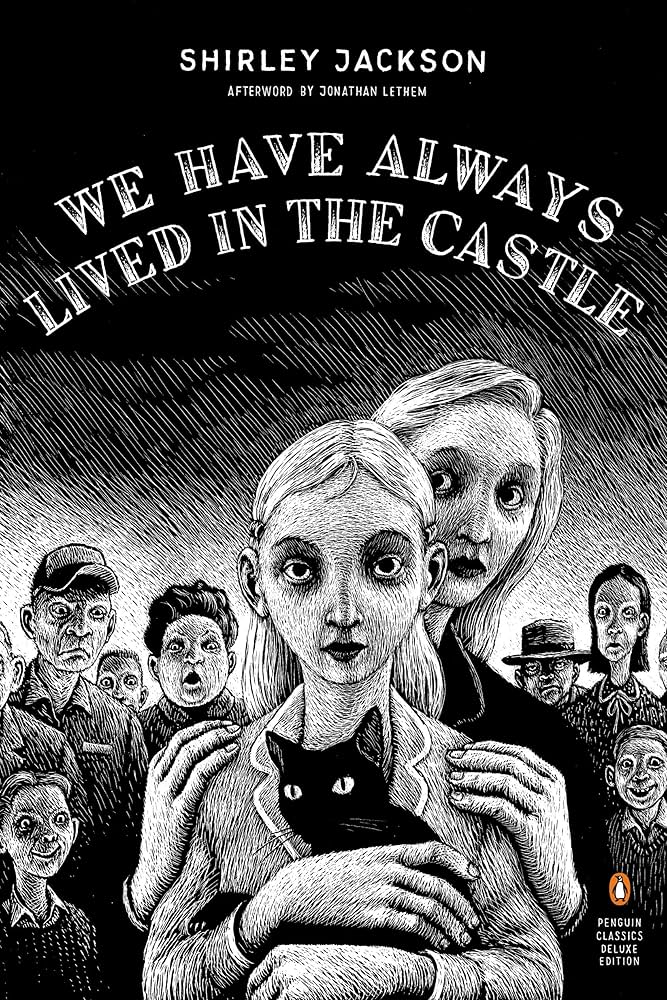
Author Shirley Jackson should of course be no stranger to horror fans, as she’s responsible for what is arguably the greatest haunted house novel of the 20th century, 1959’s The Haunting of Hill House, which has been adapted into an excellent 1963 film directed by Robert Wise, a shitty 1999 film directed by Jan de Bont, and was the loose inspiration for the outstanding Netflix series of the same name, created by Mike Flanagan. Jackson also penned the classic short story “The Lottery,” by the way, which was required reading in schools back when I was just a kid and dinosaurs roamed the earth.
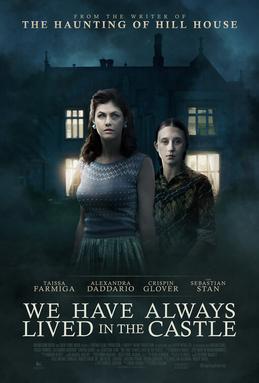
A novel of hers that sadly doesn’t have nearly the widespread cultural recognition as Hill House, though, is her 1962 gothic mystery tale We Have Always Lived in the Castle, which aside from centering around a multiple murder, also has pronounced elements of psychological horror and an unsettlingly disturbed narrator. I first read Castle back when I was a teenager and loved it, and when I watched the 2018 film adaptation of it a couple years ago, I knew I’d eventually get around to a book versus movie comparison. And I’m happy to report that the time has arrived; I reread the novel in one sitting a few days ago, then rewatched the film a few days after that in preparation (as of this writing, the film is on Amazon Prime and Shudder, among other services).
I will say upfront that the movie is a largely faithful adaptation of the book, with some minor changes here and there, and one rather significant alteration to the ending which I’m not sure I’m entirely on board with, though I understand the reason for the change.
As is usual in these posts, I’ll give a detailed summary of the novel, interjecting at points where the movie adaptation differed from the source material. And also as usual, it should be obvious that this breakdown will include spoilers for both book and film, but I’m telling y’all anyway just to cover my ass. So there’s your one and only spoiler warning.
The story is set in an unspecified small town in New England (likely based on North Bennington, Vermont, where Shirley Jackson lived with her husband for a time). The film was shot in Ireland, standing in for New England, and is set contemporary with the book, in the early 1960s.
We immediately meet our first-person protagonist, eighteen-year-old Mary Katherine Blackwood, better known as Merricat (played by Taissa Farmiga in the film), on one of her twice-weekly sojourns into the village from the isolated mansion where she lives with her older sister Constance (played by Alexandra Daddario) and their elderly, wheelchair-bound uncle Julian (played by Crispin Glover, who is quite a bit younger than the character in the novel).
As Merricat walks to town to pick up groceries and library books, we get the sense right away that Merricat has some strange thought processes, flirting with OCD and violent delusions, and that she comes across as much younger than her stated age, as though she’s been very sheltered and emotionally stunted. It’s also clear that the people in this town pretty universally hate the Blackwood family for reasons we don’t discover until later. The film, by contrast, lets us know the reason within the first ten minutes, taking some of the suspense out of the buildup.
As Merricat’s trip continues, we also start to realize the extent of her magical thinking, as she very deliberately equates the journey with moving spaces on a board game, and has an elaborate set of circumstances she tries to adhere to so that nothing bad will happen to her. After she picks up the groceries and library books, she stops at a diner for a cup of black coffee, as she always does; she hates doing this, but she feels she has to in order to show the townspeople that she isn’t afraid of them. She also thinks to herself how she wishes all the villagers were dead and she was walking over their bodies.
On some days, this diner ritual goes just fine and she’s able to drink her coffee in peace (albeit with resentful stares and whispers from the other patrons), but on this particular day, a guy named Jim (Ian Toner) comes in and sits down right next to her, and she knows there’s going to be trouble.
And indeed there is. Jim starts saying sarcastically that there are rumors all over town that Merricat and Constance are going to be moving away, and wouldn’t that be just too bad, implying that everyone will be glad to see them gone. Merricat tells him they aren’t moving and otherwise tries to ignore him as best she can, but he’s really obnoxious and won’t leave her alone. Another guy named Joe chimes in (who I think is named Bobby in the film and is played by Peter Coonan), saying that a while ago he was hired by the Blackwood family to fix the broken back step on their house, but that he wasn’t paid and he’s still salty about it. Merricat quietly says that the reason he wasn’t paid is that Constance thought he’d done a shitty job.
This whole interaction highlights the resentment the villagers feel toward the Blackwoods, who are very wealthy and insular and generally look down on the townsfolk, who they see as not much more than savages. That’s not the only reason everyone in town hates the family, though we don’t find out the other reason until a bit later (at least in the book; in the movie, it’s revealed via voice-over as Merricat is walking into town).
Finally, the confrontation in the diner gets so heated that diner owner Stella (Joanne Crawford) tells Merricat to scram so there won’t be any further hassle.
This scene plays out pretty similarly in the movie, but there’s an added bit where Jim was supposedly in love with Constance, but Merricat and Constance’s father didn’t approve of him and got him fired from his job. This angle was not in the book (in fact, Jim was married and remains employed), and neither was the moment where Jim puts his cigarette out in Merricat’s coffee. Stella is also portrayed much more sympathetically in the film (both in this scene and another scene toward the end), as she seems to actually feel bad for the Blackwoods and stands up to the other locals on their behalf. In the book, she was cordial to Merricat, and even tried to get Jim to stop bothering her, but clearly disliked the family just as much as everyone else did.
Merricat makes her way back home, mostly unmolested except for some kids taunting her with a rhyme: “Merricat, said Connie, would you like a cup of tea? Oh no, said Merricat, you’ll poison me. Merricat, said Connie, would you like to go to sleep? Down in the boneyard ten feet deep!” This rhyme, repeated a few times as all the kids in town know it, gives a hint as to the other thing the villagers hate the Blackwoods for. Merricat goes inward and tries to dissociate from the bullying, mostly imagining that she lives in a fabulous house on the moon and that the children are “rotting away and curling in pain.”
When she arrives home, Constance is out in the yard and asks if Merricat is proud of her because she came all the way to the edge of the property today. Constance, we learn, is agoraphobic (as was Shirley Jackson herself) and never leaves the house, though she playfully tells Merricat that she’ll be following her into town soon enough, a prospect that seems to horrify Merricat, who tells Constance she wouldn’t like it very much.
The dynamic between the two sisters is really interesting; Constance seems an angelic, kind, endlessly patient young woman who loves nothing more than growing food in her garden and making special, elaborate meals and desserts for Merricat and Julian. She clearly adores Merricat and indulges the younger girl’s bizarre whims and fancies, and Merricat is fiercely protective of Constance in turn. Merricat, in fact, has been using more of that sympathetic magic in order to shield Constance from harm; she buries items significant to the family, such as heirlooms and silver coins, out in the garden around the perimeter of the property, for example, and has nailed a journal belonging to their father to a tree. Since we are inside Merricat’s head for the entire story, we realize how deeply she believes that these “spells” are keeping the outside world at bay and forming a protective bubble around what remains of her family.
Through various means, such as Merricat’s inner thoughts and Julian’s musings about a book he’s writing, the reader eventually discovers that six years before the events of the novel, Merricat and Constance’s parents John and Ellen, their aunt Dorothy (who was Julian’s wife), and their ten-year-old brother Thomas were all poisoned with arsenic that had been put in the sugar bowl at dinner. Julian was poisoned too, but survived because he hadn’t used much sugar on his blackberries that night. This is why he’s still so sickly, and has become obsessed with documenting the event in the book he’s working on.
Note that in the movie, there is no mention of their brother Thomas at all, and Dorothy is only mentioned sort of indirectly by Julian once or twice.
Anyway, since Merricat had been sent to bed without supper because she was acting up and was not at the table when the deaths occurred, Constance was accused of the murders, as she was the only other family member who didn’t eat any sugar and thus survived the massacre. She was also the person who had bought the arsenic, though she claimed it was to kill rats.
Constance was eventually acquitted at trial, though the townsfolk still believed she was guilty and essentially got away with poisoning almost her entire family. So between the villagers already thinking the Blackwoods were snobs and later that one of them was a cold-blooded killer, it’s obvious why the girls are shunned by all and sundry.
Shortly afterward, Merricat begins to have a bad feeling that some terrible change is going to occur, and these feelings are exacerbated by Constance mentioning a couple of times that she might start leaving the house again, thus ruining the pleasantly closed little world the sisters have made for themselves.
Right around this time, a neighbor who is still friendly toward them, another wealthy woman named Helen Clarke (Paula Malcomson), arrives for tea, as she does every week. But this time, she brings another woman with her, interrupting Merricat’s beloved routine even further, and Merricat becomes very agitated when Helen begins telling Constance that she’s young and lovely and should come back into the world, that everyone has forgotten all that nasty business from six years ago (which is obviously not true).
The woman Helen brought with her, Lucille Wright (Anna Nugent), in fact, is fascinated by the murders, and Julian indulges her by showing her the dining table where the crime occurred and filling her in on the grisly details. Helen is mortified, as she’d specifically told Lucille not to bring up the murders because she finds the whole subject terribly gauche. She tightly tells Lucille to knock it off, and the two women leave, after which Merricat, Julian, and Constance seem amused at how they drove the women away, almost as though they planned the whole thing. This all plays out very similarly in the film, though obviously the book goes into a lot more detail and has a bunch more dialogue, particularly with Julian describing the murders to Lucille.
Portents of a change become more pronounced in both book and film, though in the book Julian is visited by the town doctor around this time, an incident not portrayed in the movie. A few days after Helen’s visit, Merricat is doing her weekly routine of going around the property making sure all of her totems and spells are in place when she notices that the journal she had nailed to the tree has fallen into the grass, which she considers a very bad omen. In the movie, she also finds the journal has fallen, but it’s after the big change has already occurred, and many of her other totems have been dug up as well. In the book, an anxious Merricat decides that the journal is no longer effective magic, and wonders if she should bring something else to nail to the tree to strengthen the protection. This isn’t really mentioned in the film, though it’s made pretty clear in both mediums that Merricat believes the journal coming loose from the tree allowed the change to happen, as one of her most powerful protections had fallen away.
The change that Merricat has been dreading finally occurs with the arrival of their estranged cousin Charles Blackwood (Sebastian Stan), who is the son of Julian’s other brother Arthur. In the book, Merricat is home when he arrives and sees him through the window, thinking at first that he’s one of the villagers come to harass them. In the movie, Constance happens to send Merricat on an errand to town (to buy sugar, of all things) on a day that isn’t one of her regular days, and Charles is already in the house talking to Constance when she returns, much to Merricat’s chagrin. In the movie, it almost makes it seem as though Constance knew Charles was coming, though this isn’t explicitly stated, but in the book, he just turns up without any warning, surprising both sisters.
Also in the book, it’s stated outright that Charles is only showing up now because his father has died; Arthur had forbidden Charles from visiting before due to the murder scandal. It’s also revealed that Charles’s father died broke, heavily suggesting that Charles has only come to see Constance because he knows she has a shit-ton of money in the house that he’s eager to get his grubby mitts on. In the movie, I don’t think Charles mentions his father’s death, and in fact it seems as though the movie was trying to imply that he’d been traveling or living in Italy previously, hence why he’d never been to see them.
Constance lets Charles in and seems charmed by him, but Merricat is terrified and livid with rage, running off to hide in a spot she loves in the woods with her beloved cat Jonas (who is also in the movie, and don’t worry, nothing bad happens to him in either the novel or the film). She does some more rituals, hoping it will drive Charles away or make him cease to exist, and when she returns to the house the following morning, she’s pleased because her magic apparently worked. But then she discovers that Charles is still there, sleeping in their father’s old room, and she throws a glass on the kitchen floor, thinking that breaking the glass will magically make him leave.
Constance fawns over Charles in both the book and the movie, taking great care to cook him delicious food, cleaning up after him, and generally being a genial, subservient host. Julian is also initially interested to have his nephew around to talk to, leaving Merricat alone in her hatred of Charles. Charles tries to befriend her, not entirely in a genuine way, but Merricat isn’t having it, not only because she suspects what he’s up to, but also because she fears he’ll take Constance away from her.
As time goes on, it seems as though Charles does intend to take Constance away, though it’s also rather obvious in both mediums that he doesn’t really give much of a crap about her as a person; he just wants all the money they keep in a safe in the house. Charles starts being rude to Julian too, telling him to stop dwelling on the murders and categorizing him as a weak, complaining old man who should be put in a home. Julian becomes ever more disillusioned with Charles’s presence, annoyed at all the noise he makes and all the trouble he’s causing. Charles also tells Merricat to her face that he’ll probably still be in the house in a month and suggests that Merricat won’t be.
Constance, though, doesn’t seem to see Charles’s flaws, perhaps because she’s so enchanted with the idea of leaving the house and having a regular life again. Charles is constantly berating her for waiting on Julian and Merricat like a slave, and Constance seems at least partially susceptible to his arguments, though she also comes across as confused and conflicted, in both the book and the movie.
Tensions in the household begin to escalate as it becomes clear Charles isn’t planning on leaving anytime soon and is trying to get his hooks into Constance. He offers to fix that pesky back step, and even says he’ll take over Merricat’s grocery trips to town, which makes Merricat very angry. Even though she hates going there, she is a stickler for routine, and going to town on Tuesdays and Fridays has always been her responsibility, so she feels as though her place in the household is being usurped. She attempts spells to get Charles to leave, is outwardly rude to him, and sometimes recites facts about poisonous mushrooms while they’re having dinner in order to frighten him. Nothing works, though, and Charles persists in hanging around, with Constance continually trying to smooth over relations between everyone in the house.
One day while Charles is in town, Merricat sneaks into his room (which of course was her father’s room) and takes a gold watch chain that she nails to the tree where the journal was before. Charles finds it and is incensed that Merricat would treat valuable items with such seeming carelessness, not understanding the reasons she’s doing it. He accuses Constance of coddling her and indulging her mental illness. This is similar to what happens in the film, though Merricat doesn’t nail a gold chain to a tree; she actually buries a gold watch of her father’s that Charles finds when he’s helping Constance with her gardening.
In the book, Charles also finds a jar of silver coins that Merricat has buried and has a fit about that; in the film, he actually finds them in a box under the broken step while he’s fixing it. In the movie, Constance later gives this box to Julian to keep his papers in, while in the book, she just gives him a random box after he asks for one. Also in the book, Charles does a bad job of fixing the step, while he fixes it correctly in the movie.
There’s also a scene in the film where Merricat surreptitiously follows Charles into town one day, and she watches through the window of the diner as the villagers talk to him and become slightly hostile upon finding out who he is. Merricat then keys his car before running back home. In the book, Merricat does follow Charles into town one day, but it’s only briefly touched upon; she just sees him talking to Stella for a few minutes, buying a newspaper, and sitting with some of the other local men on a bench. She doesn’t damage any of his property (well, not yet, anyway).
Merricat seems to become convinced that Charles is a ghost or a demon, and suspects that more powerful magic might be needed to expel him. Julian, meanwhile, is constantly afraid that Charles is going to take his papers, calling him “dishonest.” Even though the movie version of Julian is much younger than I perceived Julian to be in the book, he’s similarly mentally addled in both novel and film, sometimes thinking Charles is his dead brother John and once telling Charles that Merricat died in an orphanage six years ago while Constance was on trial for murder, a rather significant pronouncement in light of the book’s later reveal.
One day while Charles is out, Merricat goes into his room and seeks to eliminate his presence from it, leaving no room for him in a magical sense. She takes her father’s watch that Charles has been wearing and winds it so far back that she breaks it, then she trashes his room, shoving dirt and sticks into every available crevice, pouring water on the bed, yanking down the curtains, and breaking the mirror. She does pretty much the same thing in the movie, though I don’t remember her turning the watch back.
Naturally, Charles is apoplectic when he returns home and sees the mess, and he tries to get Constance to punish Merricat, but Constance, as usual, attempts to downplay the incident. She does nicely ask her sister to be kinder to Charles because he’s not a bad man, but that’s the extent of it; she basically tries to soothe Charles by blaming herself, telling him she’ll clean his room and there’s no harm done, after all.
During the ensuing argument, it’s also implied that Julian and his wife were a bit at loggerheads with John and Ellen Blackwood while they were alive, as Julian says some things to Charles (who he thinks is his brother John) about Julian and Dorothy leaving the house because of the way they were being treated.
Merricat goes off by herself to get away from all the fuss, this time to an old abandoned summer house on the property. While there, she has a vivid hallucination of her parents, telling her how much they love her and that she should never be punished for anything. A similar scene occurs in the film.
Later that evening, Merricat returns home for dinner. Charles is still furious, and tells her that he and Constance have been discussing what to do about her. Constance gently asks her to go upstairs and wash up for dinner, and Merricat goes, but while she’s up there, she goes into Charles’s room and sweeps his pipe into the wastebasket next to his bed, which has some crumpled newspaper pages in it. She then goes back down to eat.
Obviously, not long after, Charles smells smoke, and they eventually track down the source; the fire has spread to encompass most of the room. Charles is in a panic because there’s no phone in the house to call for help (it was established earlier that the Blackwoods disconnected their phone because the villagers kept prank calling them), so he screams at Constance to get the money out of the safe and get out of the house. He then takes off toward town to alert the fire department.
In the movie, Charles bodily grabs Merricat and starts dragging her up the stairs and kinda beating on her when he suspects that she started the fire in his room. This is much more violent than the events in the book, where Charles doesn’t touch her, but simply runs around yelling about the safe.
In the book, when the firefighters arrive (led by Jim from the diner earlier), they simply brush past Merricat and Constance and go into the house to put the fire out. Merricat and Constance then go hide in the woods and watch the proceedings. Julian stays behind to gather his papers, but the girls are certain he’ll be able to get out, because the fire is still contained upstairs and his room isn’t far from the back door.
In the movie, Julian locks himself in his room and won’t come out even when the girls bang on the door and try to rescue him. The two of them then actually hide in the house for a little while before the fire starts to spread, then they climb out a window. At this point, some of the townspeople see them and start grabbing at them and assaulting them until one of the friendly villagers says that Julian is dead inside and they should all have some respect, but this doesn’t happen in the book; the villagers never look for them and they stay hidden the whole time. Julian actually died of a heart attack in the film and the book; in the novel, it was established during the doctor visit that he had heart problems, but I don’t think the movie mentioned it.
In both mediums, though, most of the locals standing around on the property tell the firefighters to let the house burn down whether the Blackwoods are in there or not.
In the movie, just as in the book, fire chief Jim comes out and tells everyone the fire has been extinguished, then after a moment, picks up a rock and throws it through one of the downstairs windows. Encouraged, the other townsfolk also begin throwing rocks, then a whole herd of them stampede into the house and start trashing the place. Charles, who has returned, attempts to drag the safe out of the house, but it’s too heavy and he ends up leaving it. In the movie, the safe is much larger and not able to be moved, so he tries to open it, but to no avail.
Constance and Merricat hide out in Merricat’s special place in the woods, soon joined by kitty Jonas, who also escaped the fire. In the movie, Jonas isn’t shown until the next morning, perhaps to give a little suspense over whether the cat survived or not.
The following morning, the girls come out of hiding and see that their house is now a ruin; the entire second floor has been burned away (thus making the house resemble a turreted castle). The damage was slightly less severe in the movie, where some of the structure of the second floor remained. In the book, all the girls’ clothes were burned, and Constance ended up having to wear Julian’s clothes, while Merricat makes herself a sort of poncho dress out of a tablecloth. This doesn’t happen in the movie.
Constance and Merricat set about boarding up the lower floors and cleaning up what they can, intending to stay in the significantly diminished house indefinitely. Merricat remarks that she’s going to poison the whole village in revenge, and it’s here that it’s revealed that Merricat was the one who poisoned the family six years ago, specifically putting the arsenic in the sugar because she knew Constance wouldn’t eat it. It’s also revealed that Constance knew that Merricat was the one responsible, and never told anyone, even taking the risk that she herself might be convicted of murder.
Helen Clarke and her husband come by the house and bang on the door to check on the girls and to tell them when Julian’s funeral is, but Merricat and Constance hide behind the kitchen table and refuse to answer the door. Helen and her husband come back once or twice, but after a while, they give up.
At this point, something odd begins to happen; the townspeople, evidently guilty about destroying and looting the house after the fire, start to bring offerings of food for the girls. One old man starts the whole thing off, leaving a pie and some chicken outside the front door, but soon enough, other locals start doing the same thing, leaving food on the porch in the middle of the night, as though in penance for their horrible actions. Constance and Merricat find this very amusing, and go about their isolated lives, eating the food that’s brought and keeping themselves hidden away in the house.
Though the book and film have been following pretty closely along up to now, right here is where the biggest change takes place. In the novel, Charles returns to the house with a journalist in tow, and attempts to get Constance to come out and talk to him. Both Constance and Merricat hide away and keep silent, and since Charles can’t get inside, he eventually leaves, never to return.
In the movie, however, Charles comes back alone and busts into the house, attacking Constance in a rage. Merricat grabs a possession of his—a snow globe featuring the Leaning Tower of Pisa—and beans him over the head with it, knocking him out. She then stabs him repeatedly with the tower sticking out of the snow globe, killing him. The girls then bury him in the garden. Obviously, nothing this brutal happens to Charles in the book.
Also, toward the very end of the movie, a couple of children approach the house on a dare some time later, and Merricat comes out for a moment and frightens them away. It’s implied that all kinds of stories and legends have sprung up about the girls in the time since the fire. This is similar to what happens in the novel, but I don’t believe either Merricat or Constance was seen by the townsfolk ever again, and in fact, ivy eventually grows and mostly covers the house, with the sisters still living happily within.
As I mentioned, the movie was a mostly faithful and decent adaptation of the book, with lovely cinematography and excellent acting. Oddly, however, I found that even though the film exaggerated many incidents from the book, making them more overtly violent—Merricat keying Charles’s car, Charles assaulting Merricat after the fire started, the townspeople assaulting the girls during the fire, and Merricat straight up murdering Charles at the end—the book was still much creepier to me than the movie was, for reasons I can’t quite put my finger on. Perhaps it was because the book is entirely from Merricat’s point of view, and she’s such a disturbed person that just being in her head for that length of time is unsettling in itself. The film tried to replicate this a bit with an occasional voice-over where Merricat described her thoughts, but it wasn’t exactly the same. I’d even go so far as to say that while I would classify the book as subtle gothic horror, I don’t think I’d call the film such, though it’s a good movie despite this caveat. The novel, as usual, is much, much better, and gets under your skin in a way that the film doesn’t.
I’d be curious to know anyone else’s thoughts on the matter if they’d care to share them. Hope y’all enjoyed this long-ass discussion; until next time, keep it creepy, my friends.
 The Scare Salon