


Between 1971 and 1978, the BBC had a delightful tradition of broadcasting a short film based on a classic ghost story every year around Christmas. The original annual run of the series consisted of eight episodes, five of which were based on stories by M.R. James, seven of which were directed by Lawrence Gordon Clark, and all of which were recently added to Shudder. I can’t tell you how excited I was by this development, as I don’t think I’d seen any of these previously and was eager to check them out. So in the spirit of the holiday, let’s tackle each short film and see if my excitement was warranted.
The Stalls of Barchester (1971)
The first installment of the series was based on M.R. James’s 1911 story “The Stalls of Barchester Cathedral,” though the TV version adds a frame story set in the 1930s that wasn’t present in the original tale. I’m not sure if this addition adds anything to the narrative plot-wise, but it doesn’t detract from it either, so I didn’t mind the change. That said, although this is a good, classic ghost story, it’s also a bit staid and slow-moving, and the “twist” (if it could be called that) will probably be quite obvious to modern audiences.
In 1932, a scholar named Dr. Black (Clive Swift) is hard at work cataloging the library at Barchester Cathedral. The librarian (Will Leighton) remembers a trunk stashed away somewhere that’s never been opened; it belonged to a former Archdeacon named Dr. Haynes (Robert Hardy), who died fifty years before under mysterious circumstances. Dr. Black agrees to go through all the stuff in the trunk and let the librarian know if anything interesting is in there. He finds Dr. Haynes’s diary, at which point we go into a flashback.
So Dr. Haynes moves to Barchester (along with his sister Letitia, played by Thelma Barlow) with the implied expectation that he’ll be taking on the role of Archdeacon after the current one, a stubborn old coot named Dr. Pulteney (Harold Bennett), finally kicks the bucket. Unfortunately, though, Dr. Pulteney doesn’t seem to be in any hurry to pop his clogs, still chugging along at the ripe old age of ninety. A couple of years pass and it’s clear that Dr. Haynes is getting impatient for the withered old fossil to keel over already, but fortuitously, the poor old man just happens to stumble on the staircase one day and plummet to his death. Gosh, what a dirty shame.
Letitia blames the maid for not noticing that a stair rod was missing. Still, from all the surreptitious glancing going on, it’s pretty obvious that Dr. Haynes and the maid conspired to bump Dr. Pulteney off, all accidental-like. Despite his guilt, Dr. Haynes is still a sanctimonious bastard, quick to admonish others for speaking ill about the poor old man or hinting that he himself benefited from the death.
Soon enough, though, weird shit begins to happen in the Archdeacon’s residence. Dr. Haynes starts to have trouble sleeping, sometimes hearing voices in the house or catching glimpses of a fluffy black cat that no one else ever sees. He also becomes obsessed with some strange wood carvings on his stall in the cathedral, one of which is a cat and one of which is a Grim Reaper holding a noose. On one occasion, he’s resting his hand on the cat carving during chapel and is certain that it turns into living fur momentarily.
Dr. Haynes asks a local expert about the carvings and is told that they were made by a man known as Austin the Twice-Born, who was said to have second sight. What’s more, the figures were carved from wood taken from an area of forest where some witchcrafty shenanigans went on, and in particular from a huge felled tree once called the Hanging Oak. When this tree was cut, the expert says, human bones were found among the roots.
As the story continues, the ghostly manifestations become more acute, with Dr. Haynes starting to see what looks like a cloaked figure skulking about in the shadows. And at one stage, another man in the cathedral tells Dr. Haynes that he saw someone standing next to him, when Dr. Haynes insists he was alone.
Eventually, this hooded figure—a living version of the carved Grim Reaper on the stall—shoves Dr. Haynes’s murdering ass down the same stairs the previous Archdeacon died on, in a delicious bit of poetic justice. Not only does the fall break the man’s neck, but the ghost also slashes up his face so much that he’s unrecognizable, which authorities at the time can’t fathom at all.
Back in 1932, the scholar Dr. Black becomes curious about the cathedral but notes when he visits that the two described carvings are no longer there, the stall having been renovated at some point in the last five decades. He goes to an antiquarian who supposedly knows all the local history, and he says that one of the figures had been brought to the archive, but it was broken in half. Inside the broken statue was a letter written by Austin the Twice-Born, in which he essentially prophesied that anyone who touched the figure “with blood on his hands” was in for a bad time. Dr. Black asks where the carving is now, but the antiquarian says that the person who owned it burned it because it scared his children.
This was a decent, middling ghost story with some creepy bits, but it might be a bit too stuffy and boring for more modern viewers. If you like old-school Gothic ghost stories and don’t mind a ponderous pace, though, then this is definitely worth watching.
A Warning to the Curious (1972)
The next episode in the series was much better and is still considered one of the best of the original run. Based on the James story from 1925, this adaptation also takes some liberties with the structure (making it more straightforward and chronological, rather than told second-hand in flashback as the source tale is) and the characterization (changing the main character from a younger man who finds the fateful item by accident to an older man who’s looking for it on purpose, and adding in the character of Dr. Black from the previous “Stalls of Barchester” episode, played by the same actor, Clive Swift). Personally, I think these were wise alterations, as the story plays out in a much more direct, focused way, and I liked that, with the appearance of Dr. Black, they were trying to make all the stories seem like part of the Extended M.R. James Universe.
At the beginning of the story, there’s a bit of a prelude which takes place about twelve years prior to the events of the main narrative. An unnamed archaeologist (Julian Herington) is enthusiastically digging a hole in a remote area of woodland. Soon enough, a sinister-looking man appears at the lip of the hole, yelling that no one is allowed to dig there. The archaeologist harrumphs that he got permission from the landlord, but the newcomer is quite insistent. There’s a bit of a scuffle, the archaeologist knocks the sinister man down, and then the sinister man goes and grabs a convenient billhook that’s stuck in a log nearby and hacks the archaeologist to death. Rude.
We then jump ahead twelve years and get into the story proper. Mr. Paxton (Peter Vaughan) is down on his luck, having just lost his job in London and not hopeful of any new prospects, seeing as how it’s the Great Depression. Since he’s always been interested in archaeology, he decides to throw caution to the wind and use what little money he has to take a trip to the (fictional) town of Seaburgh in East Anglia. See, he’s heard a tale about three legendary crowns dating from the Dark Ages that supposedly protect East Anglia from invasion, and he’s bound and determined to find the last one thought to be still hidden in the area.
Once there, he gets set up at an inn and starts wandering around. The local vicar tells him that according to the townsfolk, the Ager family were the ones tasked with protecting the last crown, but that William Ager (John Kearney) was the last of the line, and he died of consumption twelve years back. Paxton even sees his grave in the local churchyard.
While Paxton is strolling through the seemingly deserted village, he thinks he sees the figure of a man up ahead, turning a corner. When Paxton catches up, there’s no one there, but suddenly a dog runs out of a house and starts attacking his sleeve. A friendly woman emerges from the house and pulls the dog off, apologizing and saying that the dog had never attacked anyone before.
Paxton and the woman get to talking, and it comes to pass that William Ager used to live in the house where she lives now, and also that she sometimes sees a hobo-looking dude roaming around in the woods across the way. At this point, it’s implied (I think) that Paxton believes William Ager is still alive, since despite the gravestone, there was no record of his death in the church register. So Paxton theorizes that the hobo-looking dude must be William, and the spot where he’s lurking must be where the crown is buried. Top-notch deductive reasoning.
The next day, Paxton lies to the suspicious innkeeper and tells him he’s going back to London temporarily to sort out some emergency, but really he’s going out to where the crown is hidden. He’s out there digging for hours, well into the night, but he eventually unearths a skeleton (presumably belonging to the former archeologist), and then the famed crown itself. Though he thinks he sees a dark figure disappearing into the trees as he peers up over the edge of the dig site, he still decides to abscond with his find, wrapping it securely in a blanket and stuffing it in his pack.
As he’s walking the dirt path back to the train station, he encounters a stoic local holding a billhook, who asks him what he’s up to. He says he’s just heading for the train station and walks on by. The local turns to look at his retreating back, and sees another figure following close behind him that Paxton apparently doesn’t see. The same thing happens when Paxton boards the train; the porter acts like someone else is getting on behind Paxton, only to come to his senses and say, “Oh, I thought there was someone else there.” Hmmm.
Paxton keeps seeing this figure in the distance and feeling a presence around him at all times, so he finally confides in Dr. Black, a scholar who is also staying at the inn. Paxton shows Dr. Black the crown, and Dr. Black is suitably impressed, wondering what Paxton is going to do with his magnificent discovery. Paxton says he’s going to march right on up to that wooded area and put the damn thing back in the ground where he found it, because ever since he touched it, he hasn’t felt alone for a single second, and he’s convinced that William Ager’s ghost is hovering around him.
There’s a great scene later that night, where Paxton hears breathing or something in his room, then the lights go out. He gets his flashlight and shines it around, only to catch a very creepy hunched figure on the floor with only the side of a very pale face visible. Paxton screams his head off, and when Dr. Black and the innkeeper come to help, he says that Ager was just in his room to take the crown back.
Dr. Black accompanies Paxton back to the spot in the woods, and true to his word, Paxton re-buries the crown, hoping all is forgiven. The two men return to the inn, and everything seemingly goes back to normal.
But not so fast. The following morning, the innkeeper is outside shining shoes when he sees Dr. Black across the way, calling for Paxton so they can go for a walk. Paxton comes out and the two men amble off. However, only a minute later, Dr. Black appears out of Paxton’s room, asking where Paxton is. The befuddled innkeeper is all, “Um, you were just here five seconds ago and you called him and y’all went walking…?” But Dr. Black insists that wasn’t him, and runs off in pursuit of Paxton.
He sees Paxton far ahead being chased by the dark figure, and though he tries to catch up, he can’t quite manage it. By the time he finds Paxton, the poor old chap has been hacked to death with a billhook, just like the first hapless archaeologist. So Ghost William Ager is really kind of a dick, man; I mean, Paxton did bring your stupid crown back, so maybe just chill.
Anyway, this was a good installment, spooky and mysterious with a sympathetic lead character. There really weren’t any surprises, as you knew pretty much what was going to happen as soon as Paxton swiped the crown, but the execution of the tale was so effective that it didn’t really matter. Solid episode.
Lost Hearts (1973)
“Lost Hearts,” originally published in 1895, has always been one of my favorite James stories, and this was an excellent adaptation of it. Even though it’s only thirty-five minutes long, it has spookiness for days, and a surprisingly gruesome concept to boot.
We’re following an orphan named Stephen (Simon Gipps-Kent) who arrives at the sprawling country mansion of his much older, distant cousin, Mr. Abney (Joseph O’Conor). Rounding out the household are the grandmotherly housekeeper Mrs. Bunch (Susan Richards) and the surly but goodhearted butler/valet Parkes (James Melior).
Mr. Abney seems a delightful old chap, clearly enthusiastic about his young cousin’s arrival. He seems particularly excited that Stephen is turning twelve soon, specifically on Halloween; Stephen finds this fixation a little odd, but Parkes claims Mr. Abney is a scholar and delights in small details.
Things appear normal at first, though astute viewers will be put on their guard by Mr. Abney regaling his new ward with mentions of immortality, Censorinus, and Simon Magus, suggesting that he’s well-versed in ancient magic and alchemy. Stephen asks if there are any more kids around, and Mr. Abney says there were a couple staying at the house years ago, but they’re gone now.
One day while Stephen is out exploring the grounds, he sees what appears to be another boy disappearing around a column, and when he’s climbing a tree afterward, he sees a girl who vanishes moments later. Stephen also spots these same two kids peering out of an upstairs window, and later hears children’s laughter and whispering when he’s out on the grounds flying a kite.
Mrs. Bunch tells him, pretty much unprompted, that Mr. Abney had taken in a girl named Phoebe (Michelle Foster) who he’d found while out walking several years ago; she was a gypsy, Mrs. Bunch says, and took off one morning before anyone was awake. The same thing happened with another orphan Abney had come across, an Italian kid named Giovanni (Christopher Davis), who likewise stayed for a bit and then supposedly ran away, leaving his prized hurdy-gurdy behind.
The next day, Parkes blames Stephen for leaving deep scratches in the wood paneling in the hallway; Stephen insists he didn’t do it, and Abney believes him, telling him not to worry about it. That night, Stephen is awakened by a boy playing a hurdy-gurdy next to his bed; the music seems to lure him out of his room and down the hall, where he looks into another room and sees the girl sitting in a bathtub. The children move their long-nailed hands aside to reveal that their chests have been torn open, their ribs exposed and their hearts missing. I’m not sure what the significance of the kids having super long press-on nails is, but I guess it explains the scratches in the woodwork, so that’s one mystery solved.
Stephen understandably freaks the fuck out and screams at the top of his lungs, but when Abney and Mrs. Bunch find him cowering in the hall, they try to convince him it was just a dream. We as the audience know this isn’t true, though, because Abney goes into the room where Stephen saw the children, picks up the broken hurdy-gurdy from the floor (that he previously told Stephen wasn’t there), and surreptitiously burns it in the fireplace.
Not long after, Stephen overhears Parkes telling Mrs. Bunch that he heard voices down in the cellar that scared the crap out of him; Stephen tells him that he heard voices too, but both Parkes and Mrs. Bunch try to laugh the whole thing off.
Meanwhile, it’s the eve of Halloween, Stephen’s birthday, and Abney insists that Stephen come down to his study at the stroke of midnight so he can tell him his fortune, which will be Abney’s birthday present to the boy. Stephen thinks this is weird, but admits it sounds kinda cool, so he agrees. Mrs. Bunch also makes him a cake, which is a nice gesture.
As you might have surmised, Abney has ill intentions for his little cousin, rendering him unconscious with a drugged glass of port when he enters the study for his “fortune.” Abney then grabs a knife and prepares to cut out the boy’s heart, as he only needs one more to obtain immortality. Luckily for Stephen, however, the ghostly Phoebe and Giovanni return, putting Abney under some kind of spell with the music of the hurdy-gurdy and then stabbing him with his own knife (or making him stab himself, I suppose).
There’s a brief wrap-up at the old man’s funeral, where the vicar is rather amusingly trying to be diplomatic about the weird-ass way Abney died and all the scandalous occult shit discovered in his study. Then Stephen glances over and sees Phoebe and Giovanni at the edge of the churchyard waving to him before turning and frolicking off into the distance. Unlike the asshole ghost of William Ager in the last installment, these ghosts actually did our protagonist a solid by preventing him from getting his heart scooped out by an entitled old geezer who wanted to live forever. Good show, spectral children.
This was a great installment, short but sweet and very well-paced. The character of Mr. Abney was really intriguing because he didn’t seem sinister at all in the beginning, even though you knew he was probably up to some questionable business. Some of the shots of the ghost kids were legit creepy, and I was actually kind of shocked by the (admittedly brief) glimpse of the kids’ heartless chests; sure, it’s not graphic by today’s standards, but for early 70s television, it was pretty grisly.
Easily the best installment of the original series so far.
The Treasure of Abbot Thomas (1974)
Another decent adaptation of a 1904 James story, this one takes perhaps more liberties with the source material than some of the others. For example, the setting is moved from Germany to England (obviously for budgetary reasons), the narrative is told in a linear fashion rather than in flashback, one major character is removed and another added in, and there’s a whole minor subplot that wasn’t in the original tale. On the whole, these seem to have been wise alterations, though I’ll admit that the addition of the subplot seemed a tad random, as it doesn’t have much to do with the main story.
We open with a séance, always a promising setup in my opinion. Lady Datterling (Virginia Balfour) has lost her husband at some point in the recent past and has been desperate to contact him. To that end, she has enlisted the services of a pair of married mediums, Mr. and Mrs. Tyson (Frank Mills and Sheila Dunn), who she allows to live on the estate in exchange for nightly sessions where she believes she’s receiving messages from her deceased spouse.
It’s obvious that these two are frauds, but Lady Datterling is so starved for connection that she’ll believe anything. Her son, college-age Peter, Lord Datterling (Paul Lavers), is exasperated by the whole situation, wishing his mother would just get on with her life and stop entertaining this nonsense. Also at issue is the fact that she won’t allow Peter to “replace” his father, which…ew. I mean, I get that he means she won’t let him take over fully as the new lord, as is his aristocratic birthright, but the way he words it sounds a little weird and incesty. Moving on.
So Peter’s mentor and tutor at college is a kindly older clergyman named Reverend Justin Somerton (Michael Bryant), and the pair have a close, father-son relationship. Peter asks Justin to come to his house for tea and to attend one of his mother’s séances; he’s hoping that Justin’s calm rationality and status as a man of the cloth will disabuse his mother of her fanciful notions. Justin is amused by the prospect, as he’s a skeptic and loves knocking the legs out from beneath charlatans, so he agrees.
At the séance, Justin pretty much goes in for the kill almost immediately. Since Mrs. Tyson’s “spirit guide” is supposedly a fifteenth-century clergyman, Justin starts asking him exactly when he died and speaking to him in Latin and Norman French, which a man of his rank and era would have been able to understand. Naturally, the “spirit” tries to deflect, saying that time and death are meaningless, man, and clamming up when anything other than English is spoken. Finally, in a dramatic display, Justin whacks Mr. Tyson on the back, causing him to cough up the synthesizer doodad he’d been using to do the spirit voice. A devastated Lady Datterling sends the fake mediums packing the very next morning.
Note that this entire sequence is not in the original story at all, and has very little connection to the events that follow. I assume it was added in order to demonstrate that Justin, though devoutly religious, was a rationalist who didn’t buy into most supernatural codswallop. Additionally, Peter is a film-only character; in the original story, Justin is telling the tale of his lone hunt for the titular treasure to another party after the fact.
Anyway, we now get into the actual meat of the narrative. Justin is fascinated by a fifteenth-century churchman named Abbot Thomas, who legend says was carried off by the Devil in 1429. Abbot Thomas was an alchemist, and there have long been stories that he hid a massive cache of gold he’d made somewhere in the vicinity. Justin thinks the whole story is hogwash, but Peter’s interest is piqued as he reads more about the mysterious abbot.
Once Peter figures out that a passage in the abbot’s writings refers to a specific abbey on the grounds of the college, he becomes obsessed with figuring out where the gold is hidden. Justin sort of pooh-poohs the whole business, pointing out that his ass might get shitcanned if his superiors think he just came to this area to look for the supposed treasure, but Peter’s enthusiasm and drive, coupled with Justin’s own curiosity, eventually break down his resolve.
The bulk of the story, then, is Peter and Justin trying to figure out these vague riddles and codes that the abbot left that ostensibly pinpoint where the gold is stashed. There’s a stained-glass window in the abbey with four particular saints on it, and after taking photographs of the window, Peter is able to discern several clues, including a coded message in Latin that was etched into the window but later painted over.
The long and short of it is that the gold is supposedly hidden deep in a culvert in the churchyard, behind a “stone with seven eyes.” The abbot’s writings warn that there is also a “guardian” watching over the treasure, but Justin and Peter naturally don’t believe there would be any risk in looking for loot that was hidden by a dude who’s been dead for four centuries. So one night, Justin sneaks down to the culvert, breaks open the iron gate and creeps on in, taking care to avoid the occasional slug inching along the wall.
Not surprisingly, Justin finds the described stone and pries that sucker off. And indeed, there is a big bag of what feels like coins in the hole behind the stone, but just as Justin retrieves it, he sees a brief glimpse of a man’s sneering face reflected in the water on the floor of the culvert, and then a sort of black, slug-like slime comes oozing out at him, seemingly sentient and not happy about the thievery. Justin snatches the sack and beats feet.
After that, we see Peter calling at Justin’s place since he hasn’t seen him for a couple of days. Justin’s housekeeper says he’s locked himself in his room and slid a table in front of the door and won’t come out. She also complains that there’s slime all over the doorstep and the stairs leading up to Justin’s room; she cleaned it once, she says, but the next day it was back again.
Peter gets Justin to open the door and the clearly frightened clergyman tells him that he’s been stalked by something of “darkness and slime” since he stole the treasure. There’s then a slightly confusing bit, because he says the bag contained nothing but worthless metals, just as he expected; in other words, supposed alchemist Abbot Thomas couldn’t turn jack shit into gold like he thought he could.
But when Peter peers into the sack, it looks like a bunch of gold coins to me; dusty, dulled gold coins, but gold nonetheless. Peter even gives Justin some side-eye, as if to say, “Worthless metal? Sure, old man.” In fact, I thought Peter was going to go along with Justin’s pronouncement and then keep the gold for himself, especially after Justin pleads with him to put the bag back in the culvert so The Blob will stop tormenting him. But that’s not what happens, so I admit I was sort of befuddled.
Peter goes back in the daytime and puts the sack of “gold” back where it belongs, and a relieved Justin finally comes out of his room. He’s still recovering from the shock, though, and is confined to a wheelchair temporarily. He’s in the courtyard talking to Lady Datterling, Peter, and some other woman. After a time, everyone wanders off, leaving Justin alone in his wheelchair out in the open, which kinda seems like a dick move, but whatever.
After a few moments, a man in a monk outfit begins to approach, clearly intent upon something; this is the same monk-like figure who’s been hovering around the edges of the story the entire time and is implied to be the ghost of Abbot Thomas. The monk comes right up on Justin before Justin realizes he’s in trouble, Justin makes an “oh, shit” face, then we cut to black. So it seems, just like in the “Warning to the Curious” tale, that even putting something back that you stole doesn’t release you from the curse; you’re doomed! DOOMED!
Again, another solid adaptation; even though Peter wasn’t in the original story, I thought he was a good addition, as I liked the team-up of the younger man and his older mentor, trying to solve this medieval mystery. I didn’t even mind the whole séance bit, though I wish it had been tied into the main story more. But overall another good installment.
The Ash Tree (1975)
Based on another 1904 short story by M.R. James, this was the last of the James adaptations in the series, and director Clark has gone on record saying he was disappointed at how it turned out. The adaptation is similar to the original story, though structured differently; while the source tale begins in the 17th century and then moves on to the 18th, the TV version starts with more recent events and tells the rest in flashbacks and visions.
It’s 1735, and we’re following an aristocrat named Sir Richard (Edward Petherbridge), who has just inherited his family estate, Castringham Hall in Suffolk, after the death of his uncle. His uncle died with no heirs, as did the uncle’s uncle before him, and Sir Richard is looking to buck this trend, having already become engaged to Lady Augusta, who will hopefully provide him with an heir. Lady Augusta, by the way, is played by Lalla Ward, best known for her run on Doctor Who from 1979 to 1981, and for being married to both Tom Baker and Richard Dawkins (not at the same time, obviously). In the original story, it’s a succession of sons, not uncles, but the change doesn’t really affect the plot.
Sir Richard seems to settle in just fine at first, but before long, he begins spacing out at inopportune times and picturing himself in the past, in the role of his own ancestor. See, back in 1690, his uncle Sir Matthew was instrumental in the execution of a local woman named Anne Mothersole (Barbara Ewing) who was suspected of being a witch. It seems that the townsfolk back then were inclined to be lenient toward her because of her social status, but Sir Matthew testified (with some reluctance) that he had seen Anne in the ash tree outside his bedroom window, clad only in her nightgown and snipping branches to presumably use for witchcraft. He also stated that when she ran off, she seemed to disappear and turn into a hare, though he admits he isn’t entirely certain she actually shapeshifted.
The woman is taken to the gallows and hanged, cursing Sir Matthew in particular, and then is buried in unhallowed ground on the “losers and heathens” side of the churchyard. Not long afterward, Sir Matthew is found dead in his bed, his skin all blackened as though he’s been poisoned, though no one can figure out exactly what killed him.
Back in 1735, Sir Richard is becoming increasingly troubled by these visions of the past, as well as by weird scratching noises coming from the tree, and something that sounds like babies crying. He and the vicar even see something scuttling in the tree that they suspect might be a squirrel, but aren’t completely sure because it’s kinda funny-looking. Sir Richard isn’t a big fan of the spooky tree, and neither is the vicar, so Sir Richard vows to cut it down.
Another project Sir Richard is working on, incidentally, is an expansion to the local church, to make room for a special pew for his soon-to-be wife. The only problem is that this expansion will necessitate digging up Anne Mothersole’s grave and moving her body elsewhere. The church has no objection to this since they thought she was a witch anyways, so the exhumation is given the all-clear.
However, the night after Sir Richard proclaims his intention to get rid of the ash tree, the same thing happens to him that happened to his ancestor Sir Matthew: the housekeeper enters his room upon hearing strange noises and finds him dead as the dodo, with a look on his face of pure terror. She also sees a bunch of creepy little creatures—essentially huge spiders with baby heads for bodies, which is a pretty fucked-up image no matter how you slice it—scurrying out the window and back into the ash tree. The horrified woman flings her lantern out the window and into the branches of said tree, burning it to the ground while the baby-head spiders squall and screech.
The following day, workmen are raking through the remains of the tree and find to their horror a skeleton or mummified corpse with a big vagina slit-type situation, that looks a bit like a sheela-na-gig, now that I’m thinking about it. Simultaneously, workmen doing the exhumation of Anne Mothersole’s grave at the churchyard find that her coffin is empty, suggesting that Anne’s dead body has been giving birth to these abominations in the ash tree that act as architects of her revenge from beyond the grave.
This was a fairly good adaptation of the story, but I can see why Clark felt it wasn’t as good as the others he’d directed. The acting is impeccable and the atmosphere suitably eerie, though I will admit that viewers who have never read the original story might find it a tad hard to follow because of the changes to its narrative structure and the fact that both Sir Richard and Sir Matthew are played by the same actor, and don’t look different enough to immediately clue you in to what era you’re looking at. All in all, though, this one was pretty decent, and the baby-head spiders were surprisingly effective and disturbing for a teleplay of this vintage.
The Signalman (1976)
Easily the best installment of the series, this episode was one of three in the original run that wasn’t based on an M.R. James story. Instead, it was based on Charles Dickens’s classic 1866 tale “The Signal-Man,” which was inspired by Dickens’s own experience as a passenger in the horrific Staplehurst train derailment of 1865. It’s always been one of my favorite ghost stories, and this adaptation more than does it justice.
We meet a man only known as The Traveller (Bernard Lloyd), who is walking on a ridge near a railway tunnel when he feels compelled to call down to The Signalman (Denholm Elliott) he sees near the tracks below. At first, The Signalman simply stares at The Traveller, not answering his summons and behaving very strangely. Finally, after The Traveller asks if there’s a path he can use to come down to the tracks, The Signalman gestures toward a dirt trail so The Traveller can make his way down.
The Signalman is still acting oddly, and as The Traveller speaks to him, it’s clear that The Signalman is afraid of him for some reason. The Traveller assures him there’s nothing to be scared of, and The Signalman seems to relax a bit, eventually inviting The Traveller into his small signal box for a cup of tea and a chat.
The Signalman tells The Traveller that his job isn’t particularly difficult, but that he sort of ended up here because he had slacked off in his studies. The Traveller tells him that even though there isn’t much to the job, it’s still hugely important, and many lives depend on it being done right. The Signalman seems to appreciate this and states that he’s quite content with the job and bound to do his duty, even though it’s a very lonely, isolating profession.
The Traveller makes a comment that a tunnel accident would be truly nightmarish, and The Signalman concedes that this is indeed the case, describing just such a scenario as though he’s had firsthand experience. While they’re talking, The Traveller notices that The Signalman keeps nervously looking over at the signal bell, even though The Traveller never hears it ring. He asks if The Signalman is troubled about something, but The Signalman is reluctant to answer. The Traveller bids his companion a good night but tells him he’ll be back to visit the following evening if he wants the company. The Signalman gratefully agrees but tells The Traveller not to call out to him when he comes back. The Traveller thinks this is a weird request, but promises he won’t.
The next night, The Traveller and The Signalman are again ensconced in the cozy signal box when The Signalman begins to talk about what’s bothering him. When he saw The Traveller yesterday, he explains, the hand gestures he made and the words he spoke made him initially think that The Traveller was a disturbing specter he claims he’s seen on multiple occasions, hence why he’d been afraid of him at first.
This man, he says, is always standing by the red signal light at the mouth of the tunnel, with one arm across his eyes and the other arm waving violently. The man always shouts something to the effect of, “Hallo, below there! Look out! Look out,” which is a similar thing to what The Traveller said on the first day he showed up.
The Signalman further states that the appearance of this mysterious man is always heralded by the ringing of the signal bell, but in a strange, vibrating sort of ring that isn’t at all like its regular sound.
The Traveller obviously does not believe this man is a ghost, and he gently tells The Signalman that he’s probably just seeing things, or prone to suggestion because of the stress and solitary nature of his job.
The Signalman, however, insists that he isn’t finished. Not long after seeing this supposed spirit the first time, he continues, there was a horrifying accident in this very tunnel. Although The Signalman saw the danger and waved his red flag at the engineer in a desperate attempt to get him to stop, it was all to no avail; two trains collided in the tunnel, and there were numerous deaths and injuries.
The Traveller is disturbed by this but asserts that it all could have been a tragic coincidence. The Signalman, getting a bit agitated, again declares that he isn’t finished. A while back, he goes on, he saw the waving man again, and this time he approached and tried to ask him what the danger was. The man didn’t answer, but just kept to his usual words; The Signalman even got a brief glimpse of his face, which is creepy as hell and looks like a screaming man’s countenance made of white plaster.
Moments after this, a train came roaring out of the tunnel, narrowly missing The Signalman, who’d been standing on the track trying to talk to the spirit. As the train passes, a woman in a wedding dress is leaning too far out of the window and falls to her death on the ground just below the signal box.
Upon hearing this, The Traveller seems a little more rattled, especially after The Signalman tells him that the woman’s body was laid out on the floor right where they’re both sitting. He still attempts to find a rational explanation, but for the third time, The Signalman tells him there’s even more to the story.
He says that he’s been hearing the bell and seeing the man off and on for the past week or so, and he’s beginning to fall into despair because he doesn’t know what the ghost wants him to do. He doesn’t know when or from where the danger is going to come, and doesn’t have any way of preventing it, if that’s what the spirit wants. Even if he did report some nebulous danger just based on his sightings, his superiors wouldn’t believe him and would probably fire him for being crazy. The Signalman laments that the ghost won’t simply tell him what he needs to do, or show himself to someone who has the power to do something.
The Traveller tries to reassure him by saying that all he can do is fulfill his duties to the best of his abilities, and not beat himself up trying to interpret the actions of a purported supernatural being. This seems to make The Signalman feel better, and he agrees that maybe he should just do his job and not worry so much about things he can’t control.
The next day, The Traveller is again walking to the railway line to visit his friend, but on the way there, he hears a strange vibrating ring, just like the one The Signalman described before (but which The Traveller never heard). Immediately knowing something is wrong, he breaks into a run.
Meanwhile, The Signalman has been drawn out of his signal box by the same ring, and he sees the apparition by the red tunnel light. Standing on the track, he pleads with the ghost to tell him where the danger is and what he needs to do to stop it, but the ghost just shows its horrible face. The Signalman is so distracted by the spirit that he fails to notice a train bearing down on him through the tunnel, despite its shrill whistle, and the engine runs him down while The Traveller watches in horror from the ridge above.
After the train stops, the crew members pick up The Signalman’s (surprisingly intact) corpse from the tracks, and the engineer tells The Traveller that he can’t understand why The Signalman didn’t move, because he’d always been so careful and conscientious before. The engineer then says that as soon as he saw that The Signalman wasn’t responding to the whistle, he started shouting and waving his arms to get him off the tracks. The Traveller, obviously filled with dread, asks the engineer to demonstrate, and as you might have guessed, the engineer does the exact same hand movements and says the exact same words as the specter always did. The Traveller simply stares at him with a look on his face like all his blood just turned to ice, and I admit that I legit got goosebumps from seeing his expression.
This was a fantastically spooky installment, atmospheric and eerie, with excellent performances by the two leads. The imagery of the ghost was also very unsettling and effective, especially that weird stone face with the perpetually screaming mouth. There were a couple of very slight changes from the source material—such as The Traveller suffering from nightmares about The Signalman’s stories, the woman in the wedding dress dramatically falling out of the train window instead of just dying inside the train as in the original tale, and The Traveller seeing The Signalman’s death firsthand rather than hearing about it from someone else the next day—but all in all, this was not only a very faithful adaptation, but a perfectly executed one, and is rightly considered by many to be the best of the series.
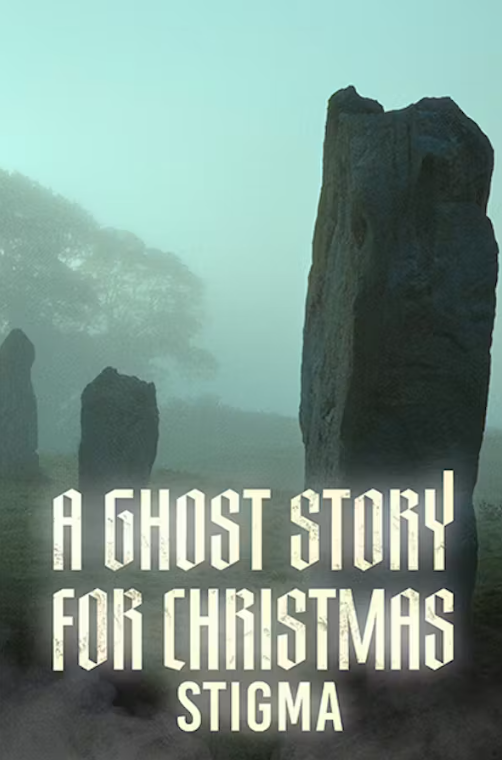
Stigma (1977)
This installment, the shortest in the series at thirty-one minutes, was the last to be directed by Lawrence Gordon Clark, who parted ways with the production after it was decided to adapt contemporary stories going forward instead of classics. The tale, set in the then modern day of the 1970s and based on an original story by Clive Exton, is less a ghost story than a disquieting folk horror, but is still moody and interesting, though much is left unspoken.
We’re following a family consisting of Katherine (Kate Binchy), Peter (Peter Bowles), and their thirteen-year-old daughter Verity (Maxine Gordon). Though this isn’t stated explicitly, we’re led to assume that the family has recently moved out to the countryside from the city, specifically to a place in Wiltshire that’s just lousy with standing stones and other pagan accouterments.
A couple of workmen have been hired to move a big-ass rock from the yard because it supposedly spoils the landscape. The crane the guys have brought isn’t quite up to the task of hefting this thing, though they do manage to shift it a bit, which causes a weird and possibly unnatural wind to rush out of the hole. The guys say they’ll come back the next day with a bigger crane to finish removing the stone.
Whatever this wind was, it clearly had an effect on Katherine, because she starts acting super out of it, kinda spacey and speaking with a really flat affect. The house also starts to shake and distort, though this might just be her perception. She snaps out of it after a few minutes, but then notices she has blood on her hand. Thinking she cut herself while chopping vegetables for dinner, she washes her hand in the sink, but there’s no wound there.
When she goes into the bedroom to change clothes, she sees a large bloodstain on her blouse and her undershirt, but when she strips them off in a panic and wipes the smears of blood off her skin, there’s again no source for the blood. She sees then that the blood seems to be leaching out of her pores in spots, which is mightily alarming, and since she doesn’t want anyone else in the family to see it, she cleans up all the blood she can, tightly wraps her midsection with towels, and puts a baggy dress on over the whole affair.
Later on that evening after Peter gets home from the office, he makes a sideways comment about never trusting women to open bottles; when Katherine asks what he means, he points to a stain on her dress that he assumes is wine. She flips out and heads into the bathroom to check on the profuse bleeding situation, but to her relief, there’s no blood and the stain does indeed smell like wine (although it seems odd that she didn’t remember spilling it).
That night after everyone has gone to bed, Peter is startled awake by something or other, and creeps downstairs. An onion seems to fall out of nowhere, a couple of the stove burners have been left on, and he sees a knife seem to move a bit by itself. Unsettled but not sure if he’s imagining it, he goes back to bed, failing to notice the steady dripping sound coming from where his wife is sleeping.
The next day, he’s enjoying his tea and toast in the morning and sees that the workmen have returned with a much bigger crane to move the stone. He becomes concerned when Katherine doesn’t come downstairs and goes up to see what’s wrong; simultaneously, Verity watches out the window as the workmen move the rock and uncover a skeleton lying beneath it.
When Peter gets to the bedroom, he sees to his shock that Katherine’s side of the bed is absolutely drenched in blood, which has been dripping onto the floor. He yells for Verity to call an ambulance, which she does, but as he’s pulling aside Katherine’s clothing, he realizes that he can’t tell where the blood is coming from.
The workmen, unaware of what’s going on inside the house, wonder whether they should call the police about the skeleton, which looks as though it’s been there for some time. They then discover several old knives in the grave that seem to have been placed there deliberately; one of them is even sticking out of the skeleton’s ribcage.
Meanwhile, a local doctor happens by and goes up to have a gander at Katherine. He twigs onto the fact that the blood is leaking through her skin somehow, but has never seen anything like it. Because she’s so pale and has obviously lost a lot of blood, he tells Peter that they shouldn’t wait for an ambulance. They bundle her into the car and take off, leaving Verity back at the house.
The workmen show Verity the skeleton and the knives, and Verity sagely says that it was common for people suspected of witchcraft to be buried in just this manner; she says she read this in a book. As she speaks, it’s revealed that she has an onion in her hand, which she then starts peeling.
At the same time, Peter is driving to the hospital while the doctor gives Katherine mouth-to-mouth in the back seat, but after a few minutes, the doctor wearily tells Peter to pull the car over, implying that Katherine is dead. Peter is distraught, getting out of the car and wandering into a field as the shot pulls back, revealing the whole of the area, ringed with standing stones.
Although this was not obvious, I’m assuming that Katherine became possessed or something by the spirit of the witch in the grave, and then sort of “re-enacted” her execution. I’m sure someone more versed in folk magic could explain the significance of the onion and some of the other things in the episode; I definitely feel as though there were a lot of little clues scattered about in there that you might not pick up on if you’re not familiar with the folklore.
This was a pretty good episode; a bit jarring after the 19th-century settings of the previous installments, but an intriguing work nonetheless. It had a very uncanny vibe to it that was heightened by its refusal to completely explain itself, and to be honest, I’d be curious to see a more fleshed-out version of this, where some of the blanks were filled in. Another decent watch.
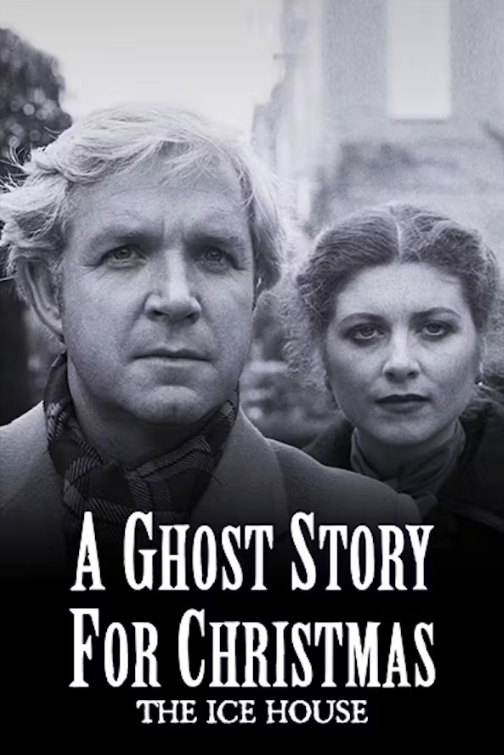
The Ice House (1978)
This final installment in the original series run is generally considered the weakest of the bunch, and though I liked it well enough, I can sort of understand why. Directed by Derek Lister and based on an original teleplay by John Bowen, the story has an intriguing setup and is pleasingly unsettling, but fails to come together into a coherent narrative. Although I’m usually a big advocate of cultivating ambiguity and leaving some questions unanswered, I feel as though “The Ice House” erred too far on the side of inscrutability, and just ended up making little sense and not even really being a ghost story on top of that.
Our main character is Paul (John Stride), a middle-aged man who has come to a remote health spa to recover after his wife took off and left him. The place is run by a pair of obviously creepy siblings, Jessica (Elizabeth Romilly) and Clovis (Geoffrey Burridge). Fair play to these two: their performances are nicely skin-crawling, and even though it’s never quite revealed what their exact deal is, they come across as really sinister, even though they’re both sweet as pie on the surface.
The story starts out with Paul getting a massage from a young man named Bob (David Beames), who always has cold hands for which he apologizes several times (calling it “a touch of the cools,” which probably should have been the title of the story for as often as it’s repeated). Later on, Bob seems nervous at one session and asks Paul to help him get away from the spa, but he clams up as soon as Clovis walks into the room. Bob disappears shortly thereafter, though the siblings say he just quit and might even return someday.
The siblings are also very keen to show Paul their ice house (a stone structure where people kept ice back in the days before refrigeration and home freezers were a thing), and the beautiful flowering vine growing on the outside of the building. The two flowers on the vine are of a trumpet variety; one of the blooms is red and the other is white, corresponding to the colors the human siblings are always wearing. Jessica also reveals that the flowers are likewise siblings, that the plant is very hardy, and that the scent of the blossoms is very pleasant and “overpowering.”
Paul gets more and more weirded out the longer he stays at this odd facility. There are other residents, but they’re all quite elderly and act very strangely, speaking very little or not at all. One woman in particular whimpers and shakes periodically for no obvious reason, and sometimes spaces out, as though she’s catatonic, before being completely normal again moments later.
Paul also notices that Jessica and Clovis are overly concerned with his care and comfort while apparently not paying any attention to the other guests. Jessica explains that this is just because he’s the newest resident and because he doesn’t see all the stuff they do for the others, but Paul isn’t so sure.
At the siblings’ urging, Paul goes to sniff the flowers at night and appears to be affected by their entrancing smell. There’s also a bizarre scene where the siblings are enthusiastically making out beneath the vine where the flowers are blooming, so add incest to the list of sketchy shit this pair is up to.
Paul also becomes obsessed with the ice house, thinking something might be in there, but although the siblings encourage him to take a look, he’s always reluctant to, presumably because he’s afraid of what he’ll find. The one time he does try the door, it’s locked, but when he tells Jessica this later, she insists the door is never locked, and that there’s nothing in the ice house except ice anyway, a proclamation that is also repeated numerous times.
At last, Paul musters up enough intestinal fortitude to enter the ice house. He searches for a light, but there isn’t one, so he uses a match to make a little ersatz torch out of a letter from his wife (a detail that is treated as significant, but is never really elaborated upon). In the ice house, he sees a person (I think it’s Bob) frozen in a block of ice. There appear to be other blocks of ice standing upright against the walls, covered by fabric, but Paul is too terrified to investigate further and books it out of there.
Without initially telling Clovis and Jessica what he saw, he insists he wants to leave the spa. The siblings have no objection and offer to prepare his bill so he can leave in the morning. They put him to bed and bring him tea and toast to recover from his shock. He seems as though he’s starting to have doubts about what he saw in the ice house, especially after Jessica mildly tells him again that there’s nothing in there except ice. As a matter of fact, she says, if it will make him feel better, she can take him there herself and show him before he leaves. He agrees, clearly doubting his own sanity.
The following morning, Jessica takes Paul to the ice house as promised, and just as she said, there’s nothing but regular-ass ice in there. Yes, the ice is covered with fabric, but it’s lying on the floor in big chunks, not standing upright, and there aren’t any bodies frozen in any of the chunks. What’s more, Jessica turns on an electric light with a switch, in a place where Paul felt along the wall before and found no light switch. Now certain that he must have been hallucinating, Paul quietly agrees to cancel his cancellation and stay on at the spa.
It’s then revealed via a short monologue by Jessica that the siblings don’t “approve” of death, and thus are determined to circumvent it. Paul, after hearing this spiel, seems to accept his fate and walks into the ice house (ushered in by a still-living Bob), closing the door behind him. End scene.
So I guess there are a lot of possible interpretations of the story, though none of them seem to fit with all the presented details. It’s clear that Jessica and Clovis are related to the flowering vine somehow, but I didn’t really get a good sense of what their connection to the plant was, and what the plant had to do with the ice house specifically. I’m guessing that these two are freezing people in the ice house to keep them alive indefinitely (a similar premise to H.P. Lovecraft’s “Cool Air”), but if that’s so, why did Paul see the Bob-sicle at first and then not see anything but ice when Jessica was with him? Is everybody at this spa already dead, perhaps, or is this some kind of purgatory? And why was so much made of Paul burning the letter from his wife? I honestly thought at first that Paul had actually killed his wife and this was some kind of weird judgment, or all happening in his head, but that doesn’t really make much sense either. Some reviewers have also commented on the excessive number of massages from male masseuses Paul receives in this episode, and speculate that perhaps it’s implied that Paul was closeted, hence why his wife left him. I can see that being the case, but then again, even if he was supposed to be coded gay, that doesn’t really have anything thematically to do with what happens to him in the story, at least as far as I can discern.
As I said, this one was pretty befuddling and a bit disjointed but did have a very disquieting aura to it that I quite enjoyed. If the lore of the story had been laid out a bit more clearly, this could have been great, but as it was, it came across as mildly spooky, but overall sort of confusing.
BONUS EPISODE:
Whistle and I’ll Come To You (1968)
Although this short film wasn’t technically part of the Ghost Story for Christmas series, it became retroactively associated with it and bundled with it on DVD releases, since it was also adapted from an M.R. James story and was a direct influence on the creation of AGSFC, having predated it by three years. It actually first aired as an episode of the documentary series Omnibus, and the only differences it has with the later Ghost Story films was it being in black and white and having a short narration at the beginning giving a brief bio of M.R. James. As most readers will know, this is an adaptation of what is probably James’s most beloved tale, 1904’s “Oh, Whistle, and I’ll Come to You, My Lad.”
This forty-two-minute film is considered one of the best TV ghost stories of its era, and I would tend to agree, though I’ll admit that the adaptation is significantly toned down from the original story, leaving out several creepy incidents that might have been cool to show. The main character is also quite a bit older in the film than he was in the source material, but that didn’t make much difference as far as that goes.
Professor Parkins (Michael Hordern) is a somewhat doddering, punctilious academic who has come to an unnamed English coastal village for a bit of R and R. Though in the original story he specifically comes to play golf, in the TV version he says he doesn’t play, and mostly just seems to want to poke around the place.
There are some subtle oddities as soon as he arrives, with the servants just looking at him without saying anything, putting him at a separate table and serving him last at dinner while the other guests give him side-eye, and that kind of thing. His room also has two beds in it, a fact which will play into the narrative later on. Parkins himself doesn’t seem too put out about this, but he is a bit of a strange character; his tendency to mumble to himself and repeat what others have said to him has suggested to some viewers that he’s meant to be suffering from some kind of mental illness, but to me, he just came across as a man who was so often inside his own head and absorbed with his own thoughts and intellectual pursuits that he tended to forget other people existed, like the standard trope of the absent-minded professor. Anyway.
Shortly after arriving, he decides to go on a “bit of a trudge,” and ends up browsing through an old cemetery. In the original story, he’s encouraged by a colleague to go there specifically and explore, but in the adaptation, he just finds it in his wanderings.
Parkins finds a bronze whistle sticking out of a cliff face near an old grave (the whistle was actually in a hole in the wall of an old Templar preceptory in the source story). Curious, he puts the whistle in his pocket and heads off toward home, but notably, he sees a figure standing on the beach some distance away, as though it’s watching him.
When he gets home, he cleans out the inside of the whistle, scraping the dirt onto a piece of paper. In the James story, he throws the dirt out the window of his room and sees the figure again, but that doesn’t happen in the TV version.
The whistle has an inscription on it in Latin reading, “Quis est iste qui uenit,” which he translates to, “Who is this who is coming?” In the source tale, the whistle has a second inscription, the meaning of which isn’t given in the story itself, but has been roughly translated as, “Thief, you shall blow, you shall weep.” This second inscription doesn’t appear on the whistle in the TV version, which explains why Parkins, probably thinking the whole thing is a lark, blows the whistle. Moments later, a strange windstorm whips up outside. In the story, he also has a weird vision of the figure, but that doesn’t happen until later in the film. He does hear creepy noises in his room, though.
The next morning over breakfast, Parkins has a discussion with another guest, only known as The Colonel (Ambrose Coghill), who is a much more significant character in the story and is actually named Colonel Wilson. The Colonel asks Parkins, seemingly apropos of nothing, if he believes in ghosts, and Parkins goes off on a very pedantic but wryly amusing digression about the nature of death and whether we can even define what we mean by “ghost.” He’s clearly very pleased at his own cleverness, smiling to himself with a satisfied smirk.
That night, he has what seems to be a nightmare of seeing the figure on the beach, and then being pursued by an ambulatory piece of gauzy fabric that vaguely resembles a person. This dream sequence is deliciously eerie and effective, and corresponds well with the description in the original story.
The following day, he’s returning to his room after breakfast when the maids ask him which bed he prefers they make up. He has no idea what they’re talking about because he’s only used the one bed during his entire stay. They tell him that both beds look as though they’ve been slept in, and when Parkins enters the room, he sees they are correct. Curious but seemingly not overly troubled, he figures there must be a rational explanation.
In the original story, Parkins and The Colonel go to play golf at this point, and when they’re returning to the inn, they meet a terrified boy along the road who tells them that he just saw a spooky white figure waving to him from an upstairs window of the inn, the window that corresponds to Parkins’s room. Parkins and The Colonel go to investigate and find the room locked as usual, but the covers on the other bed in the room are all askew, even though the maids made both beds earlier and no one has been in the room since. This incident was not in the film version, but in my opinion, it absolutely should have been.
That night, after perusing a book on Spiritualism, Parkins starts hearing rustling sounds in the dark, coming from the bed on the other side of the room. Obviously frightened, he sits up and glances over, only to see the sheets of the bed rising and twisting of their own accord, fashioning themselves into the rough shape of a person. Parkins whimpers and starts sucking his thumb, unable to believe what he’s seeing. The Colonel hears his distress and comes to his aid, but it isn’t clear in the film if The Colonel saw the apparition or not. Parkins simply slumps onto his own bed, repeating, “Oh no, oh no…” End scene.
This was an okay ending, but for my money, the one in the original story, though similar, was much scarier and had more threat to it. Just as in the film, Parkins glances over and sees the sheets forming themselves into a figure, but in the story, Parkins jumps out of bed, at which point the figure begins groping about the room, feeling the bed where Parkins was just sitting as though looking for him. Parkins gets a horrified glimpse of the thing’s face, comprised of “crumpled linen,” and then the thing sort of forces him toward the window, where Parkins falls halfway out. The Colonel then busts into the room and the apparition collapses back into a heap of sheets, but it’s implied that The Colonel saw the spirit, because he throws the whistle into the sea the next day, and has the maids burn the sheets the ghost formed itself from.
As I said, this was an excellent adaptation of the James story; the character of Parkins was interesting to watch, and the subtle buildup was well executed. I also felt the effects on the fabric ghost were beautifully done, and came across as very chilling. That said, I think the film was perhaps a bit too restrained and low-key and might have benefited from showing a couple more of the scary incidents from the original story. But if you’re into old-school British ghost stories, you really can’t go wrong with this one; the story and the adaptation are considered classics for a reason.
Well, that’s all for the original Ghost Story for Christmas tales; check them out for yourself if you have Shudder. And until next time, keep it creepy (and Christmasy), my friends.
 The Scare Salon