I’m finally getting back to this series after who knows how long, and if you’re keeping track, that means we’ve arrived at the exalted year of 1984, the year I turned twelve years old. A lot of fantastic movies came out that year, but my top five were pretty easy picks this time around. As usual, I also have a handful of honorable mentions, which are, in no particular order:
Children of the Corn, an adaptation of the 1977 Stephen King short story of the same name, takes many liberties with the source material and is pretty goddamn cheesy in places, but I can’t help loving it anyway. Linda Hamilton and Peter Horton play well off each other as the couple who wanders into the terrifying town of Gatlin, Nebraska, where all the kids have got religion and killed off all the adults, but the real stars of the show here are the two main villains, Isaac (played by a creepy-as-fuck John Franklin), and the lanky, red-haired Malachi (played by Courtney Gains, who would also later feature in one of my favorite horror comedies of the 1980s, The ‘Burbs).
Another great cheese classic that went on to garner an enormous cult following, C.H.U.D., directed by Douglas Cheek, centers around a homeless shelter manager and a cop who team up to discover what’s been happening to New York City’s homeless people, who are disappearing at an alarming rate. They soon find out that there are mutated humans down in the sewers who have been munching on the unhoused. One of the best B-movies of the 1980s, and a hell of a lot of fun, despite its somewhat serious themes.
Not strictly a horror movie as much as a science-fiction and horror-tinged adventure yarn, Joseph Ruben’s Dreamscape stars Dennis Quaid as a psychic who’s been using his gifts for nefarious purposes (gambling and skirt-chasing), but after getting into some hot water with a gangster, he agrees to participate in an experiment that entails him linking minds with other test subjects and essentially going into their dreams. It’s a great premise, has some legitimately creepy imagery, and blends genres seamlessly; I watched it again fairly recently and although the special effects are dated, overall it really holds up.
Probably my second favorite Friday film (after part two), Friday the 13th: The Final Chapter (which of course was no such thing), this one is significant for introducing the recurring character of Tommy Jarvis (played impeccably here by Corey Feldman) and highlighting the wonderful madness that is Crispin Glover (and THAT DANCE). It also shines due to Tom Savini’s excellent effects work, with the outstanding shot of Jason’s head sliding down the machete at the end being a particular highlight.
One of the best Christmas slashers and also one of the most controversial films of the decade, Silent Night, Deadly Night focuses on the (then fairly rare) killer Santa trope. Our villain, Billy Chapman, sees his parents murdered by a killer Santa when he’s a child and is subsequently sent to an orphanage where he’s horribly abused. When he becomes an adult, he becomes obsessed with people being “naughty,” and dresses as Santa to punish those he sees as transgressors. Although killer Santa movies are a dime a dozen nowadays, this one really blew the doors open and was so reviled that it was actually pulled from theaters after only one week. It’s tame by today’s standards, but it’s still a holiday horror classic, and the shot of a half-naked Linnea Quigley impaled on a set of deer antlers is a scene for the ages.
A bit of an idiosyncratic choice as it’s technically a documentary, but I decided to include it anyway just because I saw it so many times on cable back in the day and enjoyed the whole vibe of it so much: Terror in the Aisles, directed by Andrew J. Kuehn, is one of the best horror documentaries of the era, and is hosted with great panache by Donald Pleasence and Nancy Allen. It does a fantastic job of breaking down different types of horror films, showing copious clips of relevant films, and providing insightful commentary. An easy recommend if you love docs about the genre.
And now, on to the main attraction.
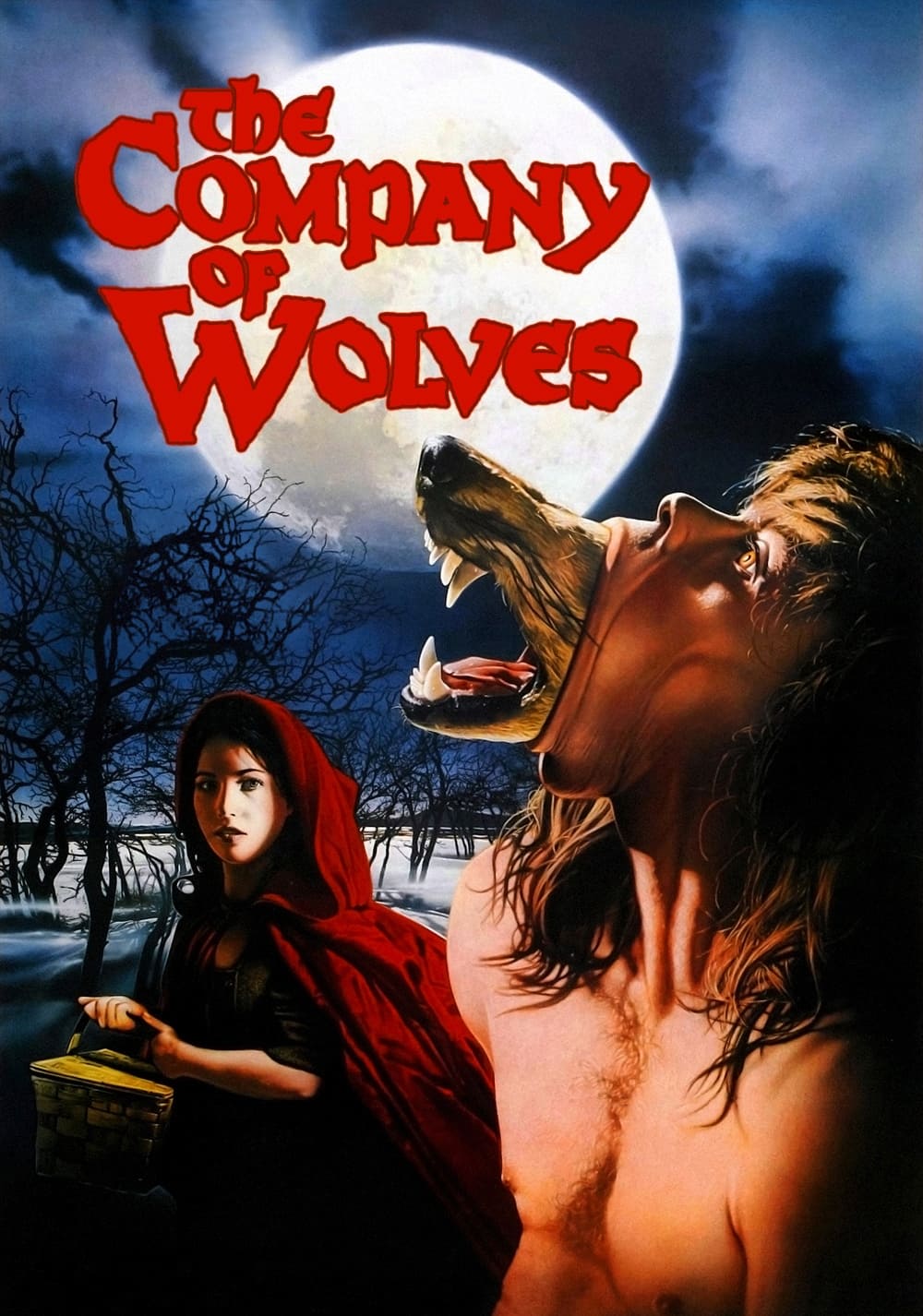
The Company of Wolves
Neil Jordan’s stylish gothic fairy tale is probably closer to fantasy than horror, though it does boast some fairly enthusiastic gore and some well-done werewolf transformations. Based on the 1979 short story by Angela Carter, which was in itself a loose retelling of Little Red Riding Hood, the movie is almost set up like an anthology, with the main narrative containing several embedded stories within stories that are all similarly themed.
We start out in the present day (of 1984), with a girl named Roseleen (Sarah Patterson) dreaming that she lives out in the countryside in the 18th century. In the dream, her sister Alice (Georgia Slowe) is eaten by wolves, and Rosaleen is then sent to live with her grandma, who is played by Angela Lansbury, as all good grandmas should be. While the main Red Riding Hood story with Rosaleen, her grandma, and a boy she likes plays out, grandma also tells Roseleen a couple of stories, and Rosaleen tells a couple of stories (to her mom and the huntsman/werewolf). It sounds convoluted, but it doesn’t come across as confusing on screen at all; the structure of it is unorthodox, sure, but it isn’t difficult to follow.
The vibe of this movie is sort of like Labyrinth, but much darker and bloodier; it has a similar girl-coming-of-age-and-learning-to-avoid-predators theme, and also a similar slightly surrealist or fantasy-based aesthetic. The scene where the nobles at the long dining table all turn into werewolves (well, dogs, actually) is classic, but the whole movie is a real treat if you’re into werewolves and Grimm’s fairy tales.
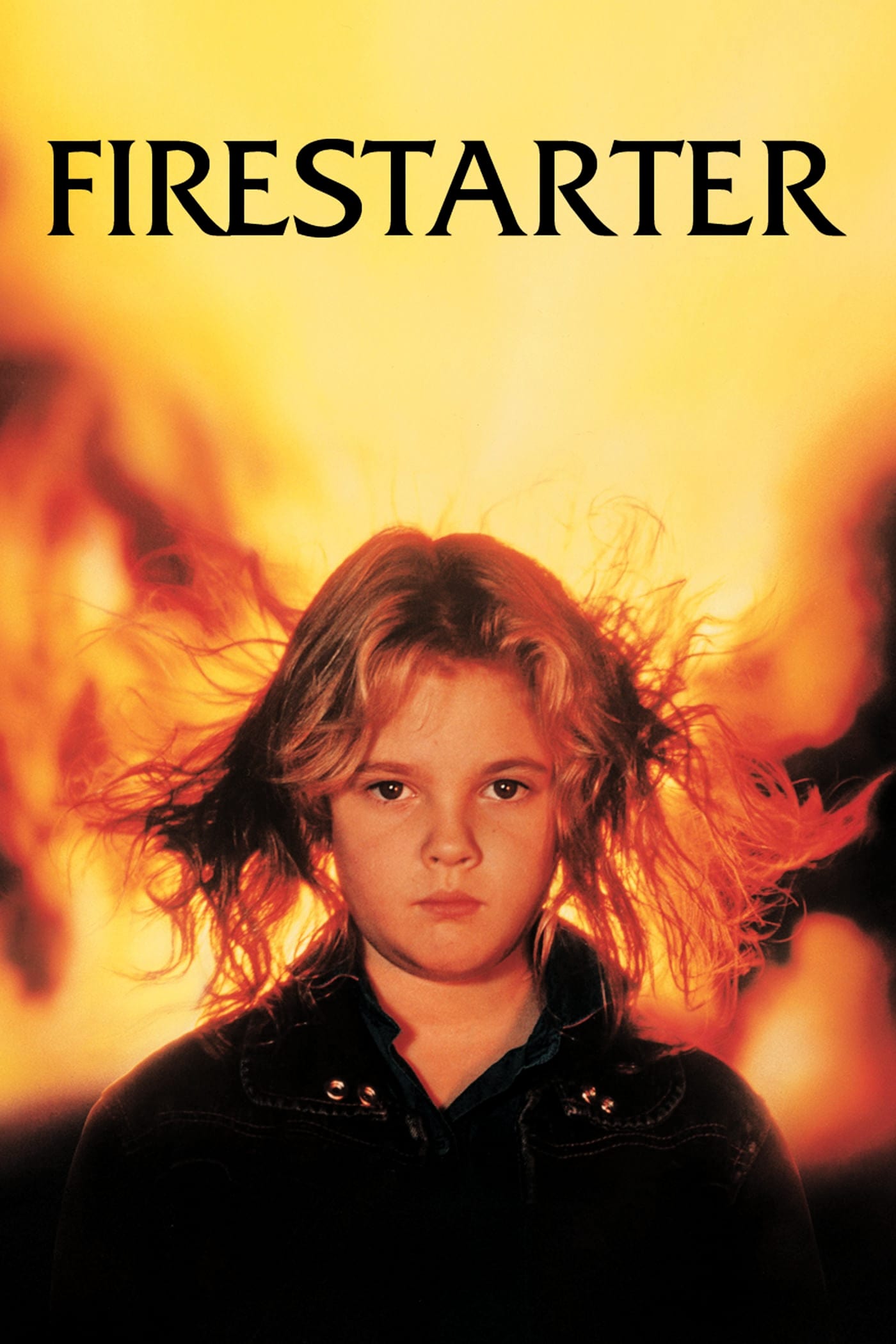
Firestarter
Though not among my favorite Stephen King adaptations—hell, it’s not even among my favorite King adaptations just from the 80s—it’s still a really solid flick that I find myself enjoying more and more each time I rewatch it.
Most people are probably familiar with the story, but if not, it concerns a little girl named Charlie (Drew Barrymore), who has pyrokinesis, and her father Andy (David Keith), who can do psychic mind control. They’re being pursued by nefarious representatives of The Shop, a shady government agency that did some human experiments back in the day that gave Andy and his wife their telekinetic powers in the first place.
The movie is pretty faithful to the book and I think that’s to its benefit, and although it sags a bit in the middle after Charlie and Andy are captured, it’s still an entertaining watch, if a bit slow in places. I would also be remiss if I didn’t point out the excellent and intensely unsettling performance of George C. Scott as the malevolent John Rainbird; even though it’s a tad annoying that a white actor was cast as a Native American character, there’s no denying Scott’s terrifying presence here, made all the more pronounced by the fact that the audience knows he’s manipulative and evil, but poor, innocent Charlie doesn’t, and happily befriends him. Their fraught interactions are therefore a highlight of the film for me.
Another big plus is the pyrotechnic work, which is astounding even today; the final scene, in which Charlie finally lets loose and uses her powers to throw fireballs with her mind and burn the whole place to the ground is completely epic, and the fact that the character still retains the audience’s sympathy and goodwill despite essentially being a mass murderer many times over is a credit to just how goddamn adorable Drew Barrymore is.
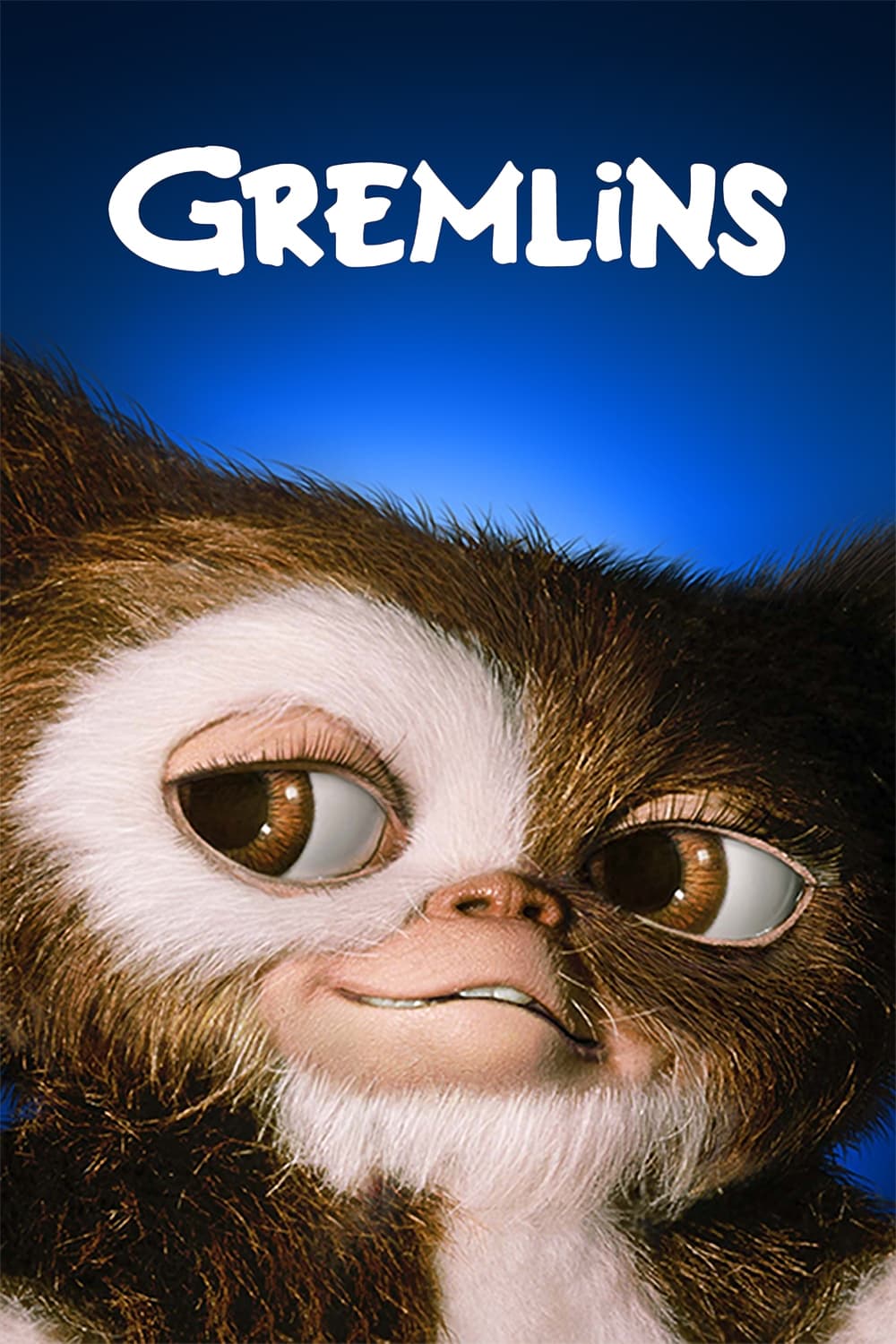
Gremlins
Joe Dante’s awesome Christmas horror comedy is easily one of the best films of the 1980s, blending a heartwarming, sweetly Spielbergian tale about an adorable, magical pet with a gory, violent cavalcade of monster carnage in a way that feels completely refreshing and a hell of a lot of fun. This somewhat severe tonal switch, by the way, was one of the things that spurred the creation of PG-13, a new movie rating between PG and R; another supposed “family” film that came out the same year and went in similarly grotesque directions was, of course, Indiana Jones and the Temple of Doom. I still remember some parents being apoplectic after taking their children to see either Gremlins or Temple of Doom and then having to deal with their precious offspring screaming their heads off at the sight of creatures being blown up in microwaves and living people having their hearts pulled right out their chests. The 80s didn’t fuck around.
Again, I feel as though Gremlins doesn’t need much introduction, but for younger readers who may not have seen it, it concerns a teenage boy named Billy (the seemingly ageless Zach Galligan) who receives a fuzzy, big-eared creature called a mogwai as a Christmas present from his dad, who purchased the cute little critter at your standard-issue mysterious shop in Chinatown.
Billy names the little guy Gizmo (whose voice is provided by comedian Howie Mandel) and everything seems hunky-dory at first, until several things conspire to break all of the three “rules” of caring for a mogwai: don’t expose him to light, don’t get him wet, and don’t feed him after midnight. Shockingly, breaking these rules results in Gizmo sprouting little pods out of his back that eventually “hatch” into small, ugly, reptilian monsters with a taste for murder and mayhem who can reproduce at an astounding rate. Soon enough, the whole town is overrun with the things, and the body count begins to stack up.
A blackly comic holiday classic, Gremlins boasts excellent effects work and an entertaining, chaotic tone that makes the whole movie an utter blast to watch from beginning to end. Bonus points are also awarded to the wonderful Phoebe Cates and her infamously grim story about her Santa-clad father getting stuck in the chimney and dying on Christmas Eve. Just a great flick all around, and a Christmas tradition in our house.
Night of the Comet
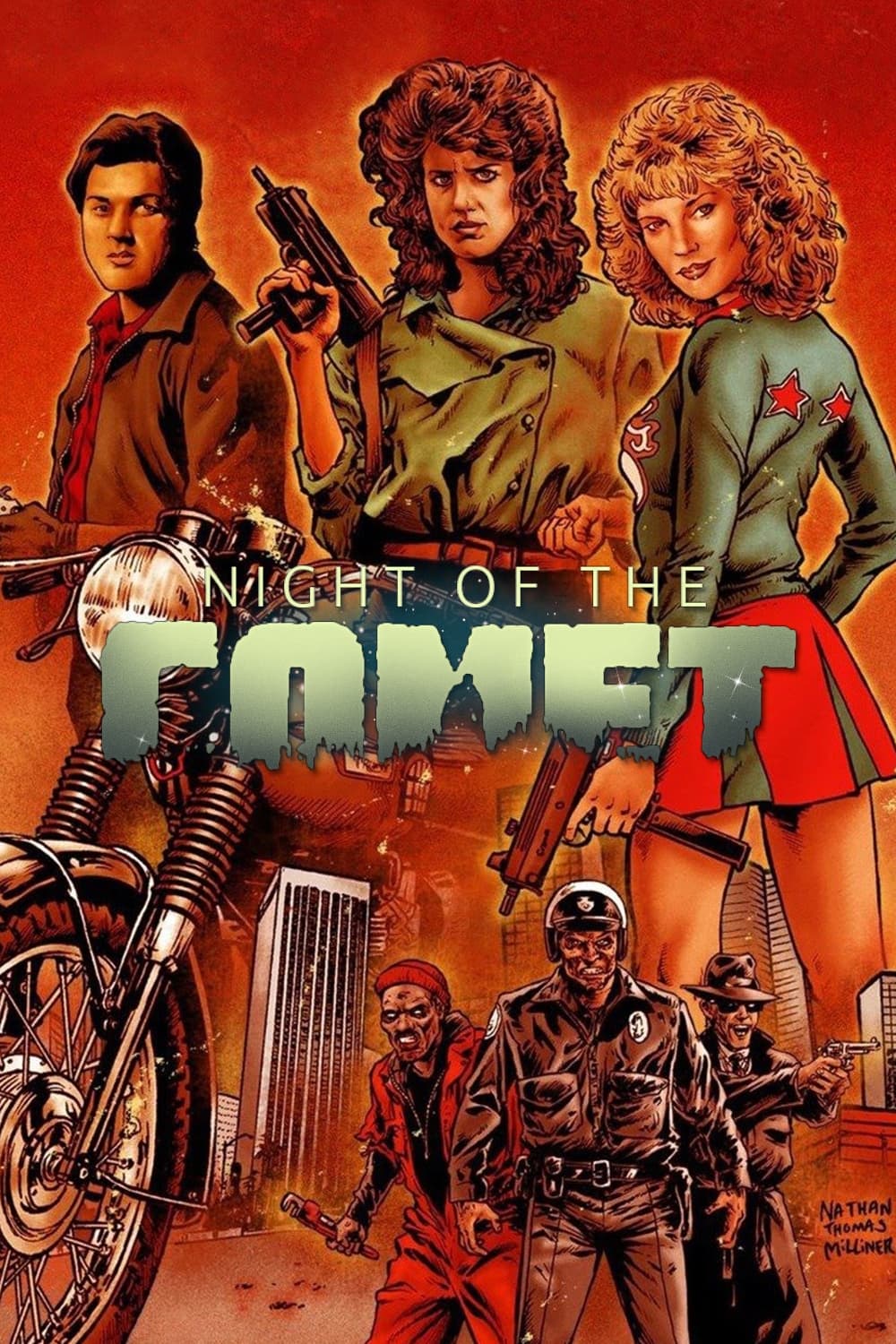
Though I’m not usually the biggest fan of post-apocalyptic horror, Night of the Comet is so winning and lovable that it’s difficult for me to resist. Written and directed by Thom Eberhardt (Honey, I Blew Up the Kid) and pitched as something akin to Valley Girl meets Repo Man, the movie is a darkly funny adventure about the end of the world, as seen through the eyes of two teenage girls.
Eighteen-year-old Reggie (Catherine Mary Stuart) and her sixteen-year-old sister Sam (Kelli Maroney) have your typical 80s teenager problems, like not getting along with their stepmom and having some mysterious person beating your high score on Tempest down at the arcade. It so happens that a comet is going to be passing close to the Earth several days before Christmas, but the girls aren’t really concerned about it, and everyone else just thinks it’ll be kind of a neat thing to see.
Well, as both sisters have their own personal things going on—Reggie getting busy with her boyfriend in the projection booth of the movie theater where she works, and Sam spending the night in a steel shed after a fight with the aforementioned stepmother—they don’t initially think much of it when they wake up the next morning to find that the sky is red with haze, and there are a bunch of strange piles of red dust everywhere that all have piles of clothing next to them.
Eventually, the girls figure out that the comet has wiped out most of the people on the planet, and turned some of those remaining into zombies. Though obviously shocked, they regain their aplomb pretty quickly and begin to navigate this new world they find themselves in, arming themselves with weapons and bitchin’ new duds at the mall, and trying to track down a man they heard looking for survivors over the radio.
The apocalypse has rarely been this charming, as the two leads are kick-ass chicks whose surface vapidity belies their razor-sharp intelligence and resourcefulness. A beloved cult classic for a reason, and one that all fans of 80s horror should have on their to-watch lists.
A Nightmare on Elm Street
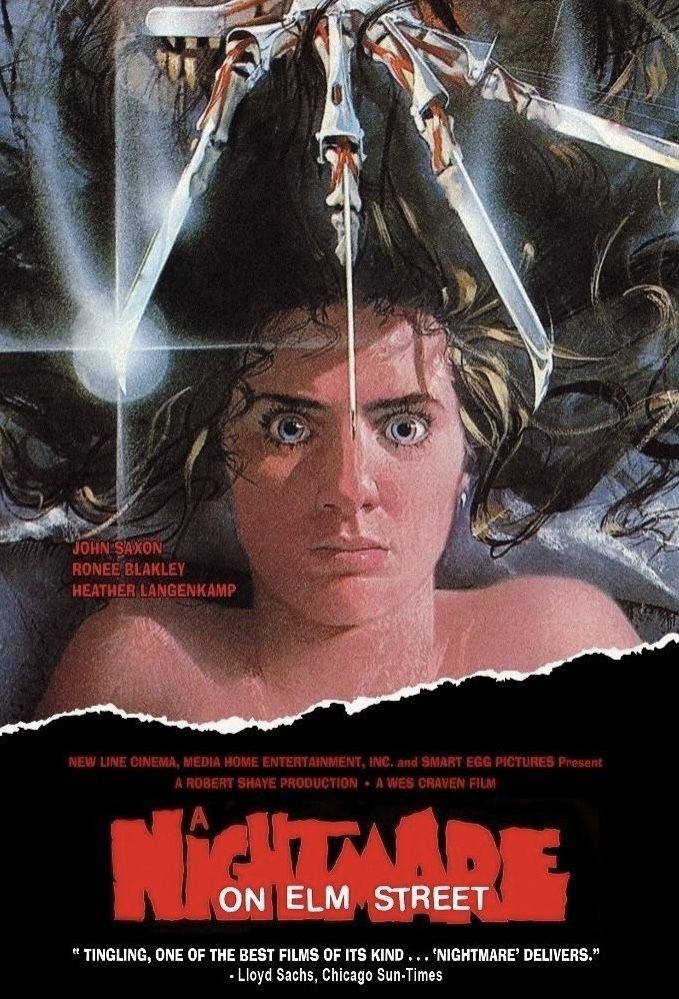
Wes Craven’s excellent supernatural slasher not only introduced the world to one of the most iconic villains in horror, but also kick-started a long-running movie franchise and a multimedia merchandising juggernaut. But for all the films, TV shows, Halloween costumes, coffee mugs, and branded vibrators (probably), the OG Nightmare on Elm Street is still the best and scariest of them all, in my humble opinion.
Loosely based on an unsettling series of articles Craven read about Hmong refugees having horrifying nightmares and later dying in their sleep, the movie is centered around a group of teenagers who slowly begin to realize that they’re all dreaming of the same frightening figure: a badly burned man with knives for fingers. As the characters are picked off one by one in gloriously bloody and creative ways, it becomes clear that if you’re killed by this man in your dream, you die in real life.
It’s later uncovered that the man, Freddy Krueger, was once a child murderer in the town, and the parents of all the murdered teens partook in some vigilante justice after he was acquitted of his crimes because of a technicality, locking him in the boiler room where he worked and burning him alive. Freddy has thus become a sort of dream-demon, punishing the people who killed him by taking revenge on their offspring.
A Nightmare on Elm Street was just such a brilliant conceit, using the tropes of the slasher film, but introducing a pronounced supernatural element that allowed all the kills to be distinct and wildly imaginative. Robert Englund, in his debut turn as Freddy, is terrifying here, a far cry from the wisecracking and somewhat defanged comedian he would later become, and of course I would also be remiss if I didn’t point out the awesomeness of final girl Nancy Thompson (Heather Langenkamp), who musters every bit of grit and ingenuity to fight back against Freddy with everything she’s got. Everything about this movie rules, in other words, and I consider the first Nightmare on Elm Street required viewing for any horror aficionado.
Well, I finally got through 1984, so stay tuned for whenever I get around to 1985! And until then, keep it creepy, my friends.
 The Scare Salon