I’ve probably mentioned this a couple of times before, but I’m generally not a massive fan of vampire novels. There have been a few I’ve gotten really into, but vampires as monsters are a bit stale for me, and I don’t make a habit of seeking out fiction featuring bloodsuckers.
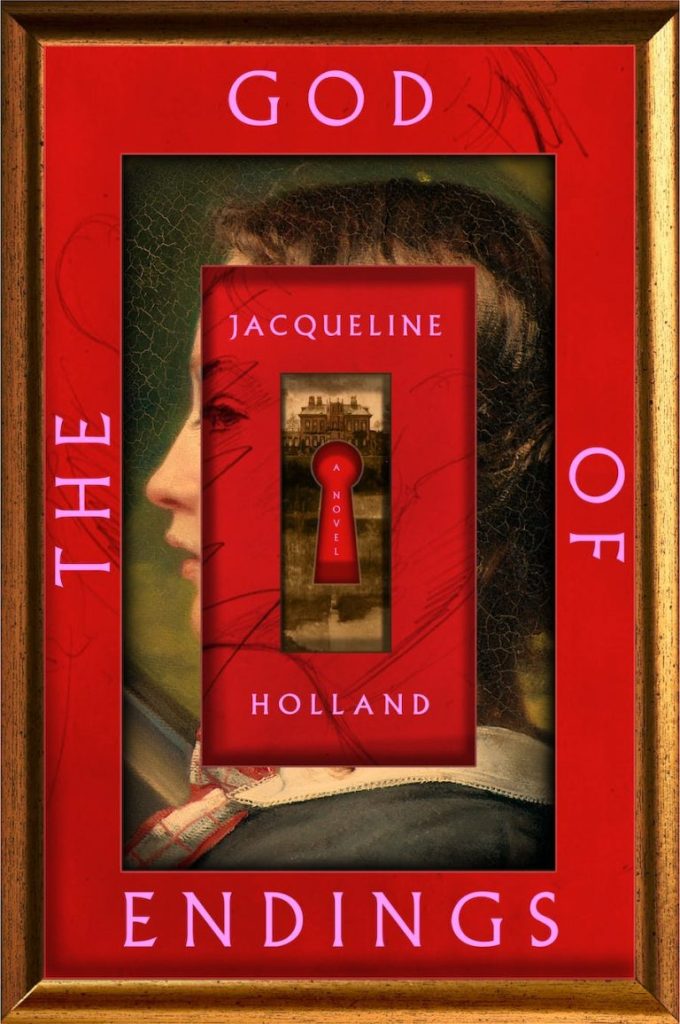
But something about the cover and title of Jacqueline Holland’s 2023 debut novel The God of Endings piqued my interest, even though the short blurb stated that not only was this a vampire story, it was also historical fiction, which is another subgenre I don’t truck with much. But for whatever reason, this book sort of called to me, and wow, I’m really glad it did, because this was phenomenal; easily one of the best horror novels I’ve read in a long while.
It’s beautifully written, emotionally engaging, epic in scope but still tightly focused, and completely and utterly immersive. I’m as surprised as anyone else that a historical vampire novel genuinely knocked my socks off, but life is full of surprises, I guess. I’m also flabbergasted that this is Jacqueline Holland’s first published novel, because holy shit, it’s GREAT.
We begin the tale in 1834, and a young girl named Anya (or Anna) is helping her father in his work as a stonemason; he carves gravestones, to be precise. Not long after, though, tuberculosis rages through her village, followed by the heightening of superstitions about vampires. Anya’s entire family succumbs to the disease, and then the poor child is forced to endure the backward townsfolk burning her family’s bodies and making her eat the ashes to prevent the dead from coming back to feed on the living.
Shortly before his death, Anya’s father wrote a letter to Anya’s Slavic grandfather, who she met once when she was a baby but doesn’t remember at all. Anya herself grows sicker and sicker with tuberculosis and eventually dies, but then she is resurrected by her formidable grandfather, who is of course a vampire. He takes Anya to live with him and his companion/manservant Agoston for a time as she adjusts to her new reality, but soon enough, he leaves her to fend for herself, as he is a firm believer in people getting toughened up by having to figure out how to overcome their own hardships.
Keep in mind that although Anya is only about ten years old when she’s turned, this book avoids the whole Anne Rice Claudia problem by explaining that if a vampire is turned when they are still a child, they will grow into their “bloom,” or their prime, and then just stay that age forever. Anya’s grandfather looks older, but he was an old man when he was made a vampire.
Anyway, after the setup of Anya getting turned into a vampire, we jump ahead to 1984, where about half of the book takes place. In 1984, Anya is now living under the pseudonym of Collette LeSange, and is running an elite prep school-type place in upstate New York, in a house her grandfather owns. Her students are the bright young offspring of upper-middle-class to wealthy families in the area, and Collette teaches them French and art history, among other things. She also lives in the lovely old mansion, and has a couple of women who help her out with the school but go home at the end of the day. Obviously, nobody knows she’s a vampire, and so far she’s been able to keep her ravenous hunger for blood under control by keeping a large number of cats that she’s trained to let her drink a bit from every few days. She loves the cats, and the kitties don’t seem to mind her taking sips of their blood in exchange for treats.
Oh, and if you’re a cat person like I am, bear in mind that—spoiler alert—there’s an absolutely heartbreaking and horrifying scene in here involving most of the cats that I don’t even want to think about because it traumatized me so much. You’ve been warned.
So Collette naturally loves all her students, but one boy in particular is her special favorite. His name is Leo, and he’s a bit of a sickly child, suffering from asthma and various other maladies. He’s also very intelligent, the sweetest kid ever, and might be an artistic genius. Collette, an artist herself, is enraptured by his prodigious artistic talent and tries to encourage it at every opportunity.
The problem is that Leo’s parents aren’t really ideal, let’s put it that way. His dad Dave seems kinda checked out and hostile, and Collette begins to suspect that he might be abusive. Leo’s mom Katherine is much nicer, but is sort of forgetful and appears out of it a lot of the time. Despite Collette’s reticence to get too close to people (so they don’t find out she’s, y’know, undead), she finds herself unwittingly drawn into a friendship with Katherine, as Katherine begins to confide in her about her marital problems and also starts asking Collette to babysit Leo.
At the same time, however, Collette is becoming concerned because her hunger is suddenly increasing at an unprecedented rate; drinking a bit of blood every three days or so was enough to keep her sated before, but now she’s constantly ravenous, and what’s worse, she starts going out feeding in the middle of the night without remembering what she did the next morning. She fears she’s becoming a danger to others, which of course might put her students in jeopardy.
She’s also convinced that something significant and probably terrible is on the horizon, as she begins to feel the lurking presence of Czernobog, the titular god of endings in Slavic folklore, hovering around the perimeter of her existence. She’s not afraid of her own death, as her long life has been beset with tragedy and her own end would be a relief, but she is certainly fearful of unknown changes that might cause her to hurt others around her.
I neglected to mention that while all the stuff in 1984 is going on, the book also goes back and forth to different key events in Anya/Collette’s life in the nineteenth and twentieth centuries (including a stint in a small French village during the Nazi occupation of World War II), illustrating how she came to be where she is today and why she feels the way she does about herself and the so-called “vremenie” (which is what vampires call humans). She has always felt resentment toward her grandfather for turning her, as she believes she’s been cursed to live in a world that shows her nothing but misery. So a large part of Collette/Anya’s arc over the course of the story involves her learning to accept her immortality and live with the reality that things and people will come and go while she endures.
As I said, this was a fantastic read, steeped in Gothic tradition, Slavic folklore, and a sort of fairy tale vibe that came across mostly in the historical chapters. The main character of Anya/Collette, who we see the entire story through, is a sympathetic, complicated, multifaceted woman, a reluctant immortal who struggles with her desire to live among humans while also having to keep them at arm’s length. When she begins to black out and feed without remembering what she did, we feel her horror right along with her, and empathize with her loss of control. Even though she is a somber, introverted woman, she is never whiny or boring; she has wells of strength she draws from, and a deep sense of compassion that keeps her from being as monstrous as she feels she is. She seemed very real to me as a person, and that’s a testament to Josephine Holland’s outstanding writing. I was legitimately distraught when something awful happened to Collette, or when she got close to getting caught in her vampiric escapades; I was so emotionally invested, not only in her character, but also in that of Leo, who was such an angel that your heart just ached for him and all the shit he had to put up with. The developing relationship between Collette and Leo is at the core of the story, and gives it a lot of resonance.
If you love vampire media, then you need to jump right on this because I think I can almost guarantee that you will love it, especially so if you’re also a fan of historical fiction. I wouldn’t call myself a big fan of either of those things, and I still adored this book, so make of that what you will. This was so good and so all-consuming that I didn’t really want it to end, and that’s indicative of how amazing the character- and world-building is. An easy recommend.
Until next time, keep it creepy, my friends.
 The Scare Salon