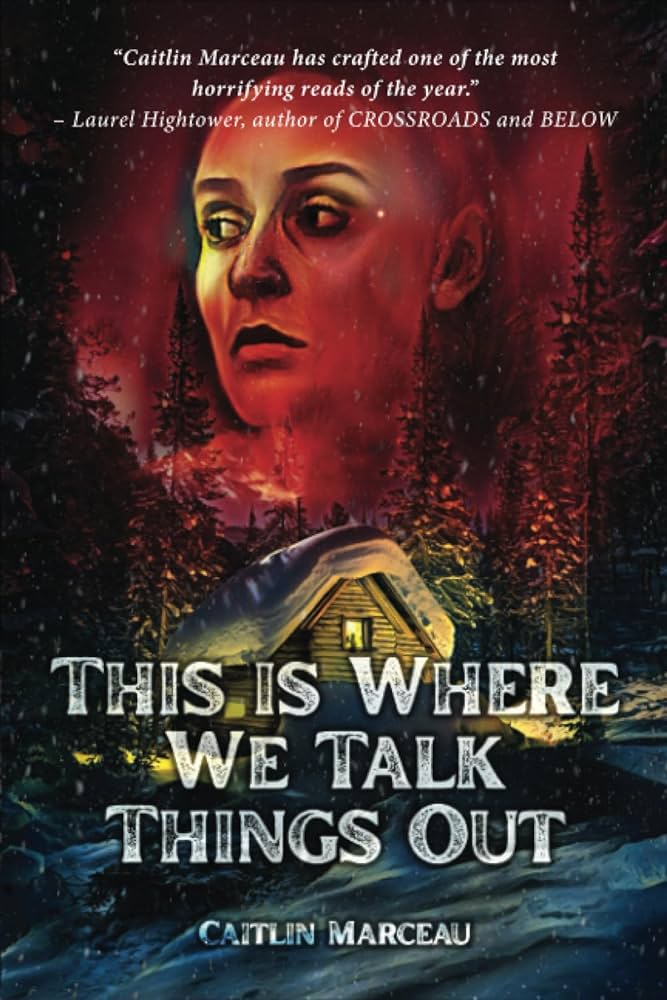
The 2022 novella This is Where We Talk Things Out was my first experience reading Canadian author Caitlin Marceau, and it definitely won’t be the last, because this was a gripping, fast-paced story that I blazed through in less than two hours. I’ve seen it compared to Stephen King’s Misery (due to the “trapped in a remote cabin in a snowstorm with a crazy person” angle) and also to Gillian Flynn’s Sharp Objects (because of the fucked-up mother-daughter relationship at the heart of the tale), so if you’re in the mood for a harrowing psychological horror along those lines that is also less than a hundred pages, then this might be exactly what you’re looking for.
The main protagonist of the story is a woman named Miller, who at the beginning is packing up to go—grudgingly, it seems—to spend a weekend with her estranged mother at a remote cabin some distance away. Her fiancée Florence is reluctant to let her go, and Miller isn’t too jazzed about the prospect either; it seems she’s mostly been low to no contact with her mother for a long time but feels slightly guilty about it now that her beloved father has passed away.
Miller’s mom Sylvie reached out with the offer of the weekend trip in order to mend fences, and though Miller isn’t convinced her mother is genuinely going to try to repair their ailing relationship, she’s willing to give it one last shot before potentially cutting her mother off for good.
Sylvie arrives at Miller and Florence’s apartment complex, honking her horn outside because Miller has actually never told her mother which apartment she lives in, and doesn’t plan to change that anytime soon.
Although you’d think that Sylvie would at least try to play nice at first, the picking and needling starts pretty much the second Miller gets to the car, with Sylvie complaining that Miller shouldn’t put her luggage on the back seat because it will get her upholstery dirty. Rolling her eyes (which she does a lot over the course of the story), Miller complies to keep the peace.
The drive is quite long, and Miller realizes that she doesn’t know exactly where this cabin is. When she asks Sylvie about it, all she’ll say is it’s “up north.” The mother and daughter attempt to make normal conversation, but the dynamic between these two is clear from the get-go: Sylvie is constantly gaslighting her daughter and making passive-aggressive comments about her lifestyle choices, and when Miller calls her out on it and pushes back, Sylvie plays the victim, pretending that Miller’s “harsh” words hurt her feelings. I’ve known a few people exactly like this, and reading the exchanges between these two characters made me really tense, angry, and exhausted all at the same time, which of course was the entire point; this is a psychological horror, after all.
Miller falls asleep during the drive, and when she wakes up, they’ve arrived at the cabin, so she still has no idea where she is, and of course, there’s no wifi or cell service way out here. Already annoyed and feeling that this trip was likely a mistake, Miller takes her things into the cabin.
And here’s where the first overt red flags start creeping into the situation. Because it turns out that Sylvie has decorated this cabin as close to Miller’s childhood home as possible, given the differences in architecture between the two homes. That’s right: Sylvie took everything from the house she raised Miller in and transferred it here, exactly the way it was when Miller was growing up. Miller is understandably weirded out by this, and is also walloped anew by grief when she sees all the framed photos of her and her father lining the walls. The whole thing is quite overwhelming, and Miller wants some time alone to process.
Sylvie, though, wants to spend time with her daughter, and gets real butthurt when Miller just wants to go to her room and rest. She finally relents, though, and when Miller goes upstairs to the guest room to try and text her girlfriend to come get her, she realizes that like the rest of the place, this room too is decorated just the way her bedroom was when she was a kid. Now pretty thoroughly freaked out, she falls asleep after not being able to get through to Florence on her phone.
The next day, she gets up and attempts to get dressed, but discovers that all of her clothes are gone. She asks Sylvie what happened to them, and Sylvie says she put them all in the washing machine because they stunk of weed, and they’re in the dryer now and almost done. Miller, of course, tries to tell her how unreasonable it is to go through her things without permission, but Sylvie acts all wounded again, claiming she was only trying to do something nice and getting shit all over as a result of it. Sylvie is a frustrating, narcissistic, monstrous woman, and all the more terrifying because she seems so real.
Pissed off, Miller goes down to the laundry room in the basement to retrieve her clothes, only to find out that they’re still in the washing machine; not only that but they’re all torn up and covered in bleach. Miller is livid, but Sylvie plays the innocent victim again, claiming that she “accidentally” confused bleach for laundry detergent (even though the bottles look completely different) and that the tears in the clothes must have come from the agitator. Miller doesn’t buy this bullshit story, but naturally, Sylvie won’t admit to any wrongdoing, so Miller eventually gives up.
Sylvie then helpfully says that there are lots of spare clothes in the dresser in Miller’s room, and when Miller goes to get some, she finds to her horror that, as you might have guessed, all the clothes are homemade replicas of stuff she wore when she was little, only adult-sized.
To make matters worse, a blizzard hits the area, covering the whole cabin in snowdrifts.
From here, things escalate quite precipitously, and it starts to become clear that not only is Miller completely trapped with no way to call for help, but her mother might be way more disturbed that she initially thought.
If you’re into domestic horror with a snowbound cabin angle, I think you’ll probably be into this; it’s not long, but the characterization of the two main players is efficient and excellent, and really gets the horror of the situation across without wasting too much time on unimportant details. The ramping up of the tension was likewise outstanding, and you couldn’t help but feel secondhand anguish on Miller’s behalf as her predicament got worse and worse.
While one big plot reveal was telegraphed pretty early and therefore fairly easy to figure out, it didn’t diminish the overall power of the story, which keeps you on edge for the entire, nail-biting journey. An easy recommend for fans of Misery, Sharp Objects, or Stephanie Wrobel’s Darling Rose Gold.
Until next time, keep it creepy, my friends.
 The Scare Salon