
I’m Jenny, and I love horror movies. It doesn’t even really matter to me what era or subgenre they come from (though of course, I have my preferences); just give me some ghost-choked castles, some unspeakable monsters, some taboo-breaking imagery, and/or gallons of dripping gore, and I’m a happy Crystal Lake camper. As a matter of fact, if someone wanted to pay me to do it (please?), I would gladly watch horror movies all day every day and never get tired of them until the day I dropped dead. There’s just something so fundamentally me about the horror genre that I don’t think I’ll ever be able to extricate myself from the hold it has over me, even if I wanted to (which I don’t, to be perfectly clear).
For a very long time, I’ve been wanting to do an extended post and video delving into the history of my beloved genre and talking about some of my favorite examples from every decade. It’s taken me this long to get around to it, as you can see, but better late than never, so at long last, let’s do this shit.
Horror as an overriding genre, of course, didn’t start with movies. Humans have been fascinated by scary things since before they were even humans, and some of the oldest written tales in existence contain massive dollops of horrific situations and monstrous creatures. Everything from the Epic of Gilgamesh to the Greek and Roman myths to the Holy Bible contains fantastical critters, people being killed in terrible ways, people possessed by demons or turning into vampires or werewolves, and folks coming back from the dead. The real world is a frightening place, after all, and by couching real-world horrors within fictional ones, we can better get a handle on our anxieties about the dreadful fates that may one day befall us. This is true the world over, and thus every culture has its own darker mythologies and specific boogeymen.
In the 19th century, there was something of an explosion in horror-themed literary content, though it wasn’t named or marketed as such at the time, usually being termed gothic instead. The works of Ann Radcliffe, Horace Walpole, Sheridan Le Fanu, Henry James, Mary Shelley, Bram Stoker, and Edgar Allan Poe would focus on death, despair, and supernatural themes, and in fact, it was many of these very works that served as source material for the developing media of film when it was still in its infancy.
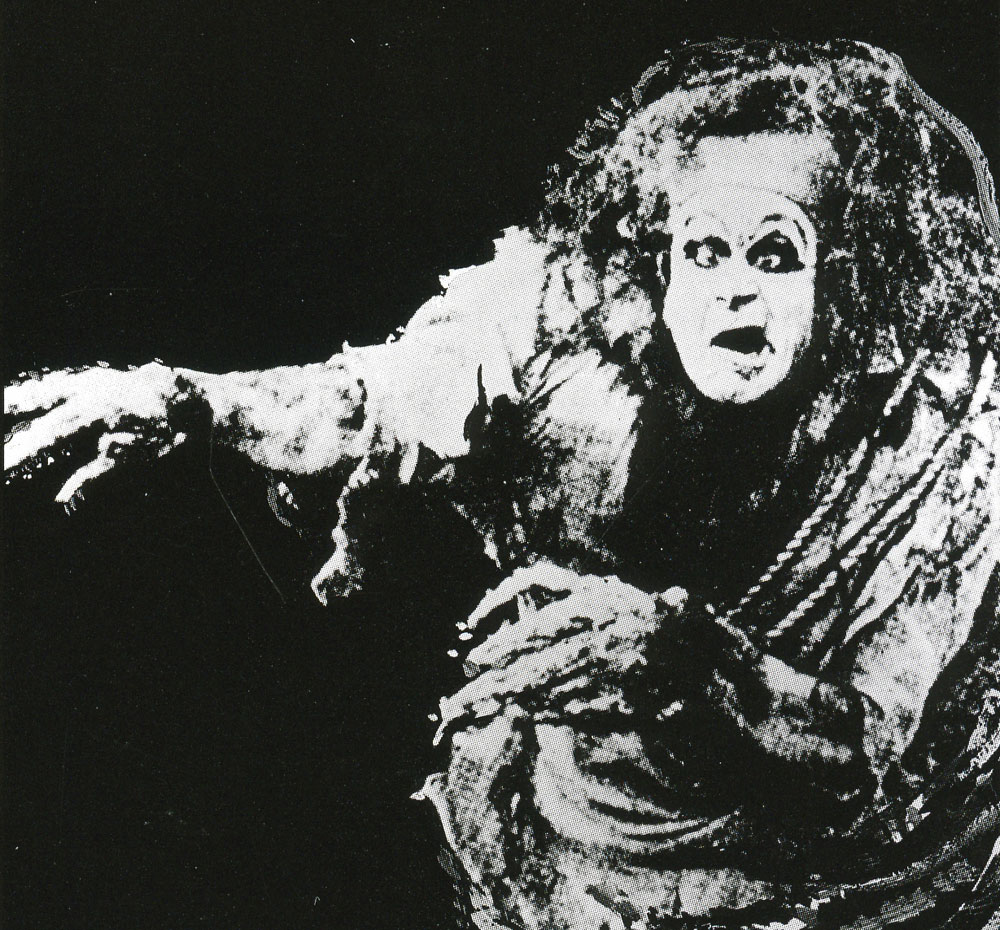

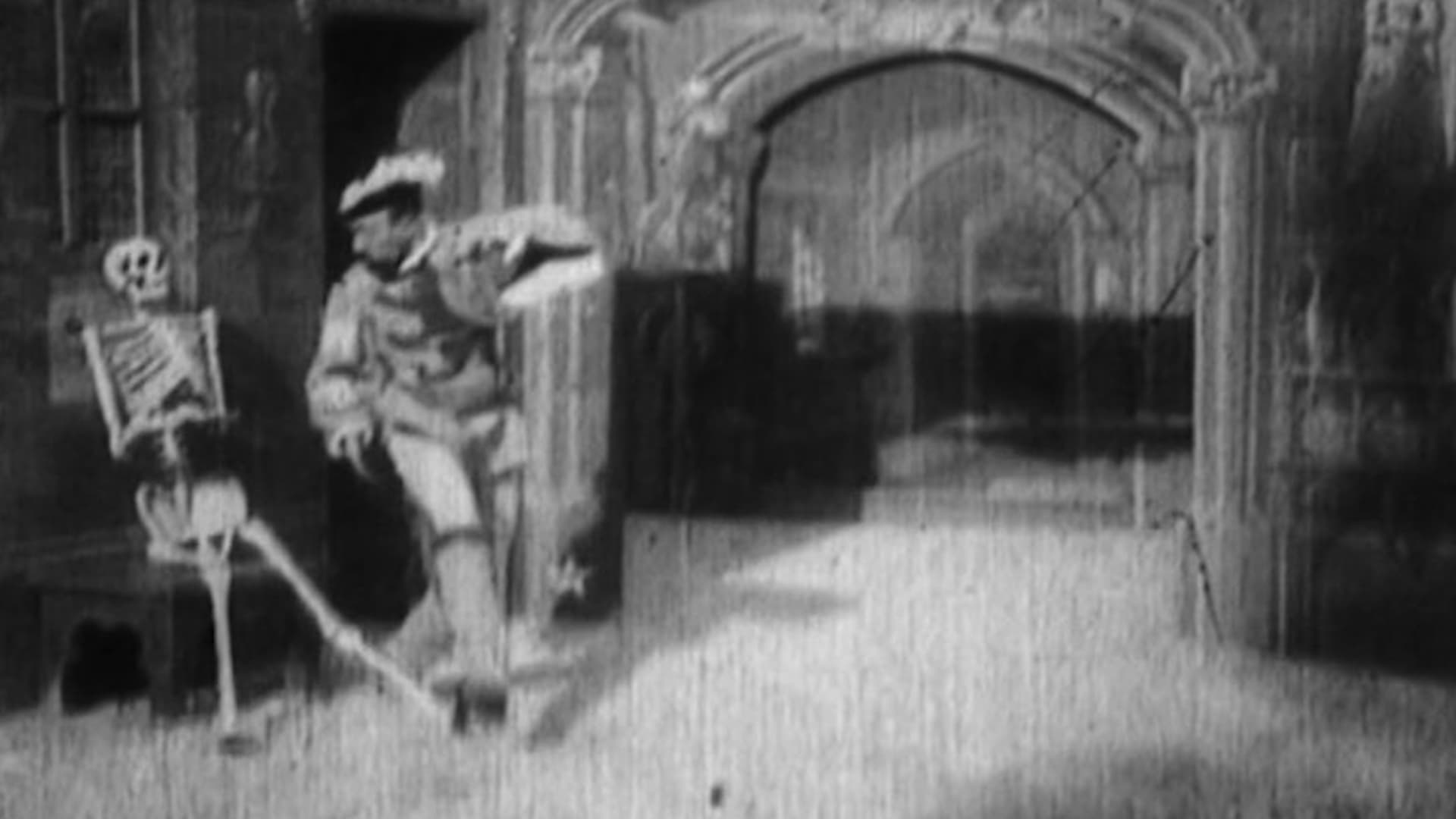
The first horror film, if it could be called that, is generally considered to be 1896’s Le Manoir du Diable (The House of the Devil, released in the U.S. as The Haunted Castle), directed by prolific auteur Georges Méliès. The film itself is only a few minutes long and is really more funny than scary, utilizing many trick shots and special effects that were all the rage at the time, but it does contain a decrepit old castle, bats, skeletons, and the Devil manifesting witchy ladies and imps out of a big-ass cauldron. I wrote a fun little watch-along here, if you’d rather read about it than watch it, though I’d submit that it will probably take you way longer to read the writeup than to sit through the actual movie. Totally up to you, however.
Méliès made a few of these short trick films with vaguely supernatural or horror-esque themes, including The Nightmare from 1896, The Bewitched Inn from 1897, and The Cave of the Demons from 1898. He made a fuckton of other movies too (I mean, it’s fairly easy to make 70-odd movies a year when they’re only a couple minutes long), but most of them weren’t horror, so we needn’t concern ourselves with them here. Suffice it to say that Georges Méliès was an enormous influence, not only on horror films but on film history in general.
The early years of the 20th century saw a ridiculous number of horror flicks being churned out as filmmakers began capitalizing on and experimenting with this new and exciting technology. And if you think the modern moviemaking landscape is bad because of the seemingly endless cycles of remakes and sequels, allow me to direct your attention to the earliest days of cinema, when one single year could see multiple separate movie adaptations of, say, Oscar Wilde’s The Picture of Dorian Gray or Robert Louis Stevenson’s The Strange Case of Dr. Jekyll and Mr. Hyde. Even Thomas Motherfucking Edison got in on the act, cranking out a weird adaptation of Mary Shelley’s Frankenstein in 1910. Most of these movies were pretty short, but the first multi-reel “horror” film was also a literary adaptation: a creepy 1911 film version of Dante’s Inferno.
There were a whole bunch of Poe adaptations as well, particularly in France and the United States, including 1909’s The Sealed Room (not so much a direct adaptation as a sort of “inspired by” deal), 1912’s The Raven, and 1913’s The Pit and the Pendulum. One of my favorite films from the silent era, as a matter of fact, was a hypnotic, expressionist adaptation of The Fall of the House of Usher, though that didn’t come out until 1928. It had some utterly outstanding visuals, though.
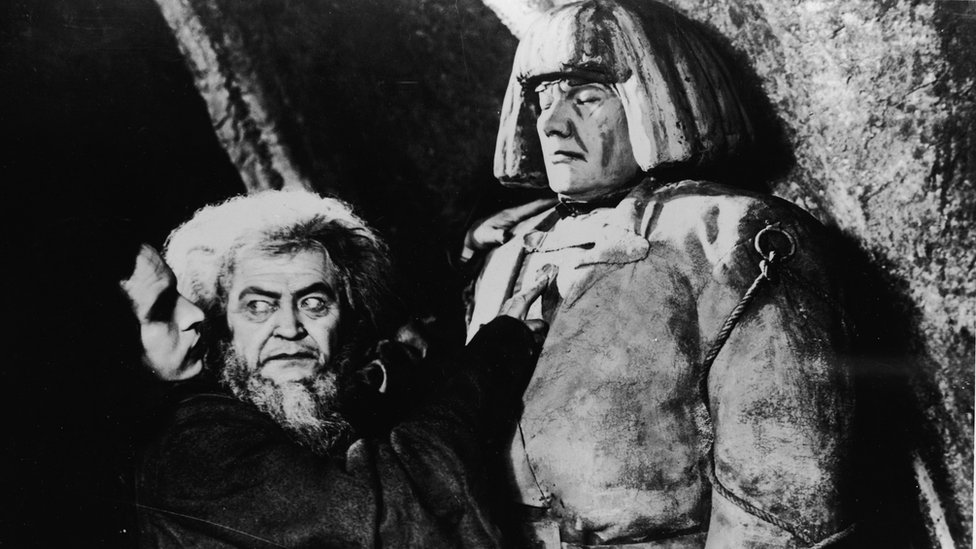
Keep in mind that at this stage, horror wasn’t really codified as a discrete genre that anyone would recognize, though some films would occasionally be described using that term. Most of the movies, as I mentioned, were adapted from existing literature or mythology. An example of that latter idea would be Paul Wegener’s The Golem from 1915, based around a type of monster from Jewish folklore. Only clips of The Golem, and its dark comedy sequel The Golem and the Dancing Girl from 1917, remain, but the third installment, 1920’s The Golem: How He Came Into the World, still exists in its entirety.

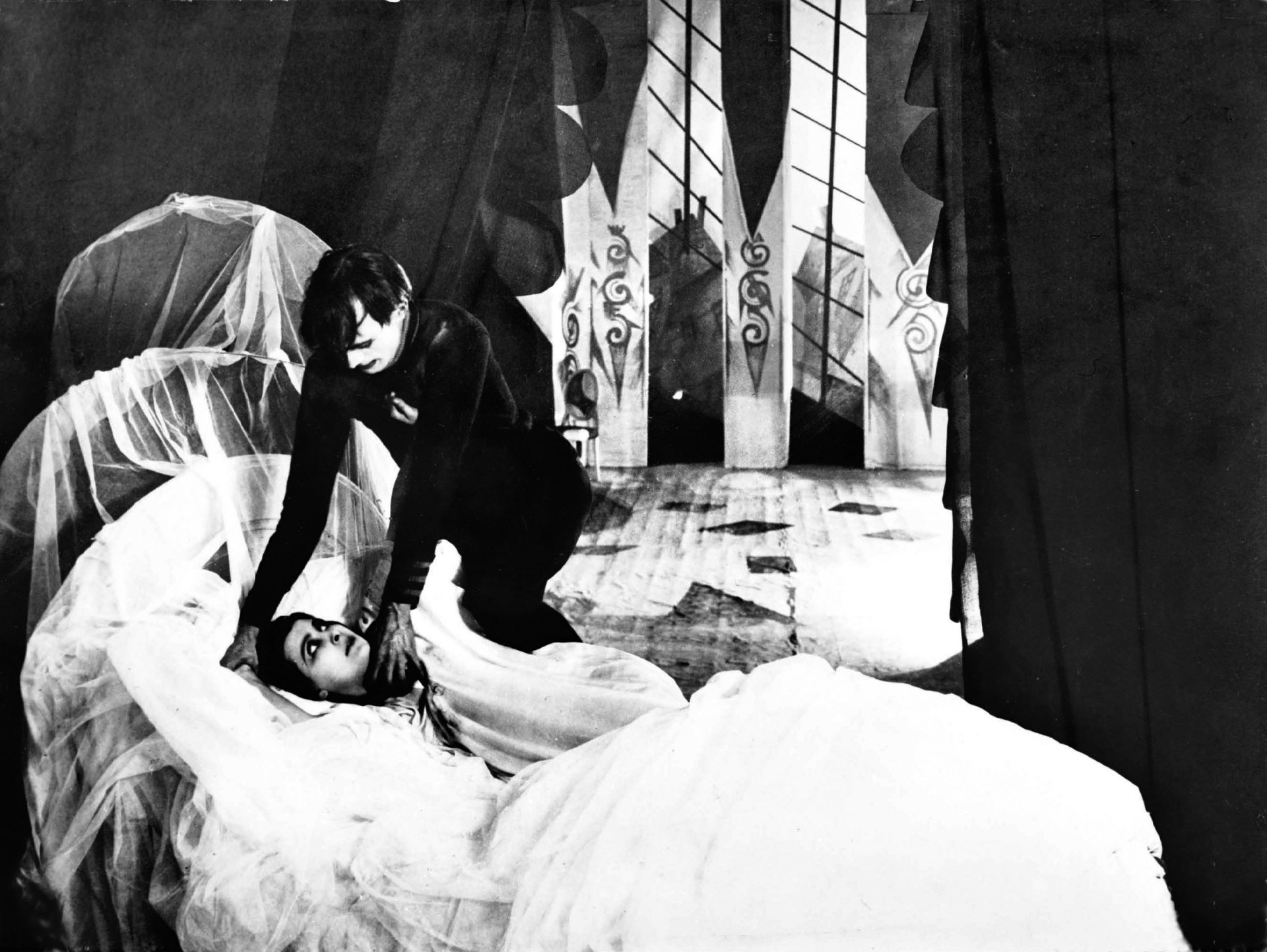
But by the time the 1920s dawned, it was all about German expressionism, baby, and the style came busting right out of the (oddly-shaped) gate with the surreal and dreamlike 1920 movie The Cabinet of Dr. Caligari. Expressionism’s whole purpose was to use images as exteriorized manifestations of a character’s inner turmoil, and since Francis, the character in Caligari who is telling us the story in flashback, turns out to be an inmate at an insane asylum (spoiler alert for a century-old movie…sorry), the entire film plays out against a bizarre, nightmarish backdrop of stark shadows, twisted buildings, and absolutely no right angles: a grim, phantasmagorical vision meant to signify Francis’s unstable mental state. The look of this movie is so fucking cool that it almost singlehandedly influenced the visual style of the iconic Universal monster movies that would come along a decade later, and anyone who’s a fan of Tim Burton’s films will immediately see where he got a lot of his aesthetic flair as well.
As far as the 1920s go, the other heavy hitter of horror was of course 1922’s Nosferatu, directed by F.W. Murnau and starring Max Schreck as the vampire, Count Orlok. The movie is a Dracula adaptation in all but name; Bram Stoker’s widow famously would not give Murnau permission to adapt the novel, so the German director tried to do an end run around her by…essentially making a straight Dracula movie, but just changing the names of the characters a little bit. Nice try (well…), but of course it didn’t work; Stoker sued, she won, and the judge ordered all copies of Nosferatu destroyed. Luckily for posterity, at least one lonely little copy survived somewhere, and now more than a century later, we can still watch this creepy-ass flick in all its spooky glory. Max Schreck really steals the show here, I have to say, and his appearance is so unsettling and inhuman that many years later, in 2000, E. Elias Merhige (of Begotten fame) would make a terrific little film called Shadow of the Vampire in which he presented the idea that Murnau (played by John Malkovich) had hired an actual bloodsucker (played by Willem Dafoe) to play the part of Count Orlok in the movie. Perhaps even more so than The Cabinet of Dr. Caligari, Nosferatu would set the standard for the burgeoning horror genre going forward, and as such its importance cannot be overstated.
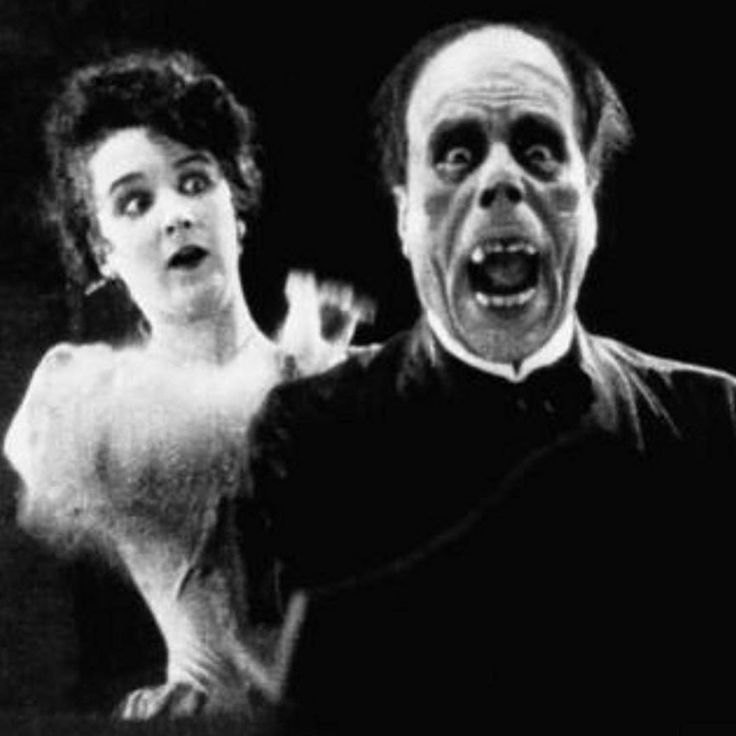
As you may have noticed, a lot of the really influential horror at this point was coming from Europe, but America certainly had its moments as well. Though the days of big horror stars like Bela Lugosi and Boris Karloff were still a few years away, Hollywood did have Lon Chaney, “The Man of a Thousand Faces,” who starred in loads of different kinds of films but is today remembered most fondly for his more horror-tinged turns in The Hunchback of Notre Dame (1923) and The Phantom of the Opera (1925), roles for which he designed and executed his own extraordinary makeup that still looks fantastic today. Lon Chaney also starred in one of the most famous “lost” horror films of the silent era, 1927’s London After Midnight, directed by Tod Browning. Just the stills alone are creepy as hell, and I’m really hoping this movie gets unearthed in my lifetime because I would love to see it.
Some of my other favorite horror films from the 1920s that I haven’t mentioned yet would include The Phantom Carriage (1920), Häxan (1922), The Hands of Orlac (1923), and The Man Who Laughs (1928), which incidentally was a huge influence on the look of the Joker from the Batman comics.
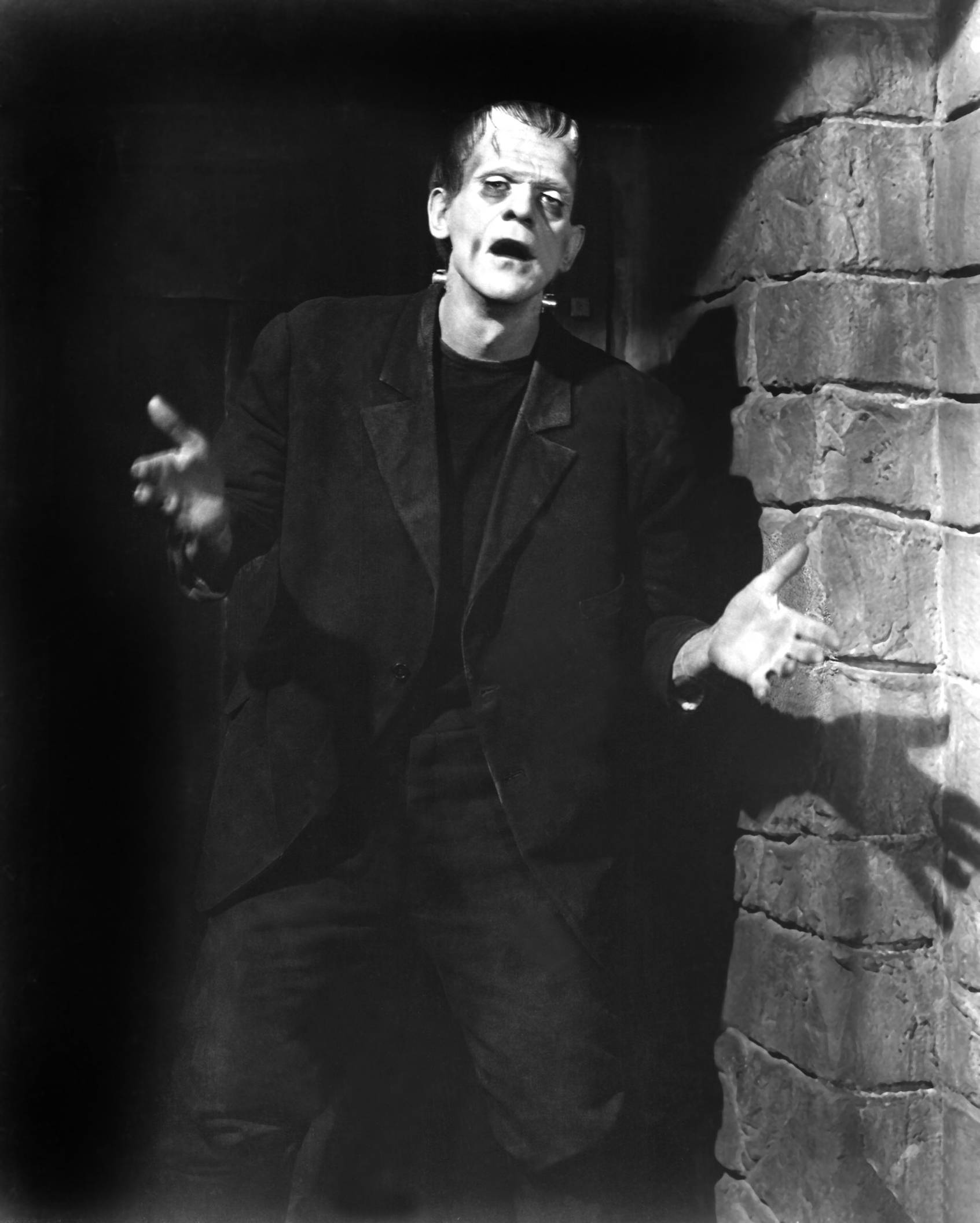


The 1930s would be a watershed decade for horror, as the genre would become its own recognized niche and produce a handful of iconic actors and films that are still revered to this day. The aforementioned Tod Browning ushered in the golden age of the Universal monsters with his 1931 Dracula, starring Hungarian actor Bela Lugosi, who had played the role in the Broadway stage version since 1927. Lugosi’s portrayal of the count differed significantly from the character in Stoker’s novel, who was more in line with the way he was represented in Nosferatu; indeed, I think it’s pretty fair to say that Bela Lugosi’s interpretation of the character has had the most impact on the way we perceive vampires in media today. In vampire folklore, the monster was almost always a disgusting ghoul in a bloodied shroud, but Lugosi made him a smooth, handsome, alluring nobleman. Think about it; if you go to a Halloween store and look for a “classic” vampire costume, it’s gonna look like what Lugosi wore in the play and the movie, and if you ask someone to put on that costume and act like a vampire, odds are very good that they’ll start doing Lugosi’s thick Hungarian accent. That right there is cultural indelibility, folks.
I’d like to mention here that during this era, studios would sometimes film a Spanish-language version of whatever movie they had going; they’d use the same script and the same sets, but all different actors. This was the case for Universal’s Dracula as well, and I will note that the Spanish version of the movie, directed by George Melford and starring Carlos Villarías as the Count, is absolutely worth watching, and in some respects is superior to the American version in my opinion, at least in regards to its more dynamic shot compositions and longer runtime, allowing more of the intricacies of the novel to appear on screen.
Anyway, Dracula was a big hit with both critics and audiences, and Universal figured they were onto a lucrative thing with this horror business, so they decided to strike while the iron was hot, immediately planning adaptations of Frankenstein and Poe’s “Murders in the Rue Morgue.” Bela Lugosi was famously offered the role of the monster in the upcoming Frankenstein film but turned it down because the role had no dialogue and he didn’t like the idea of his face being covered in heavy makeup and prosthetics. The role was instead awarded to a relatively little-known character actor by the name of Boris Karloff, and his stunning, sympathetic, but also pretty scary performance, as well as Jack Pierce’s iconic makeup design, ensured the movie’s wild success and unbelievable staying power.
Both Lugosi and Karloff were now major stars, horror was a hot genre, and Universal kept cranking out more spooky flicks for an eager public. Karloff returned to the screen in 1932’s The Mummy, a film that very much took the bones of the Dracula story and placed it in an Egyptian context. The makeup in that film, also by Jack Pierce, is likewise incredible, and although Karloff is only actually in the “wrapped” mummy getup for a tiny portion of the film, he’s so great as the more human sorcerer character Ardeth Bey that you won’t even mind (and the later sequels, none of which starred Karloff, would feature way more of a “wrapped mummy rampaging” plot, so check those out if that’s more your speed).
The two legends would also star in a bunch of movies together during the 1930s, including the amazing 1934 film The Black Cat (very loosely based on the Edgar Allan Poe story…sort of), and another Poe adaptation, 1935’s The Raven. Universal would put out a bunch of horror titles with different actors too, like The Old Dark House from 1932 (directed by James Whale, who also helmed Frankenstein) and 1933’s The Invisible Man, starring Claude Rains. Also, 1935 saw the release of Whale’s follow-up to Frankenstein, Bride of Frankenstein, starring Elsa Lanchester, which many people believe is superior to the original (though I’m actually not sure where I fall on that; I really like them both, so it’s almost like having to pick your favorite kid).
Meanwhile, the other studios saw how much cash Universal was raking in with these newfangled scary pictures, and started throwing their hats into the ring. For example, MGM made their own great adaptation of Dr. Jekyll and Mr. Hyde in 1931; Paramount made Island of Lost Souls, based on H.G. Wells’ novel The Island of Dr. Moreau, in 1932; and Warner Brothers released Mystery of the Wax Museum in 1933.
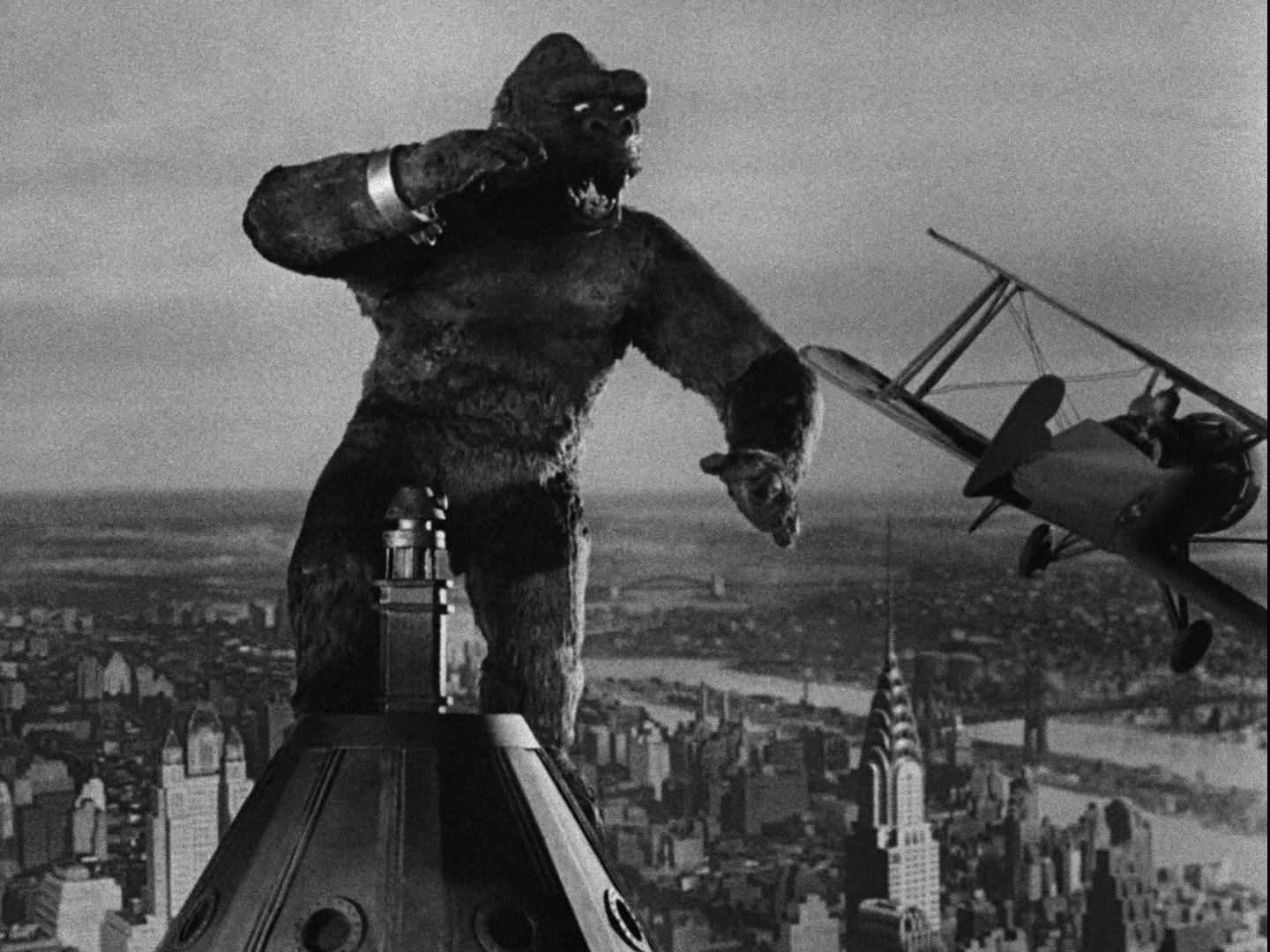
But among all the other studios, RKO would be the one to unleash another of the most important movie monsters upon the world with their 1933 film King Kong. Bolstered by the stupendous stop-motion effects of Willis O’Brien, the movie was a smashing success, spawning a number of sequels, offshoots, and reboots over the years, right up until the present.
Aside from all the excellent and important horror movies that came out during the 1930s, the other significant development of the decade, unfortunately, was the so-called Hays Code. Because some pearl-clutching ninnies somewhere believed that seeing vampires stalking busty young ladies and mad scientists bringing corpses back to life would decay the morals of society at large (or something), a sort of self-censorship agreement was established that drastically limited what you could show in a movie from 1934 all the way up to 1968 when it was replaced by the MPAA rating system we’re all familiar with today. The UK had a similar censorship thing going on, and in fact, it was their reluctance to show American horror movies in Britain that led to Hollywood studios making fewer horror flicks starting in 1936. The genre wouldn’t stay down for long, however, and by the end of the 1930s, both Dracula and Frankenstein were re-released, kicking off another string of sequels and increasing the genre’s popularity once again.


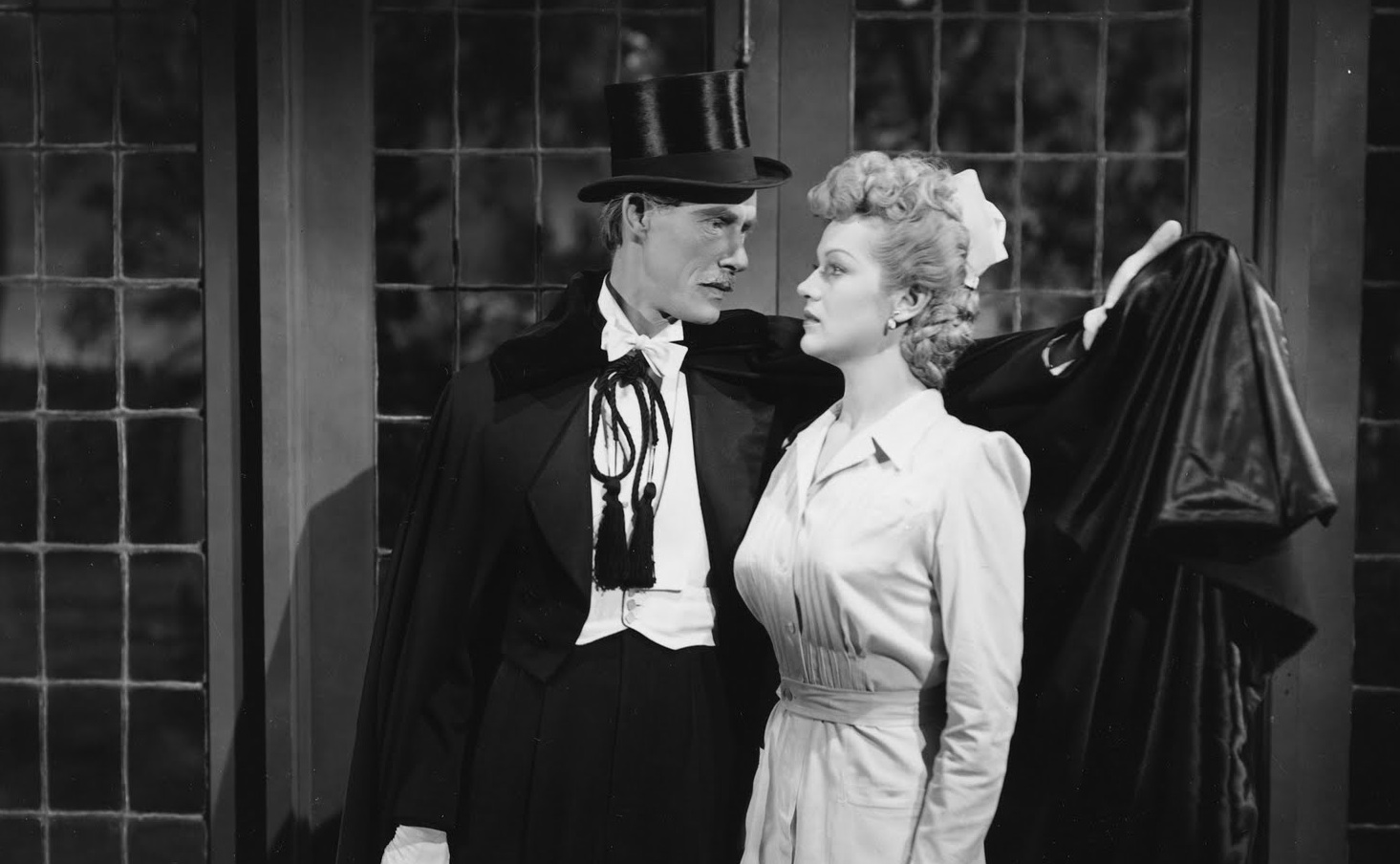

The early years of the 1940s, before the U.S. entry into World War II, were all about trading on beloved horror properties, and as such, Universal released movies like 1940s The Invisible Man Returns, 1941’s The Mummy’s Hand, 1942’s Ghost of Frankenstein, and 1943’s Son of Dracula. Probably the most important Universal film to come out in these years was 1941’s The Wolf Man, which established another of the classic monsters we still recognize today. The film starred Lon Chaney Jr. as the doomed Larry Talbot, and Universal was very keen to make him their next big horror star, placing him in several of the aforementioned films, playing Dracula, Frankenstein’s monster, and the mummy. Lon Chaney Jr., in fact, is the horror actor who played more of the classic monsters than anyone else (four of ’em, to be precise), with the only omissions being The Invisible Man and The Creature from the Black Lagoon, which came out much later anyway.
Since the monsters were so popular, Universal started doing all kinds of fun cross-overs with them, such as 1943’s Frankenstein Meets the Wolf Man and 1945’s House of Dracula; these pictures came to be known as “monster mashes” or “monster rallies.” There were also a host of smaller studios, like Monogram and PRC, looking to ape Universal’s success and putting out their own lower-budget flicks; sometimes they even got big-name horror actors like Bela Lugosi to star in their poverty row quickies, if said actors needed some ready cash.
RKO, makers of King Kong, were also looking to get into the low-budget horror film business and set up a new sideline headed by producer Val Lewton. The funny thing was that the studio would give Lewton a splashy title and expect him to come up with some lurid cheapie that would get butts in seats, but Lewton decided to go classy with it and make more sophisticated, psychological fare. Case in point was his wonderful 1942 film Cat People, which I’m sure the studio heads were envisioning to be a sexy lady version of The Wolf Man, complete with a hot babe transforming into a cat; but Lewton instead turned this general idea into a fascinating, ambiguous, and beautifully shot drama about a woman who supposedly transforms into a black panther when sexually aroused or jealous. Lewton also made another of the best horror films of the 1940s, I Walked with a Zombie from 1943.
As the decade went on, there was more of an emphasis on this kind of psychological horror, as the movie audiences had started to skew noticeably older. Alfred Hitchcock made Spellbound in 1945, and the awesome film The Spiral Staircase came out a year later. Much like today, though, these films were generally referred to as thrillers rather than horror movies, even though they absolutely had horror elements; it seems that audiences and critics were still associating the horror tag with rampaging monsters and supernatural creatures, rather than villainous human antagonists.
When the United States became involved in the Second World War, theater attendance declined precipitously, and it seemed as though the public taste for horror films took a particular hit, as very few of them were made in the latter part of the 1940s, though several of the classics were re-released during the period. I’ve heard a lot of experts theorize that this was probably because people were experiencing real horrors in their lives and didn’t have any desire to see fake ones; I don’t know if that’s true, though it sounds fairly reasonable, I guess. It’s always seemed to me that eras featuring a lot of social and cultural upheaval tend to produce the best horror films, as artists are working out their own anxieties through fiction, but it’s possible that the specific anxieties engendered by the war all came out in the movies of the following decade of the 1950s.


Although there were a few straggling “gothic” horror films that came out in the early 1950s, like 1952’s The Black Castle with Boris Karloff, and 1953’s House of Wax with Vincent Price, the general perception in Hollywood was that all those creaky old classic monsters were pretty passé, and by this time, the iconic horror stars of the golden era were mostly starting to age out a bit. Bela Lugosi, in particular, seemed to have the hardest time shedding his typecasting and ended up a drug addict who was compelled to appear in no-budget schlock like that put out by the likes of Ed Wood (not that Ed Wood’s movies aren’t entertaining, because they are, but they’re entertaining largely because they’re so terrible). That said, the classic monsters didn’t disappear from the cinema landscape entirely, but their stories were retooled to fit into the more sci-fi framework that was the hallmark of the era.
Science fiction was the trending subgenre in the 1950s, and movies went all in with themes of science gone wrong and alien invasions. Christian Nyby’s 1951 The Thing from Another World (based on the novella Who Goes There? by John W. Campbell and of course “remade” by John Carpenter in 1982 as The Thing) was one of the most influential films of the era and spawned an enormous number of similar flicks about nefarious extraterrestrials, such as It Came from Outer Space and Invaders from Mars (both from 1953), Invasion of the Body Snatchers (1956), and It! The Terror from Beyond Space (1958). There was also, it should be noted, a classic flick with a sympathetic, helpful alien visitor, 1951’s The Day the Earth Stood Still, but this was a rarer theme amid the era’s growing paranoia due to the Cold War.
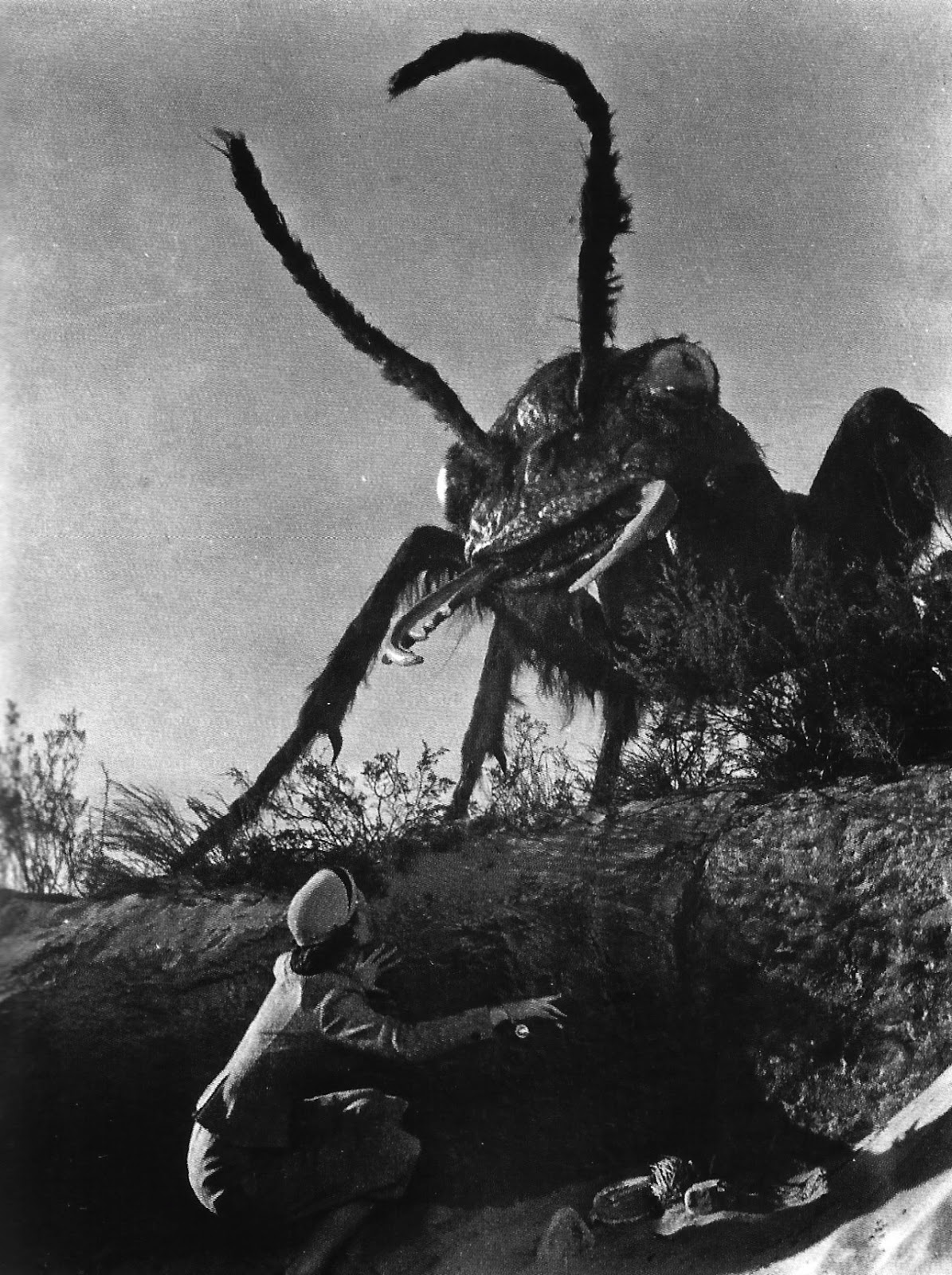
Other mini-trends of the 1950s included the so-called “big bug” movies, the best of which was Them! from 1954, about giant ants; but there was also It Came from Beneath the Sea (1955, about a big-ass octopus), Tarantula (1956), The Deadly Mantis (1957), Beginning of the End (1957, about swarms of giant locusts), Earth vs. the Spider (1958), The Giant Gila Monster (1959), and Attack of the Giant Leeches (1959). These films inevitably gave radiation as the reason for the animals growing to such alarming proportions, thus revealing the culture’s overriding unease with the burgeoning nuclear arms race and the threat of creeping Communism and annihilation under a mushroom cloud. Radiation was also responsible for easily the most enduring monster of the 1950s, good old Godzilla, whose first film rampaged out of Japan in 1954 and started a franchise that’s still crushing buildings underfoot in the 21st century.
A brief craze for 3D films also came and went in the first few years of the decade, and the latter half of the 1950s saw the fleeting but glorious trend of the “gimmick” film, mostly propounded by director William Castle. The Tingler and The House on Haunted Hill, both from 1959 and both starring Vincent Price, featured some fun things going on live in the theater where the movies were playing. The Tingler, for example, which was about a kind of centipede-looking parasite that lived in people’s spinal columns and caused fear but could be dislodged by screaming, had a gimmick whereby theaters showing it would rig up some seats with buzzers that would replicate a tingling sensation down patrons’ backs. There was also a sequence in the movie where the Tingler got loose in a movie theater, and the movie itself would go black, with the voice-over on the film urging everyone in the audience to scream to frighten the Tingler away. By the same token, The House on Haunted Hill boasted something called “Emergo,” which was in reality just a glow-in-the-dark skeleton that would come out from behind the screen on a wire and fly over the audience’s heads during the climax of the film.
There was also a growing recognition of the “teen” subculture, and studios were quick to capitalize, releasing stuff like I Was a Teenage Werewolf and I Was a Teenage Frankenstein, both from 1957. There were also low-budget flicks like Teenagers from Outer Space from 1959, which featured some teenagers in their late thirties who came to Earth dressed in unflattering jumpsuits and were looking for a safe place to farm their giant pet lobsters. And no, I did not just make that up.
I would also be remiss if I didn’t point out that Hammer Film Productions also came into their own during the 1950s. In the first part of the decade, they focused mainly on black-and-white science fiction films much like their American counterparts, but in 1957, they decided to go back in time and revisit some of the Universal monsters of old, but in saturated color and with much more gore and semi-nudity. The Curse of Frankenstein (1957) and Dracula (1958; released as The Horror of Dracula in the U.S.) came out of the gate swinging, not only introducing two new horror icons in the forms of Peter Cushing and Christopher Lee, but simultaneously updating the gothic monsters for a new generation, a business model that would bring the studio great returns for years to come.



The 1960s was the decade that changed everything in regard to horror movies, as it changed so many other things culturally. 1960 saw the release of two films that served as something of a precursor to the slasher films of later years: Michael Powell’s Peeping Tom, and of course, Alfred Hitchcock’s Psycho (based on the novel by Robert Bloch, which in turn was very loosely based on real Wisconsin grave robber and murderer Ed Gein). There had been movies about serial killers before—Fritz Lang’s M from 1931 and Charles Laughton’s The Night of the Hunter from 1955 spring to mind—but they had mostly turned up in thrillers or film noir, and their psychology hadn’t really been deeply explored. The fact that both Psycho and Peeping Tom featured killers who were initially sympathetic to the audience was pretty novel, and probably went a long way toward explaining why Peeping Tom in particular was considered so scandalous by British audiences that it essentially ruined Michael Powell’s career.
Alfred Hitchcock, of course, suffered no such dire repercussions, though Psycho itself was quite controversial upon release, not least because of its violence (which is only cleverly implied and not graphically shown), the fact that the ostensible protagonist was a thief who was shown in bed with a man she wasn’t married to, and the further revelation that this supposedly “main” character (played by Janet Leigh) gets murdered less than halfway through the story. The movie is still a compelling watch to this day, specifically due to its outstanding lead performance by Anthony Perkins, and I’d also argue that the sequels are way better than they have any right to be, particularly Psycho II from 1983. Psycho is another movie whose impact on the genre is akin to an atom bomb; in fact, many experts have stated that the horror film genre can be neatly divided into two distinct categories: movies before Psycho, and movies after Psycho.
Because the 60s was such a tumultuous era, filmmakers seemed to be pushing envelopes all over the place, experimenting with taboo subjects and testing the limits of what could be portrayed on screen. 1960 was also notable for the release of the excellent French film Eyes Without a Face, an eerie drama about a disfigured woman whose mad scientist father keeps killing girls in order to graft their faces onto hers. The movie includes a scene where the doctor very dispassionately slices the skin of a girl’s face with a scalpel and peels the whole thing off, and even though the movie is in black and white and looks somewhat tame by today’s standards, I can imagine that audiences in 1960 were probably horrified to the point of fainting.
Italian maestro Mario Bava also upped the ante with his black-and-white witchcraft tale Black Sunday, starring Barbara Steele. The film was far more violent than almost anything else audiences had seen up to that point, and the opening sequence, where a spiked iron mask is nailed onto a woman’s face, was especially shocking for the time. Bava would go on to craft another ultraviolent masterpiece, 1964’s Blood and Black Lace, a giallo film that was a major influence on later horror legends Dario Argento and Lucio Fulci. Bava’s particular blend of eroticism and horror would also be mirrored in the 60s-era films of other European directors like Spaniards Jesus “Jess” Franco and Paul Naschy (real name Jacinto Molina), and Frenchman Jean Rollin.
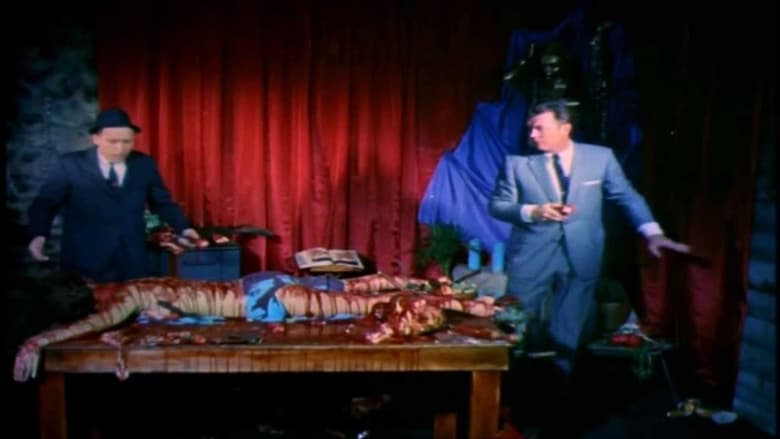
Meanwhile, back in the United States, a Pittsburgh filmmaker named Herschel Gordon Lewis decided to go much, MUCH further than anyone ever had, pretty much singlehandedly inventing the splatter subgenre. 1963’s Blood Feast and 1964’s Two Thousand Maniacs! were orgies of blood, amputation, and cannibalism, and despite their exceedingly cheap production values and questionable acting, the movies were major financial successes, paving the way for the more extreme gore flicks that were still yet to come.
It wasn’t all guts and grue, though, and actually, a couple of the best movies of the decade were classy, old-school ghost stories. 1961’s The Innocents (based on Henry James’s The Turn of the Screw) and 1963’s The Haunting (based on Shirley Jackson’s The Haunting of Hill House) wrung ample scares from shadowy cinematography and spooky ambiguity, without showing anything overtly frightening at all. Stately ghost stories were also making waves in Japan and worldwide, with 1965’s Kwaidan even being nominated for an Academy Award.
Roger Corman also became a prominent figure in horror in the early to mid-1960s, working with the smaller studio American International Pictures (AIP). Corman had started making low-budget films in the mid-1950s, including several westerns and teen flicks, but he also made some horror and sci-fi, including It Conquered the World in 1956, Attack of the Crab Monsters in 1957, and A Bucket of Blood in 1959. But in 1960, Corman would kick off his most critically acclaimed series of films with the first of his iconic Edgar Allan Poe adaptations, House of Usher, starring Vincent Price and with a screenplay by famed horror scribe Richard Matheson. Seeking to compete with the gorgeous technicolor gothic films beginning to emerge from Hammer, Corman would ultimately direct seven more Poe adaptations, including The Pit and the Pendulum (1961), The Premature Burial (1962), Tales of Terror (a 1962 anthology featuring four Poe stories), The Raven (1963), The Haunted Palace (a 1963 film that’s considered part of the Poe cycle, even though in reality it was an adaptation of H.P. Lovecraft’s novella The Case of Charles Dexter Ward), The Masque of the Red Death (1964), and The Tomb of Ligeia (1964). With the exception of The Premature Burial, which starred Ray Milland, all of the Poe films featured Vincent Price in the lead role. Some of the films also brought back classic horror actors like Boris Karloff, Peter Lorre, and Lon Chaney Jr.
Back in Britain, Hammer was getting some more competition on its own turf when upstart studio Amicus Productions began making horror films as well, though they sought to carve out their own niche by eschewing gothic stories and going with more contemporary tales, such as those appearing in EC Comics or written by Robert Bloch (author of Psycho). They focused heavily on anthology films such as Dr. Terror’s House of Horrors (1965) and Torture Garden (1967), some of which starred Hammer stalwarts Christopher Lee and Peter Cushing. But they also made a handful of straightforward horror movies, like The Skull from 1965 and The Psychopath from 1966.
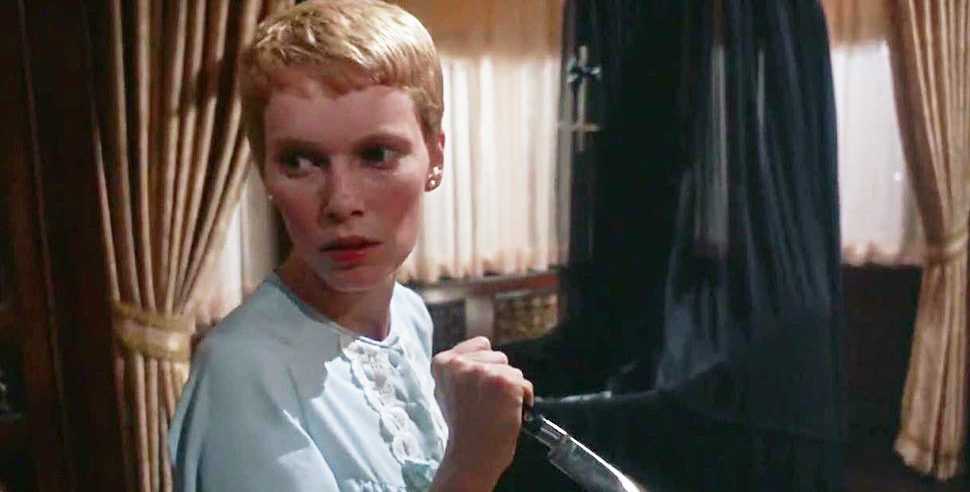
In 1968, two momentous films were released that would have a significant impact on the genre going forward. One of these was Roman Polanski’s Rosemary’s Baby, based on the best-selling novel by Ira Levin. The film was the second in Polanski’s loosely-themed “apartment trilogy,” the first of which was the disturbing psychological horror film Repulsion from 1965, and the third of which was the extremely unsettling thriller The Tenant from 1976. Rosemary’s Baby‘s blend of Satanic themes, paranoid horror, and extremely dark humor was a hit both with audiences and with critics and paved the way for a number of occult-focused horror movies in the following decade.
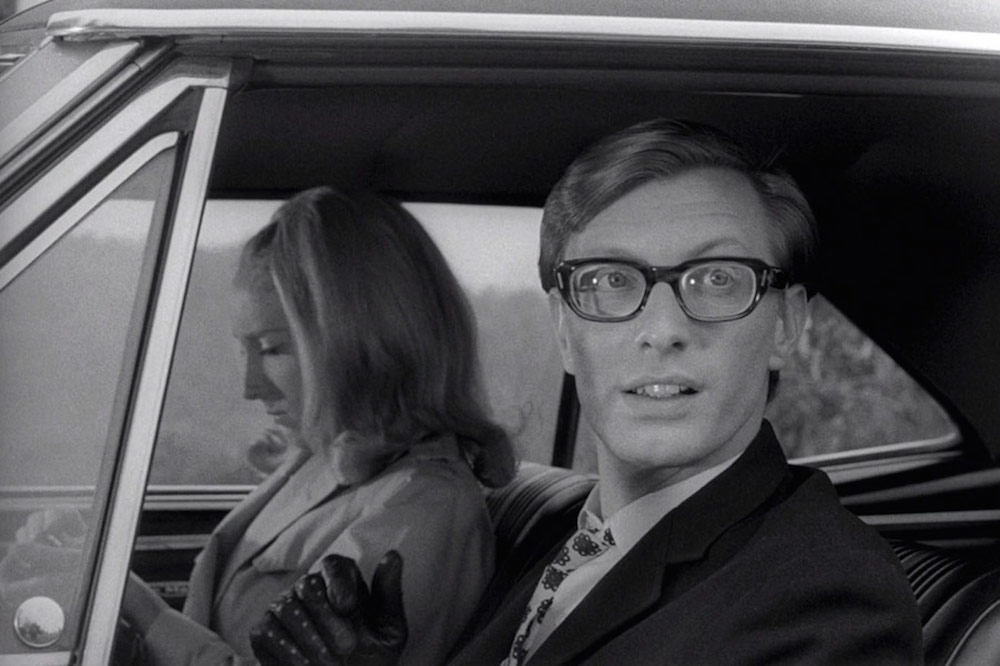
The other massively influential movie that dropped in 1968 came from the opposite end of the spectrum, so to speak. Whereas Rosemary’s Baby was a major studio release from a respected European director with a cast of well-known actors, Night of the Living Dead was the very low-budget, independent debut of scrappy Pittsburgh filmmaker George A. Romero. The movie, shot in black and white to keep costs low and featuring no known actors, was like a lightning strike to the horror genre, a terrifying and gruesome siege narrative that introduced the current concept of the zombie to the culture at large in one fell swoop. Notable for its distressing violence—such as shambling ghouls clearly eating people’s body parts, and a zombified girl murdering her own mother with a garden trowel—the film also featured some (probably unintentional) social commentary in the form of its black hero (all but unheard of at the time) being gunned down by small-town rednecks at the end after being mistaken for one of the zombies. Night of the Living Dead remains one of the seminal films in horror history, as it established modern zombie lore and spawned a subgenre so vast that no matter your current age, you probably won’t live long enough to watch every movie about zombies that’s been made since then.
A short list of more of my favorite 1960s horror films that I haven’t yet mentioned would include Mr. Sardonicus (1961), Carnival of Souls (1962), Burn, Witch, Burn (aka Night of the Eagle, 1962), The Birds (1963), Black Sabbath (1963), Dementia 13 (1963; the film debut of Francis Ford Coppola), The Last Man on Earth (1964), Onibaba (1964), Kill, Baby, Kill (1966), Persona (1966), The Fearless Vampire Killers (1967), Quatermass and the Pit (1967), The Devil Rides Out (1968), Hour of the Wolf (1968), and Witchfinder General (aka The Conqueror Worm, 1968).
Then came the 1970s, which for my money is still the best overall decade for horror. If the 1960s were all about boundary-breaking firsts, the 1970s took those initial seeds and grew all kinds of interesting monstrosities in a number of diverse styles and subgenres.
Over in Italy, the influence of Mario Bava’s Blood and Black Lace, and the popularity of the written mystery stories and crime thrillers of authors like Edgar Wallace, had initiated a short-lived but mind-bogglingly prolific boom in giallo films, more than thirty of which were made in the 1960s alone. At the start of the 1970s, young filmmaker Dario Argento crafted his debut film The Bird with the Crystal Plumage, a stylish murder mystery with a twisty plot and some absolutely brutal kills, and this movie only accelerated Italian audiences’ craving for these types of movies, causing an explosion that comprised hundreds of films in the following two decades. Argento returned to the genre three times in the 1970s, releasing The Cat O’Nine Tails and Four Flies on Grey Velvet in 1971, and the awesome Deep Red (aka Profondo Rosso) in 1975, considered one of the quintessential examples of the form.
Other notable directors of gialli included Sergio Martino (The Strange Vice of Mrs. Wardh, Your Vice is a Locked Room and Only I Have the Key, Torso), Luciano Ercoli (Forbidden Photos of a Lady Above Suspicion, Death Walks on High Heels, Death Walks at Midnight), Umberto Lenzi (Paranoia, Orgasmo, So Sweet…So Perverse), Aldo Lado (Short Night of Glass Dolls, Who Saw Her Die?), and Lucio Fulci (A Lizard in a Woman’s Skin, Don’t Torture a Duckling, Seven Notes in Black aka The Psychic). Lenzi and Fulci in particular would become much better known in the United States for their graphic gore films; Lenzi would go on to make the notorious flicks Eaten Alive! and Cannibal Ferox, while Fulci would become beloved as The Godfather of Gore with his absolutely stomach-churning films Zombi 2, City of the Living Dead, The Beyond, The House by the Cemetery, and The New York Ripper.
Mario Bava, interestingly, would also make several more giallo films in the 70s, including Hatchet for the Honeymoon and Five Dolls for an August Moon, but perhaps the most noteworthy of these was his 1971 film A Bay of Blood (aka Twitch of the Death Nerve), which was a very obvious (and enormous) influence on the slasher subgenre, and featured two scenes that were blatantly ripped off (ahem…”homaged”) in 1980’s Friday the 13th and 1981’s Friday the 13th Part 2. While a good argument could be made that Psycho or Peeping Tom were technically the first slasher movies, A Bay of Blood, in my opinion, is the first film that modern audiences would unequivocally recognize as a slasher, as many of the later tropes associated with the subgenre are plainly evident, such as killer POV shots and the old sex=death situation.
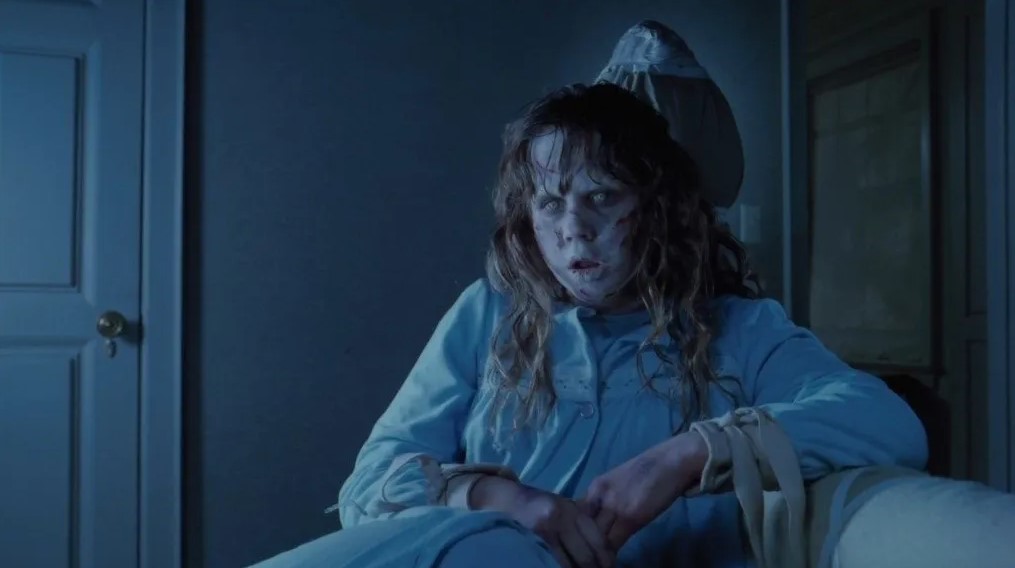
Back in the States, the shock waves from Rosemary’s Baby were still being felt, and the concept of exploring occult-themed horror within a more “prestige” Hollywood framework produced one of the watershed films of the 70s and the horror genre as a whole: 1973’s The Exorcist. Adapted from a popular 1971 novel by William Peter Blatty, which was loosely based around the “real” exorcism of a young boy that took place in the 1940s, the film was a cultural phenomenon and ended up being nominated for ten Oscars, including Best Picture. Audiences were stunned by the grim realism of the film and its willingness to completely annihilate taboos; the movie, after all, very frankly showed an innocent twelve-year-old girl getting possessed by the Devil and subsequently turning into a foul-mouthed, vomit-caked hellbeast who not only masturbated with a crucifix but then shoved her own mother’s face into her bloody vagina. It was, in modern vernacular, a lot.
More Satanic flicks followed in the wake of The Exorcist, such as Abby (a blaxploitation take that came out in 1974), Beyond the Door (1974), The Devil’s Rain (1975), Race with the Devil (1975), To the Devil a Daughter (1976), and The Omen (1976).
Other than the Devil, vampires were also back in a big way in the 1970s. In England, Hammer brought Dracula into the modern age with Dracula A.D. 1972 and Satanic Rites of Dracula, which featured Christopher Lee in his last two appearances as the titular count. American director Bob Kelljan trod similar ground with Count Yorga, Vampire (1970) and The Return of Count Yorga (1971). Paul Morrissey, an associate of Andy Warhol, made Blood for Dracula in 1974, adding copious amounts of perversion and gore, just as he had done for the previous year’s Flesh for Frankenstein. In a blaxploitation vein (heh), both Blacula from 1972 and its sequel Scream Blacula Scream from 1973 were complete aces, and kicked off a bit of a boomlet in blaxploitation horror, which included the not-very-good Blackenstein (1973) and the actually pretty awesome Ganja and Hess (1973). Later on in the decade, Count Dracula would haunt movie screens once again in a romantic 1978 adaptation of Stoker’s novel directed by John Badham; and Werner Herzog would release a remake of Nosferatu in 1979, starring the always off-putting Klaus Kinski as the vampire.
If the 1950s was somewhat known for its radiation-driven “big bug” films, the 1970s was likewise a decade of rampaging creatures, though in the latter case, the cause of the trouble was usually an environmental pollutant of some kind. Most likely spurred by the 1962 publication of Rachel Carson’s nonfiction work Silent Spring, about the dangers of chemical pesticides, 1970s cinema saw all sorts of animals mutating and growing enormous and/or super aggressive toward the humans that had thoughtlessly fucked up their habitats. You saw killer rats (Willard from 1971 and Ben from 1972), giant killer bunny rabbits (Night of the Lepus, 1972), killer frogs, alligators, birds, and butterflies (Frogs, 1972), and killer earthworms (Squirm, 1976). And in the midst of all this “nature takes revenge” brouhaha emerged a movie that would not only be a massive hit around the world but would also change pretty much everything about the way movies were released and marketed: Steven Spielberg’s Jaws, from 1975.
Though not really an eco-horror in the strictest sense, since the great white shark in Jaws was not obviously affected by environmental factors and was seemingly just an asshole, the nature-run-amok theme was still prevalent throughout, as was the message that unfettered capitalism—in this case keeping the beaches open despite the shark attacks and failing to warn swimmers about the gigantic and very hungry behemoth in the area—can get people killed.
The movie holds up beautifully nearly fifty years later and is a master class in suspense-building and effective characterization. Famously, the mechanical shark, Bruce, not working all that well and hence not appearing on screen as often as was initially intended only made the movie better, as horror movies are normally much scarier when the monster still retains some mystery.
While moviegoers in the 21st century have become accustomed to massive “tentpole” films coming out in the summertime, there was actually no concept of a “summer blockbuster” at all prior to the release of Jaws. Movies just came out whenever, usually with no consideration of their genre or budget. The summer debut of Jaws, though, was so successful—until the release of Star Wars two years later, it was the highest-grossing film of all time—that it changed the entire Hollywood model for the release and marketing of movies.
Following the sensation caused by Jaws, knockoffs were inevitable; 1976’s Grizzly was essentially “Jaws but with a pissed-off bear,” 1976’s Mako: The Jaws of Death was “Jaws but with a different species of shark,” 1977’s Orca was “Jaws but with a killer whale,” and 1978’s Piranha was “Jaws but with…well, piranhas.” Not to say that those films were bad; they were mostly pretty fun and I’d argue that Piranha actually flirts with greatness, having been directed by no less a horror icon than Joe Dante. Italy also made some blatant cash grabs with Tentacles (1977, about a giant octopus), Great White, aka The Last Shark (though that didn’t come out until 1982), and Monster Shark, aka Devil Fish (which was directed by Lamberto Bava and featured a genetic hybrid between an octopus and a prehistoric shark; it didn’t come out until 1984).
Other eco-horrors that turned up later on in the decade included Day of the Animals (1977), Kingdom of the Spiders (1977), Food of the Gods (1976) and Empire of the Ants (1977, both of which were based on works by H.G. Wells), The Swarm (1978), and Prophecy (1979).
The 1970s were also the proving ground for upcoming young directors who would contribute massively to the genre going forward. Wes Craven burst onto the scene with the absolutely merciless Last House on the Left (1972), an exploitation-style take on Ingmar Bergman’s 1960 film The Virgin Spring. Craven would later score another horror hit with his second film, 1977’s The Hills Have Eyes, loosely based on the legend of Scottish cannibal Sawney Bean and his murderous clan.
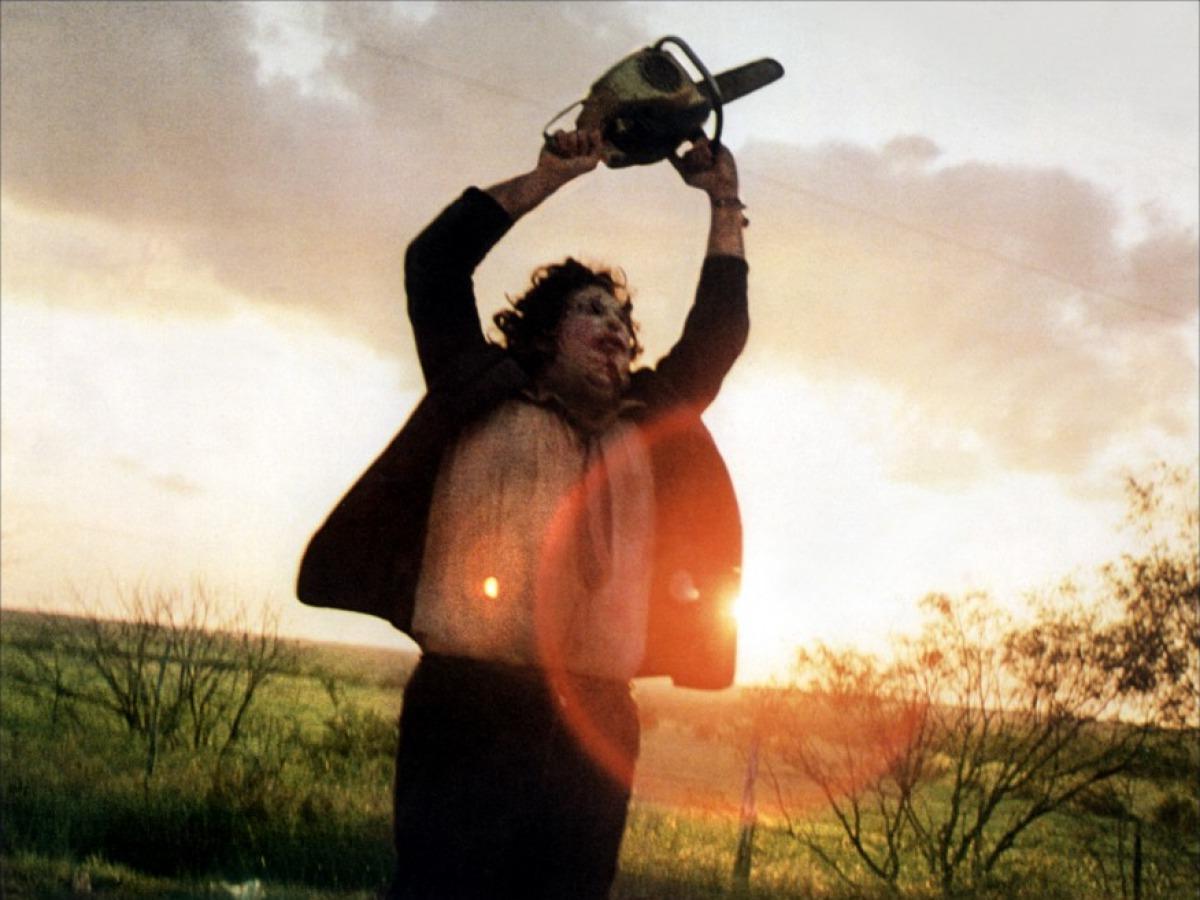
Tobe Hooper also cemented his status as a master of the genre with the hugely influential film The Texas Chainsaw Massacre in 1974. Despite its lurid title and subject matter, the movie is relatively free of graphic gore; Hooper’s genius was using clever editing and misdirection to make the audience think they saw a lot worse shit than what was actually there. Texas Chainsaw is a visceral experience, intense and revolting, and makes you genuinely glad that movies aren’t shown in smell-o-vision. It also introduced Leatherface, a character who would become one of the iconic faces carved onto the Mount Rushmore of horror villains.
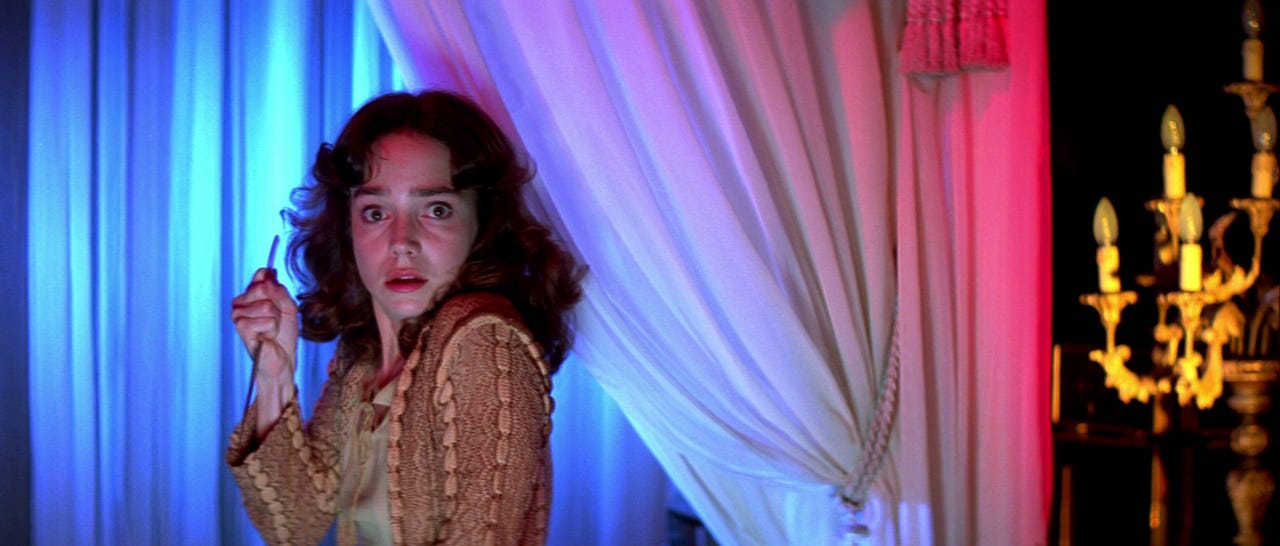
1976 saw the release of Brian de Palma’s Carrie, a brilliant and darkly funny adaptation of Stephen King’s debut novel about a ruthlessly bullied high-school girl who uses her burgeoning psychokinetic powers to get revenge on her tormentors. And 1977 was the year of Dario Argento’s Suspiria, a departure from his previous giallo films into the realm of the fairy-tale fantastical. The movie, one of the most visually stunning ever made and modeled somewhat after Snow White, concerns an American dancer who discovers that the German ballet school she’s attending is a front for a coven of powerful witches.
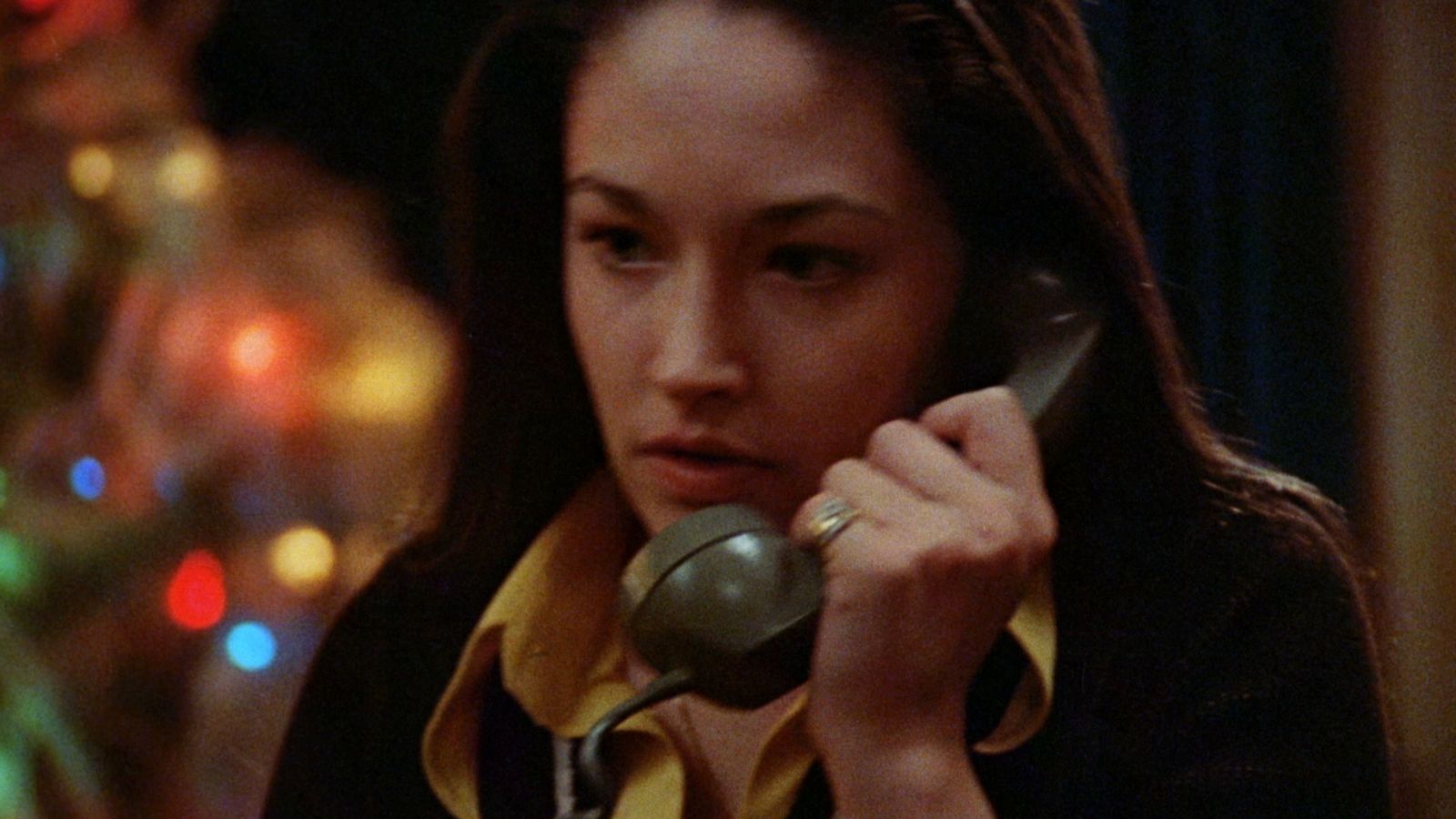
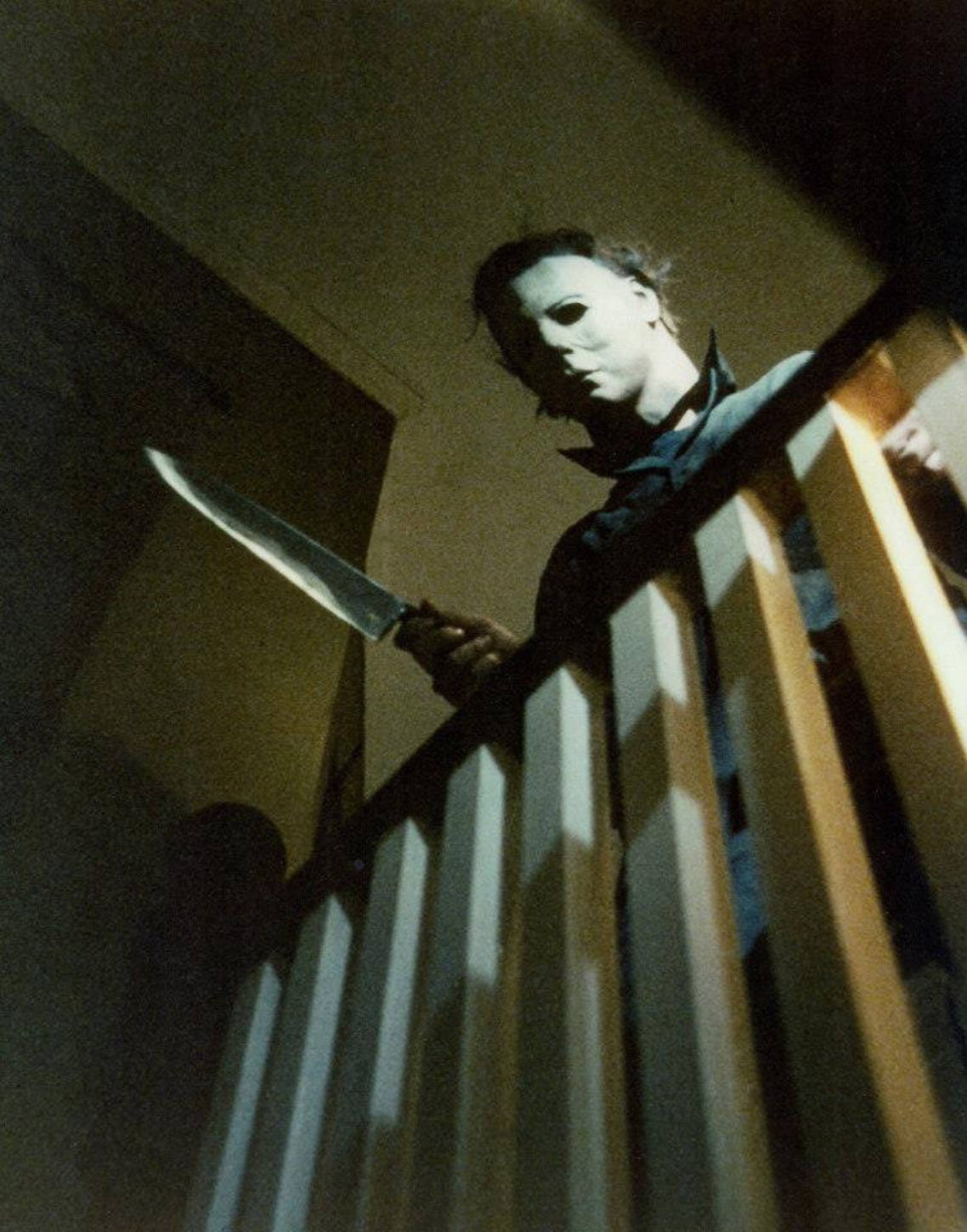
In 1978, another of the most influential films in horror was released, one whose repercussions would be felt for decades to come and whose success would spawn a franchise that’s still going strong more than forty years later. John Carpenter’s Halloween had a deceptively simple premise, partly inspired by films like Psycho and Bob Clark’s Black Christmas (1974) and mired in urban legends about babysitters being stalked by relentless killers. Jamie Lee Curtis’s virginal lead character Laurie Strode became the prototype of the “final girl,” and the actress herself was propelled to “scream queen” status, particularly after starring in several more horror films (The Fog, Prom Night, and Terror Train) in the years following the success of Halloween. She would also go on to reprise her original role in a number of sequels.
The film also gave us another of the horror villain hall-of-famers in the form of Michael Myers, a silent, hulking menace wearing an all-white mask that was originally an altered mask of William Shatner as Captain Kirk. In the first film, a great deal of the effectiveness stems from Michael’s creepy stillness, and indeed, the original intent of the character was to make him essentially a blank slate, a boogeyman, a personification of evil. In the credits of the original Halloween, the killer is referred to only as “The Shape,” and Donald Pleasence’s character of Dr. Loomis is instrumental in conveying to the audience how malevolent is the force that animates his former patient. Later films tried to mythologize Michael Myers’s backstory and even give him blatant supernatural powers, but the original film is still the scariest in my opinion because it left everything ambiguous and didn’t try to over-explain shit. I hate it when movies do that, in case you couldn’t tell.
1979 saw the release of the iconic haunted house film The Amityville Horror, supposedly based on the true story of a demonic haunting at the Lutz family home, which had previously been the scene of a multiple homicide carried out by Ronald DeFeo, Jr., who killed his entire family with a shotgun and later blamed it all on “voices.” That part of the story is true, but whether or not the subsequent haunting has any basis in reality is entirely up to you to decide; real or not, the film was undoubtedly effective, raked in big box office, and kicked off a franchise that as of this writing numbers more than forty films, though most of them have nothing at all to do with the original story and are just trading on the Amityville name to lure audiences.
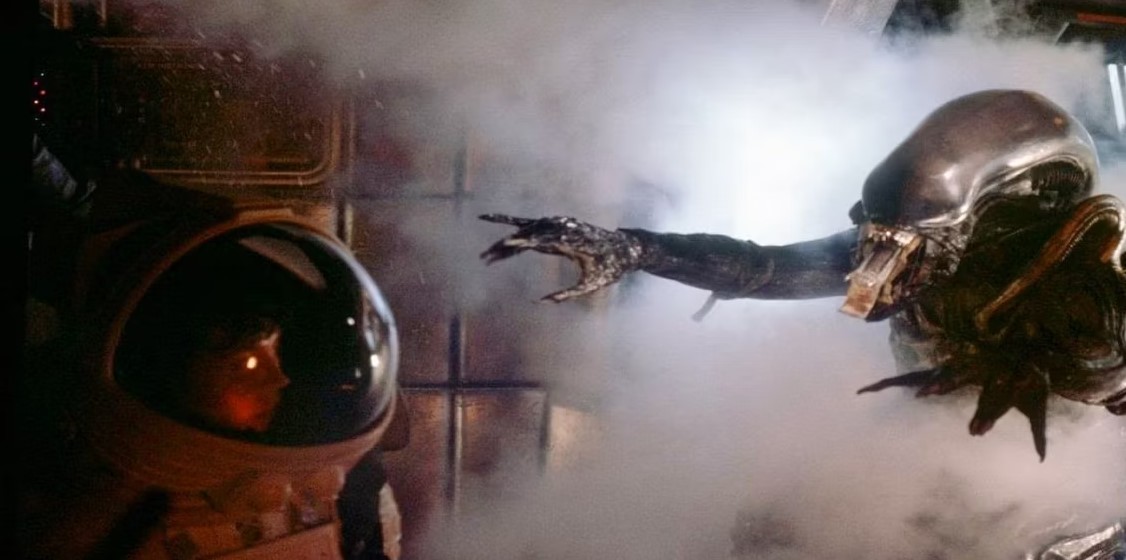
Before the decade was out, there was just one more shot in the arm to the horror genre, one which saw the scares coming not from knife-wielding weirdos or chomp-happy sea creatures, but from the vastness of space. Ridley Scott’s Alien, heavily influenced by 1958’s It! The Terror from Beyond Space but most definitely its own distinct thing, hit theaters in 1979 and gave audiences their first, pants-shitting look at one of the most horrifying creatures ever put to film: the later-named xenomorph, designed by eccentric Swiss artist H.R. Giger.
Many critics have classified Alien as basically a haunted house movie in space, which is true as far as it goes. Much of the suspense is generated by seeing these likable, competent characters being stalked through spooky hallways by a monster whose full form isn’t revealed until well into the story. The movie also features one of the best horror scenes—and one of the best jump scares—of all time: the sequence where John Hurt’s character, Kane, has a phallic baby alien suddenly burst out of his chest. Not only that, but Alien introduced the world to easily one of the most badass female characters in film history, Sigourney Weaver’s Ripley, a no-nonsense warrant officer whose ass-kicking awesomeness resides comfortably alongside a deep, nurturing compassion that sees her rescuing the Nostromo’s cat Jones from certain doom, a move which I always really appreciated, being a cat lover myself. Alien is just a masterful film by any metric, is still scary and effective today, and is required viewing for anyone new to the genre.
A grab-bag of some of my other favorite 70s horror movies that I haven’t mentioned so far would include Let’s Scare Jessica to Death (1971), The Blood on Satan’s Claw (1971), The Wicker Man (1973), Don’t Look Now (1973), The Legend of Hell House (1973), Black Christmas (1974), Trilogy of Terror (1975), God Told Me To (1976), Burnt Offerings (1976), Invasion of the Body Snatchers (1978), Salem’s Lot (1979), and Phantasm (1979). Some 70s-era films from George Romero and David Cronenberg would be on the list too, but I’ll be discussing them later, when I get into talking about the 1980s and all the iconic horror directors individually.




The 1980s was an interesting decade for horror, generally trading less on the more auteur-driven films of the 1970s and focusing more on low-budget, gory, lurid flicks that would appeal to consumers of the burgeoning home video market. The first horror film to be released in the new decade, as a matter of fact, was a Christmas slasher, To All a Goodnight, directed by Last House on the Left actor David Hess. The movie wasn’t all that good, though, and soon became overshadowed by the avalanche of cheapie slashers that followed in the wake of 1978’s Halloween.
Speaking of which, one of the most influential of said cheapies was Sean S. Cunningham’s Friday the 13th (1980), unashamedly intended as a Halloween ripoff but having its own scuzzy charm that resonated hard with fans, who made it one of the longest-running franchises in horror. Though To All a Goodnight got there first (even featuring a crazy Ralph doomsaying character, and the “mother killing in revenge for her child” trope four months before Friday the 13th‘s Mrs. Voorhees), Friday had the most staying power, cementing the hockey-masked, machete-wielding killer Jason Voorhees (who didn’t actually get the hockey mask until part three) into the pantheon of modern horror villains.
Many of the early 80s slashers were forgettable quickies, but fun for their inventive kills and copious tits and ass. There were a few, however, that in my opinion rose above the rabble to become something special; these would include Maniac (1980), Prom Night (1980), The Burning (1981), The Funhouse (1981; directed by Texas Chainsaw Massacre helmer Tobe Hooper), Happy Birthday To Me (1981), My Bloody Valentine (1981), The Prowler (1981), Sleepaway Camp (1982), Superstition (1982), Visiting Hours (1982), and Silent Night, Deadly Night (1984).
The proliferation of violent slashers in the 80s, as well as the import of some of the gorier European exploitation films that were holdovers from the 70s, caused something of a moral panic, particularly in the UK. Since at the time, the ability to rent movies on videotape and watch them at home was very new, many of the titles available were unrated and uncensored, due to loopholes in the law. A UK-wide campaign led by Mary Whitehouse was for a time able to crack down on so-called “video nasties,” a list of seventy-two films deemed the worst of the worst by largely clueless old fogies who had no idea what they were looking at nor any inkling why people watch horror movies in the first place. Owners of video shops had their products seized, and a few even went to jail, simply for the crime of renting out copies of The Beast in Heat (1977), Gestapo’s Last Orgy (1977), or I Spit on Your Grave (1978), for example. Obviously, the censorship rules were relaxed over the ensuing years, and most of the films originally on the video nasties list later became available without (or with minimal) cuts. Some of the movies on the list were certainly graphic enough to have drawn attention, but the large majority of them are laughably tame by today’s standards, which makes the video nasty panic seem even funnier (and sadder) in hindsight.
Many directors who got their start in the 1970s continued in the horror genre with great success in the 1980s. The aforementioned Tobe Hooper, who probably never again reached the perfection of The Texas Chainsaw Massacre, nevertheless hit the big time in 1982 when he directed the Steven-Spielberg-produced, big-budget horror extravaganza Poltergeist. Though Hooper’s other 80s films—such as 1981’s The Funhouse, 1985’s Lifeforce, and the 1986 horror comedy The Texas Chainsaw Massacre 2—weren’t as critically or financially successful, all of them are still great and have developed a much-deserved cult following in the years since their release.
Wes Craven started the 80s on somewhat shaky footing, releasing the odd slasher Deadly Blessing in 1981, and the mostly well-received (but not explicitly horror) comic-book adaptation Swamp Thing in 1982. In 1984, though, he struck paydirt, crafting one of the most influential and beloved films of the decade: A Nightmare on Elm Street. Taking the genius conceit of mixing a traditional slasher with dream-based, supernatural elements that would allow for all kinds of creativity, the movie was a massive hit and made an instant star of its main villain, Freddy Krueger, and the actor who played him, Robert Englund. Like Friday the 13th, A Nightmare on Elm Street would spawn numerous sequels, as well as one crossover film (Freddy vs. Jason from 2003), a TV series, toys, comics, video games, and much more. Though Craven wasn’t able to replicate the success of Elm Street for the remainder of the decade, I would personally argue that his 1988 film The Serpent and the Rainbow (loosely based on the nonfiction work by anthropologist Wade Davis) is one of his best films, and of course, he would go on to change the horror landscape once again in the mid-1990s with the release of Scream, which we’ll be discussing later.
John Landis, mainly known for his 1970s comedies Animal House and The Blues Brothers, dipped his toes into horror comedy in the 1980s with An American Werewolf in London, a brilliant 1981 film whose werewolf transformation scene—designed and executed by special effects maestro Rick Baker—still looks jaw-dropping today and was rightly nominated for the first-ever Academy Award for Best Makeup.
American Werewolf, as it happened, was one of a mini-trend of werewolf films in the 1980s, which also included the excellent 1981 movie The Howling (directed by Joe Dante and with equally awesome lycanthropes designed by Rob Bottin, whose special effects work will be appearing again shortly); 1981’s Wolfen (a crime thriller based on a book by Whitley Strieber); 1984’s The Company of Wolves (a gothic horror fantasy directed by Neil Jordan); and 1985’s Silver Bullet (based on the 1983 Stephen King novella Cycle of the Werewolf).
And speaking of Joe Dante, he would score another horror-adjacent hit in 1984 with the spectacular Gremlins, a Christmas-themed horror comedy with superb creature effects by Chris Walas (who would also work on The Fly, which we’ll be discussing in a little while). Gremlins was so successful that it inspired its own mini-boom in the “small monsters run amok” subgenre, with titles like Ghoulies (1985), Critters (1986), Spookies (1986), Munchies (1987), and the nadir of the trend, the execrable Hobgoblins (1988).
John Carpenter, meanwhile, was riding high after the success of Halloween, which at the time was one of the most lucrative independent films ever made. Though his 1980s movies weren’t all commercial successes, and some were even critically panned at the time of their release (which I have to admit boggles my mind a bit), every single one of them is adored by most horror fans today, and I would submit that John Carpenter’s output over the entire decade constitutes one of the best, if not the best, directorial hot streaks in genre film history.
In 1980, Carpenter chose to eschew the slasher subgenre he’d helped to popularize and went for a more old-school ghost-story feel with The Fog, about a strange mist that descends on a seaside town and is eventually revealed to contain the vengeful ghosts of mariners getting back at the residents for a wrong done them a century before. He followed that up with the absolutely cracking dystopian adventure film Escape from New York in 1981, which introduced Kurt Russell’s iconic character Snake Plissken to the world at large.
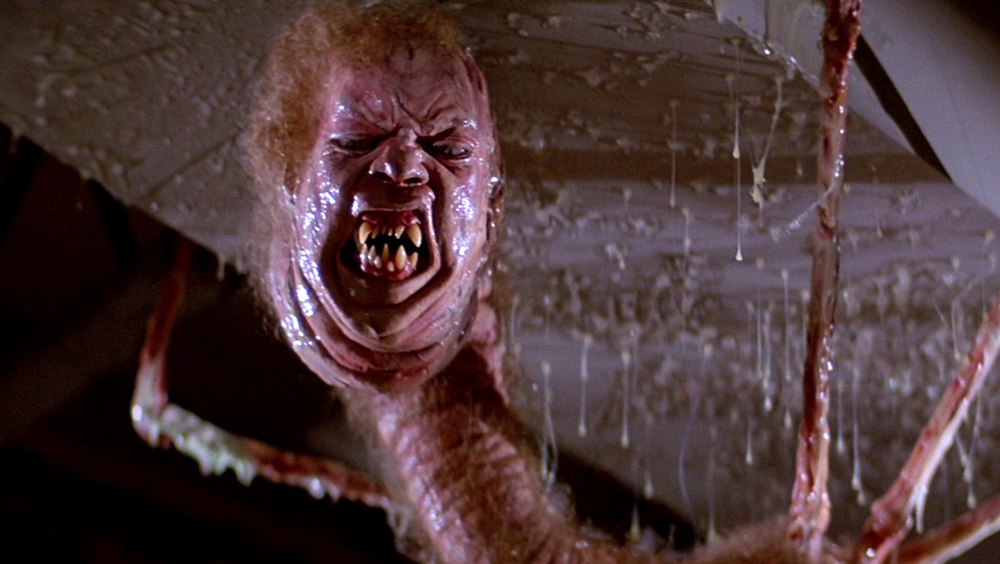
Then, in 1982, Carpenter teamed with Kurt Russell again and released what I believe to be his magnum opus, 1982’s The Thing. As I’ve already mentioned, the film was based on the 1938 novella Who Goes There? by John W. Campbell, which had previously been (loosely) adapted as The Thing from Another World in 1951. Carpenter’s take on The Thing was stunning, however, a master class in suspense building and claustrophobia, featuring amazing work by the aforementioned Rob Bottin that really blew the doors off as far as what could be done with practical effects. The Thing is easily in my top three horror films of all time, and I can’t see any other film dislodging it from its lofty perch any time soon.
As for the rest of the 1980s, Carpenter kept the awesomeness flowing with the solid 1983 adaptation of Stephen King’s Christine; the 1984 sci-fi love story Starman; the immensely fun fantasy action comedy Big Trouble in Little China from 1986; the bizarre supernatural horror film Prince of Darkness from 1987; and the paranoid sci-fi classic They Live from 1988. Not a bad run, all things considered.
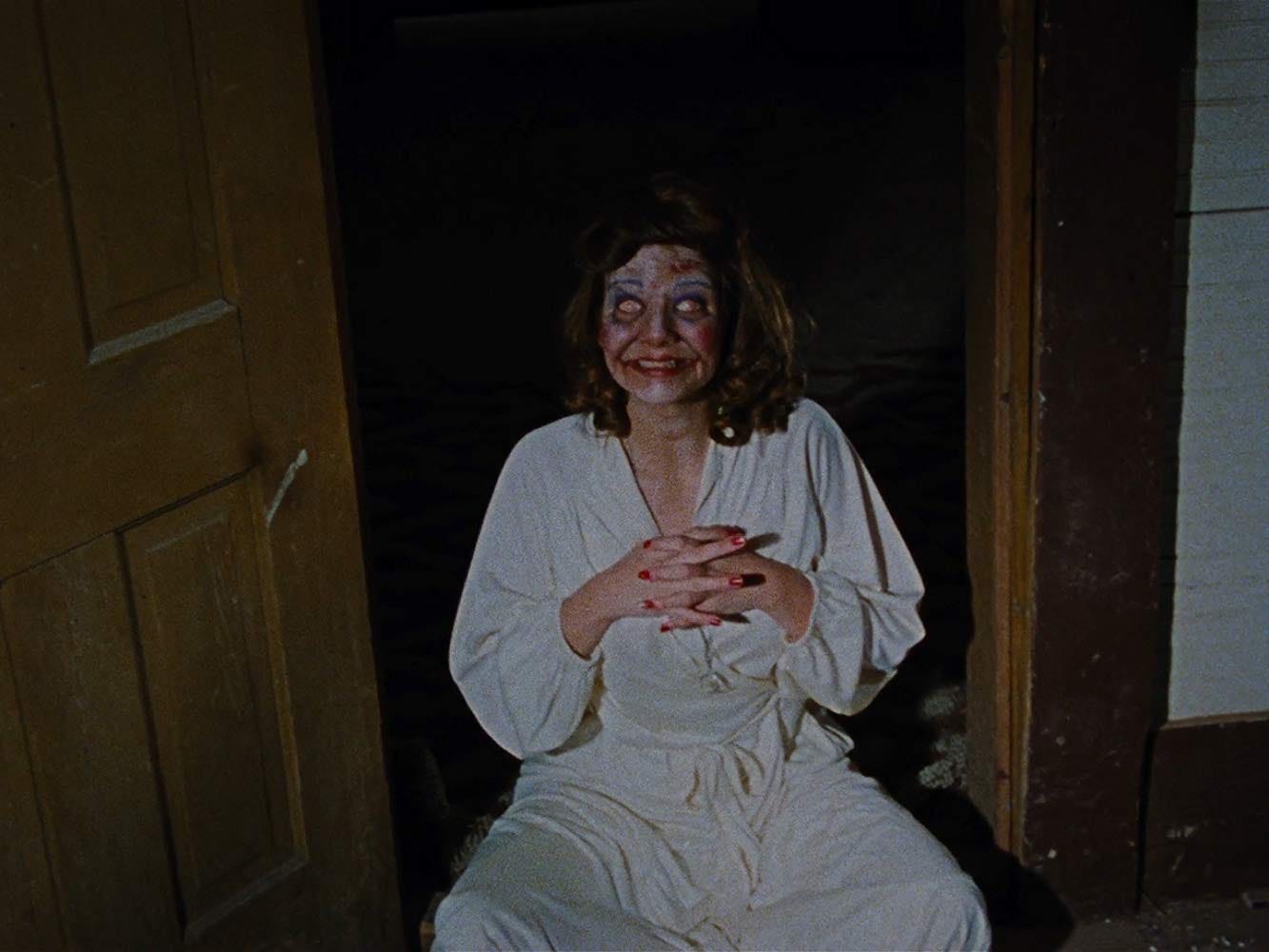
Sam Raimi, though known nowadays as a big-name director of tentpole Marvel movies, got his start back in 1981 with a modest little cabin-in-the-woods flick known as The Evil Dead. Shot for ninety thousand dollars at an abandoned house in Tennessee, the movie put Sam Raimi’s inventive vision front and center, featuring peculiar camera angles, rudimentary but somehow endearing stop-motion effects, a notorious incident of tree rape, and the indelible lead performance of horror darling Bruce Campbell.
The Evil Dead was a smash cult hit, making many times its budget back and spawning another wildly successful franchise that’s seen sequels, remakes, comics, merchandise, and a terrific three-season TV series starring Bruce Campbell as the legendary Ash Williams. In 1987, Raimi directed a sequel to The Evil Dead which was essentially just the first film remade with a higher budget, but absolutely no one complained.
George Romero, who had singlehandedly invented the modern zombie subgenre back in 1968, spent the 1970s experimenting with a few different things, directing a romantic comedy called There’s Always Vanilla in 1971, as well as a strange drama called Season of the Witch in 1973. That same year, he returned to horror with the infection-themed sci-fi flick The Crazies, and released a subtle psychological horror called The Amusement Park in 1975. In 1977, he made one of my favorite films of his, the offbeat vampire movie Martin, which starred John Amplas as an odd young man who believes himself to be a vampire. Incidentally, Martin marked the first collaboration between Romero and special effects master Tom Savini, who would go on to work on some of Romero’s most beloved films.
When the director finally returned to the zombie subgenre he’d created, he did so in a big way, coming out with Dawn of the Dead in 1978, which was a follow-up of sorts to Night of the Living Dead, demonstrating how the zombie menace had spread throughout society in the ensuing decade. The movie was a massive step forward in terms of practical effects, with Tom Savini and his then-protégé Greg Nicotero (who would of course go on to found one of the most sought-after effects companies in Hollywood) knocking it out of the park, with copious amounts of blood and viscera staining the screen red.
Romero’s 1980s output was equally quirky, commencing with the action drama film Knightriders in 1981, but then hitting tremendous heights in 1982 with the outstanding horror anthology film Creepshow. Channeling the spirit of old EC horror comics and based on original, EC-inspired stories by Stephen King, Creepshow was one of the most entertaining horror comedies of the 80s, and easily one of the best horror anthologies ever made; every frame of it drips with love for the genre.
1985 saw the release of the third of Romero’s zombie films, Day of the Dead, which amped up the gore exponentially and features probably my favorite gag in all of his films, the character of Rhodes getting torn in half by a gang of hungry shamblers, which is a showstopper of an effect, even today. For the remainder of the 80s, Romero stayed within the horror genre, directing the inferior but still respectable Creepshow 2 in 1987, and the sort of weird psychological horror film Monkey Shines in 1988.
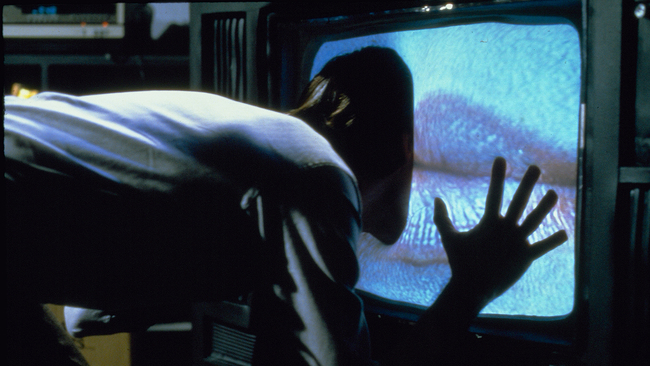
Canadian body horror stalwart David Cronenberg also got his start in the 1970s, grabbing audiences’ attention with his strange and grotesque offerings that included Shivers (1975), Rabid (1977), and The Brood (1979). But in the early 1980s, he became a force to be reckoned with for American horror fans, commencing with the bang of an exploding head in 1981’s Scanners, and then unleashing the freakishly wonderful sci-fi horror Videodrome in 1983. Though the film was a box-office failure, its themes, effects, and direction were critically lauded, and the film became an influential touchstone in surrealist body horror.
The rest of Cronenberg’s decade was just as fruitful, as he directed his own masterful take on a Stephen King novel (The Dead Zone from 1983); an utterly disgusting yet completely brilliant and emotionally wrenching remake of a cheesy 1950s classic (The Fly from 1986, which would bring him the most mainstream acceptance of his career); and a chillingly creepy psychological horror about a pair of twin gynecologists and their mutually assured destruction (Dead Ringers from 1988).
Chicago-born filmmaker Stuart Gordon would come out of the gate swinging in 1985 with his wildly entertaining mad-scientist film Re-Animator, loosely based on an H.P. Lovecraft novella with a heaping helping of Frankenstein thrown in for good measure. The fun, outrageous flick made horror icons out of actors Jeffrey Combs and Barbara Crampton, and became one of the most loved franchises in horror fandom, not least because of its over-the-top gore, its pitch-black humor, and one infamous scene of a reanimated severed head going down on a naked young woman.
Gordon followed up the cult success of Re-Animator with another loose Lovecraft adaptation, 1986’s From Beyond, which brought back Combs and Crampton (in different roles) and features some great special effects work and a cool interdimensional premise. Though Gordon would only direct one more horror film in the 1980s (the middling Dolls from 1987), his frequent collaborator Brian Yuzna would helm an awesomely bizarre and sadly underrated body horror film in 1989 called Society that almost has to be seen to be believed.
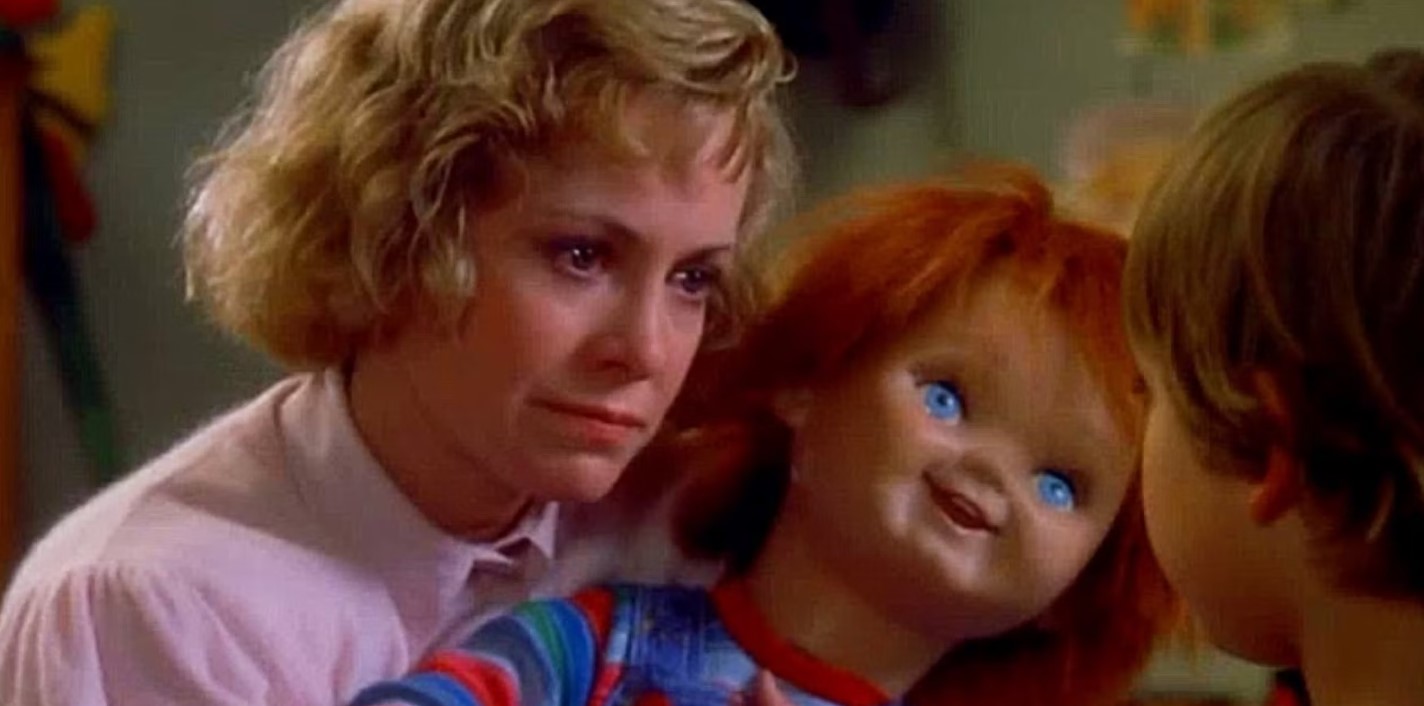
Tom Holland, while perhaps not quite the household name of the other directors discussed so far, is responsible for directing two of the best and most esteemed horror comedies of the decade: the incredible 1985 vampire film Fright Night, about a high school boy who suspects his suave new neighbor might be a bloodsucker; and 1988’s Child’s Play, about a doll named Chucky that becomes possessed by the spirit of a serial killer and goes on a rampage. While Fright Night got a decent sequel in 1988 and a remake in 2011, Child’s Play became something of a cultural juggernaut, followed up by six sequels, a TV series, a remake, comics, a video game, and loads of branded merchandise.
The 1980s was also the decade of Stephen King. The ridiculously popular horror author was simply everywhere, with a dizzying number of adaptations of his work, as well as films based on his original screenplays. The granddaddy of them all, of course, was Stanley Kubrick’s The Shining (1980), which Stephen King famously hated, but nonetheless remains one of the best horror films ever made, a stone-cold masterpiece that took King’s excellent 1977 novel of the same name about a haunted hotel and a boy with psychic powers and turned it into a chilling, oppressive meditation on familial breakdown that is so dense with thematic resonance that there are literally dozens of interpretations of the movie’s symbolism. Out of all the films I’ve discussed so far, I think The Shining is the one I’ve watched the greatest number of times, and it never fails to reveal new layers upon every single revisit. That’s a significant work of art, my friends.
I’ve already mentioned a few of the other King properties of the 1980s, such as Creepshow, The Dead Zone, Christine, Silver Bullet, and Creepshow 2, but there was also Cujo (1983), Children of the Corn (1984), Firestarter (1984), Cat’s Eye (an anthology from 1985), Stand By Me (1986; based on his novella The Body), Maximum Overdrive (1986; King directed this adaptation of his short story “Trucks”), The Running Man (1987), and Pet Sematary (1989). Film versions of King’s work would continue apace into the 1990s.
Another mini-trend of the 1980s was nostalgia for the 1950s, which was seen across many forms of media, not just horror movies. Many horror directors tried their hands at updates of 50s films; we’ve already talked about John Carpenter’s The Thing and David Cronenberg’s The Fly, but there was also the 1985 made-for-TV remake of 1956’s The Bad Seed (which had been based on a 1954 novel), Tobe Hooper’s 1986 Invaders From Mars (a remake of the 1953 film of the same name), Frank Oz’s 1986 film adaptation of the 1982 off-Broadway musical horror comedy take on 1960’s Little Shop of Horrors, and Chuck Russell’s excellent, supremely gory, and criminally underrated 1988 reimagining of 1958’s The Blob. And speaking of 50s nostalgia, there was also a brief craze in the early 1980s for 3D movies; examples included Friday the 13th Part III (1982), Parasite (1982), Amityville 3-D (1983), Jaws 3-D (1983), and Silent Madness (1984).
Although Dracula and his ilk in the 80s were largely relegated to comedies (such as 1985’s Once Bitten, 1987’s My Best Friend is a Vampire, or 1988’s Vampire’s Kiss) or nostalgic horror comedies (such as 1987’s The Monster Squad), some fantastic vampire horror films came out during the decade, many of them inspired by the more romantic or modern slant on the creatures kick-started by the novels of Anne Rice. We already mentioned Tom Holland’s 1985 Fright Night, but 1983 saw a stylish film adaptation of Whitley Strieber’s novel The Hunger, directed by Tony Scott and concerned with an elegant, thousands-year-old female vampire longing for a companion. In 1987, Kathryn Bigelow directed the excellent vampire western Near Dark, and in the same year, Joel Schumacher would helm what is probably the quintessential 80s vampire film, The Lost Boys, about a gang of cool teenage biker vampires menacing a seaside California town.
Meanwhile, over in Italy, Dario Argento made Inferno in 1980, a follow-up to 1977’s Suspiria and the second of his so-called Three Mothers Trilogy, which wouldn’t see completion until the release of the (sadly pretty terrible) Mother of Tears in 2007. Though Inferno couldn’t top its classic predecessor, it had some stunning visuals and an intriguing mystery that made it worth watching. The rest of Dario Argento’s output in the 80s would be somewhat sparse, consisting of real gems like giallo films Tenebre (1982) and Opera (1987), and one interesting but sort of odd paranormal film about a girl who can telepathically communicate with insects (Phenomena from 1986). Argento would also serve as writer and producer on a couple of fun supernatural gorefests directed by Lamberto Bava, Demons (1985) and Demons 2 (1986).
Lucio Fulci made a significant impact with American horror fans in the 1980s, coming out strong with three of his best-loved films very early in the decade: the thematically linked trilogy of City of the Living Dead (1980), The Beyond (1981; probably his best film), and The House by the Cemetery (also 1981). The dreamlike narratives and revolting set pieces struck a chord with a certain segment of the fandom, and earned Fulci the nickname The Godfather of Gore (an appellation previously bestowed upon American splatter pioneer Herschel Gordon Lewis). Fulci’s subsequent films began to dip somewhat in quality; 1982’s The New York Ripper was pretty good if oddly mean-spirited, but Manhattan Baby (1982), Murder Rock (1984), The Devil’s Honey (1986), and Aenigma (1988) definitely showed some diminishing returns.
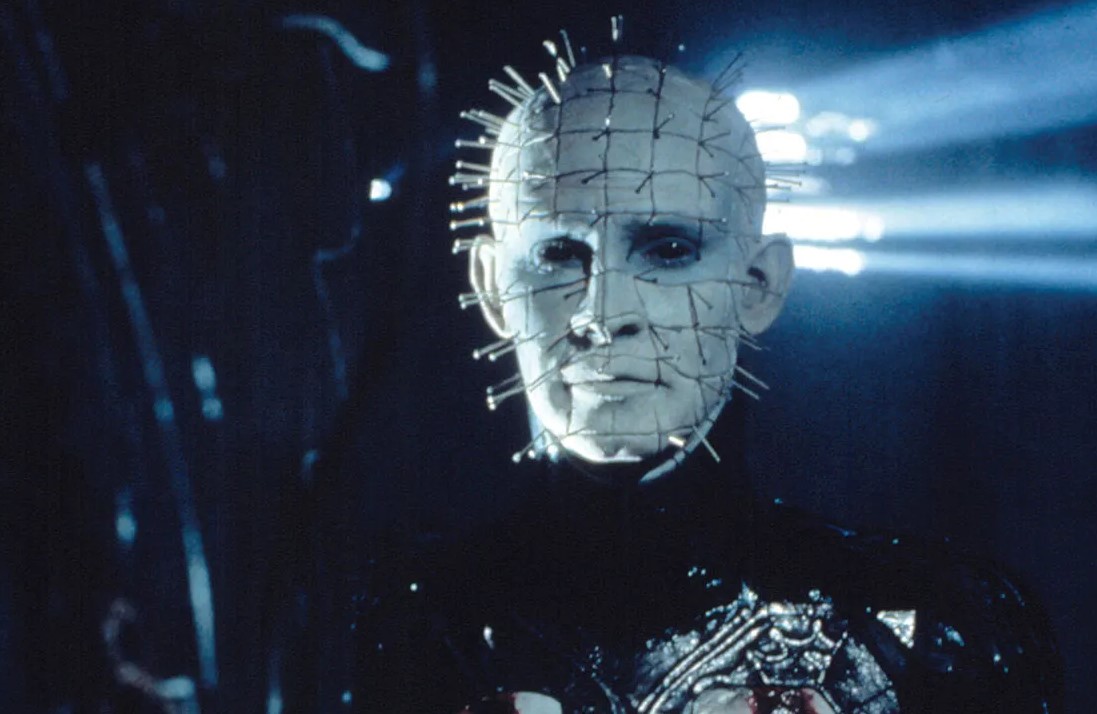
A not-so-exhaustive list of some of my other 80s favorites that I haven’t yet talked about would include Altered States (1980), The Changeling (1980), Dead & Buried (1981), Ghost Story (1981), The Hand (1981), Ms .45 (1981), Possession (1981), Basket Case (1982), The Entity (1982), Halloween III: Season of the Witch (1982), Next of Kin (1982), Q – The Winged Serpent (1982), Xtro (1982), Twilight Zone: The Movie (1983), Night of the Comet (1984), The Bride (1985), The Return of the Living Dead (1985), April Fool’s Day (1986), Gothic (1986), Henry: Portrait of a Serial Killer (1986), The Hitcher (1986), House (1986), Angel Heart (1987), The Believers (1987), The Gate (1987), Hellraiser (1987), Stage Fright (1987), The Stepfather (1987), Killer Klowns from Outer Space (1988), Lady in White (1988), The Lair of the White Worm (1988), Night of the Demons (1988), Phantasm II (1988), Pumpkinhead (1988), Begotten (1989), The Church (1989), Parents (1989), and The Woman in Black (1989). Just the size of that list should be some indication of how many fucking great horror movies came out in the 1980s.



And then came the 1990s. Don’t get me wrong; some classic horror films came out during that decade, but in my view, the 1990s was something of a mixed bag, and probably my least favorite decade for horror movies overall (although the 2000s are also a strong contender). The 90s didn’t really introduce any important horror directors like the 70s and 80s had, and a depressing number of releases were just inferior sequels to, or remakes of, beloved older properties. Horror also went meta and self-referential in the 90s, a trend that produced a handful of great films and a shitload of insufferable ones.
Since I mentioned sequels, for shits and giggles, let’s take a look at a sampling of the sequels that came out in the year of 1990 alone: The Amityville Curse, Basket Case 2, Bride of Re-Animator, Child’s Play 2, Gremlins 2: The New Batch, Leatherface: The Texas Chainsaw Massacre III, Maniac Cop 2, Predator 2, Prom Night III: The Last Kiss, Psycho IV: The Beginning, Puppet Master 2, Silent Night, Deadly Night 4: Initiation, Slumber Party Massacre III, Sorority House Massacre II, Watchers II, Witchcraft II: The Temptress, and Xtro II: The Second Encounter.
One title you may have noticed is conspicuously absent from that list is The Exorcist III, which I believe is a special case; yes, it is technically a sequel to the classic 1973 film (and slickly pretends that the laughably bad Exorcist II: The Heretic from 1977 never happened), but it takes the story in a completely different direction that almost succeeds in making it a total standalone. Less a possession flick and more a supernatural police procedural, the movie features one of the best jump scares in horror history and riveting performances from both George C. Scott and Brad Dourif. Exorcist III is one of the rare examples of a sequel done right.
The first half of the 1990s seemed to see an uptick in narratives based around psychological horror and serial killers, almost as though filmmakers had grown bored of the paranormal excesses of the 1980s and sought to ground their horrors more in the real world. The aforementioned Exorcist III followed this trend as well, as it centered on a murderer known as The Gemini Killer, but also featured demonic elements. Many of these films were unequivocally horror but straddled the line between horror and thriller, thus making them more palatable to mainstream audiences.
The most successful of the thriller/horror hybrids of the early 1990s was undoubtedly Jonathan Demme’s masterful 1991 film The Silence of the Lambs, an adaptation of the bestselling 1988 novel by Thomas Harris. The film follows FBI trainee Clarice Starling (Jodie Foster) as she attempts to glean information from imprisoned serial killer and cannibal Dr. Hannibal Lecter (Anthony Hopkins) to help catch another serial killer named Buffalo Bill who is still on the loose. The film is one of the most perfect thrillers ever made, and despite its horrific subject matter, was richly rewarded at the Academy Awards, picking up statues in all five of the major categories, including Best Picture. It was, in fact, the first horror movie to win a Best Picture Oscar (1973’s The Exorcist had been nominated for Best Picture, but lost to The Sting).
Later on in the decade, David Fincher’s Se7en (1995) took the serial killer trope to even further extremes, and though the film is generally classified as a crime thriller rather than a horror movie, there’s no doubt at all that the film contains some of the most gruesome imagery, and one of the most effective jump scares, in horror history.
In terms of psychological horror, there was 1990s Jacob’s Ladder, directed by Adrian Lyne: a nightmarish exploration of a Vietnam veteran’s fractured psyche, laced with conspiratorial distrust of the government and packed to the gills with terrifying, hallucinogenic visuals. In the same year, Joel Schumacher’s Flatliners saw an all-star cast of hot young actors portraying medical students trying to figure out what lay beyond the veil of death by essentially killing themselves for longer and longer periods before being revived.
Stephen King adaptations also continued at a decent clip into the 1990s, and seemed to separate themselves into three distinct strata: Brilliant, Middling, and Turd Sandwich. In 1990, the outstanding anthology film Tales from the Darkside: The Movie featured a King story, “The Cat from Hell,” as one of its segments, and in the same year, two adaptations were released that exemplified the extremes in quality: Graveyard Shift was a middling-to-turd-sandwich take on King’s 1970 short story about a crew of workers encountering a shitload of rats in the basement of a factory that was only saved by an unhinged performance by national treasure Brad Dourif; while on the complete opposite end of the scale, Rob Reiner’s excellent Misery, starring Kathy Bates and James Caan, is one of the best psychological horror films ever, dealing with a romance novelist who is rescued from a car crash and subsequently held captive by his insane, number one fan.
Brilliant 90s King film adaptations included Frank Darabont’s Oscar-nominated The Shawshank Redemption (1994), Taylor Hackford’s Dolores Claiborne (1995), and yet another Frank Darabont adaptation, 1999’s The Green Mile. As for middling films, I would nominate The Dark Half (1993), Needful Things (1993), Thinner (1996), The Night Flier (1997), and Apt Pupil (1998), while scraping the bottom of the barrel would be the baffling Sleepwalkers (1992), Lawnmower Man (1992, which had absolutely nothing to do with the original short story it was supposedly based on, and had King’s name removed from the film after he sued), and The Mangler (1995). I’ll note also that a staggering number of King works were adapted for television as well, including It (1990), The Stand (1994), and The Langoliers (1995), and King himself even wrote the screenplay for a three-episode miniseries version of The Shining in 1997, directed by Mick Garris. Though King was attempting to craft an adaptation much closer to his source novel than Kubrick’s acclaimed 1980 version, in my opinion he pretty much whiffed it, sacrificing scares, mood, and thematic depth for a too-slavish adherence to the plot beats of the book. The CGI effects were pretty cringey too, I have to say.
British fantasy horror author Clive Barker had burst onto the horror scene in the 1980s with his utterly grotesque Books of Blood, and horror fans were subsequently blown away by the visceral and imaginative 1987 film Hellraiser, which Barker directed himself, adapted from his 1986 novella The Hellbound Heart. Prior to Hellraiser, Barker had written two films, 1985’s Underworld and 1986’s Rawhead Rex, but was disappointed at how the movies turned out, leading to him pushing to direct more of his own work. His 1990 film Nightbreed (based on his 1988 novella Cabal) was a box office failure, as was his 1995 film Lord of Illusions, but there was one adaptation that was much more warmly received, though Barker didn’t direct it: 1992’s Candyman, based on the short story “The Forbidden” and helmed by Bernard Rose.
Candyman was a creepy tale steeped in urban legend, focused on a graduate student (Virginia Madsen) researching a frightening, legendary figure named Candyman (the unforgettable Tony Todd) supposedly haunting the crumbling halls of Chicago’s Cabrini Green, a notorious housing project. Candyman was an example of another movie mini-trend in the 1990s of urban horror, or horror exploring the gap between rich and poor and race relations in the United States; other examples would include 1990’s Def by Temptation, Wes Craven’s The People Under the Stairs from 1991, and the 1995 anthology film Tales from the Hood.
Speaking of Wes Craven, the man who had already distinguished himself in two decades was poised to make his mark in yet a third one, being probably the person most responsible for the rise of meta-horror in the latter half of the 90s. In 1994, he took the iconic boogeyman he’d created in the 1980s, Freddy Krueger, and went back to basics, attempting to make the character scary again after a string of sequels had turned him into something of a comedian. Wes Craven’s New Nightmare recontextualized the entire franchise, presenting a clever, metafictional story about Wes Craven himself and all the actors who had starred in the films (all playing themselves) being terrorized by a real supernatural boogeyman named Freddy Krueger, who had been conjured inadvertently into the real world.
Though the film was the poorest performing of all the Nightmare films, it was still a box-office success, and only two years later, Craven would take a similar formula and score a tremendous hit that was not only financially successful but culturally important, influencing the direction of horror for years to come.
Before then, though, John Carpenter would also release his own take on metafiction, but with a far more Lovecraftian flair, 1994’s In the Mouth of Madness, a trippy tale about an insurance investigator (Sam Neill) who’s on the trail of a missing horror author named Sutter Cane (Jurgen Prochnow), who may be able to write reality into existence.
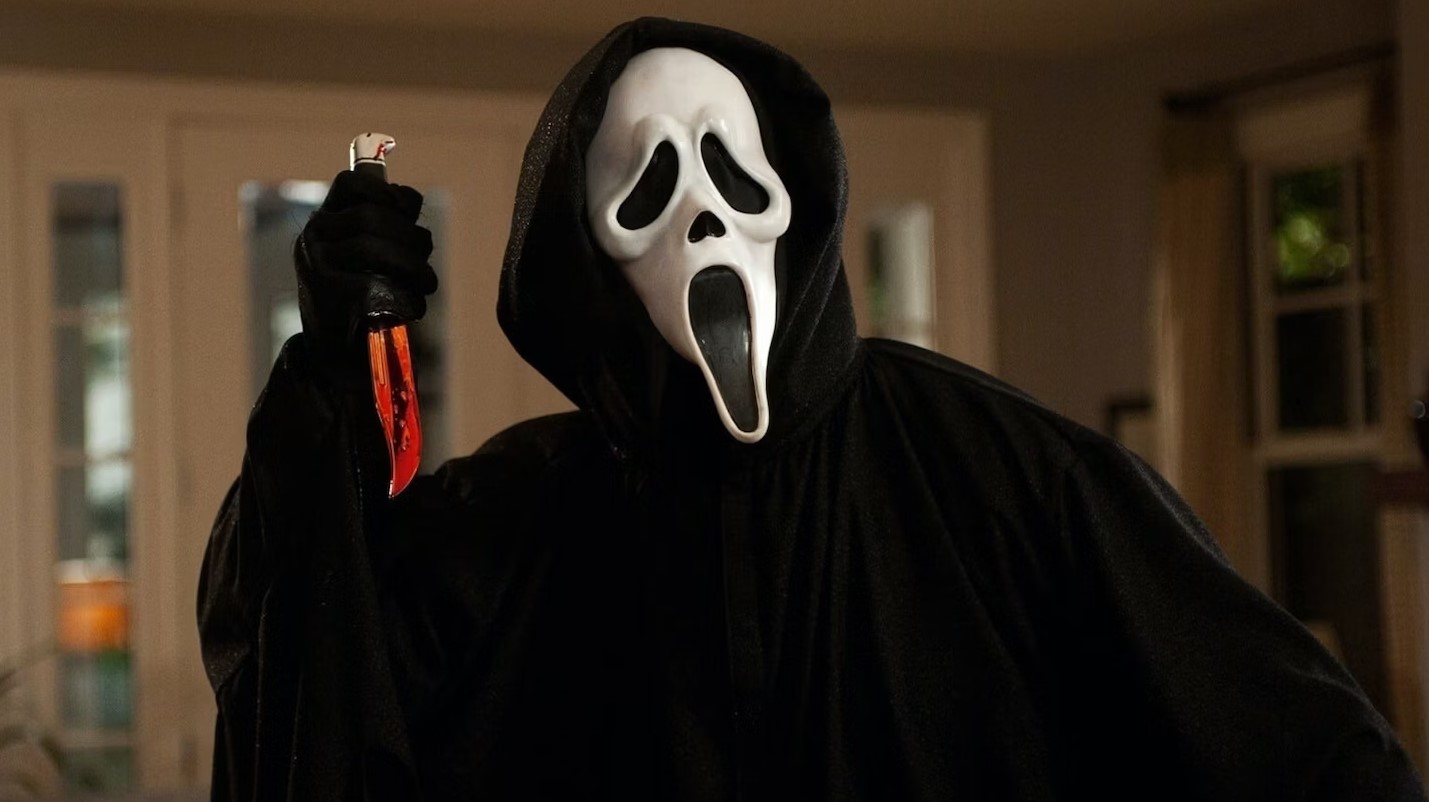
In 1996, Wes Craven dropped another mic in the midst of horror media in the form of Scream, which was simultaneously an intelligent, entertaining slasher film and also a self-referential satire of the very genre it portrayed. The fact that the characters were media-savvy and knew all the “rules” of previous horror movies was somewhat novel, and the film also had some interesting things to say about the perceived influence of horror movies on real-world violence, and the way the media exploits real-life tragedies for entertainment purposes.
Scream was a surprise success, grossing $173 million on a $15 million budget, and it not only led to several sequels and a TV series, but also kicked off a small, teen-slasher revival in the late 1990s and early 2000s, which included films like I Know What You Did Last Summer (1997; based on a 1973 YA novel by Lois Duncan), Urban Legend (1998), Cherry Falls (2000), and Valentine (2001). 1996, incidentally, would also be the year of cult favorite The Craft, another teen-centered horror movie, but one that dealt with a coven of high school witches rather than knife-wielding maniacs.
The classic Universal monsters were also back in a big way, with gothic horror seemingly skulking back into fashion after a fallow period in the 1980s. In 1992, Francis Ford Coppola released his flawed but majestic adaptation of Bram Stoker’s Dracula, complete with stunning period costumes, a love story based around the real historical figure of Vlad the Impaler, and an incredible performance by Gary Oldman as the Count. The success of Dracula led to several more gothic-themed works and adaptations, including Interview with the Vampire (1994; based on the 1976 Anne Rice novel), Mary Shelley’s Frankenstein (1994), Wolf (1996; though not strictly gothic, the movie did explore a more modern take on the classic werewolf story), Mary Reilly (1996; based on a 1990 novel by Valerie Martin which was itself a loose adaptation of Robert Louis Stevenson’s The Strange Case of Dr. Jekyll and Mr. Hyde), and Tim Burton’s Sleepy Hollow (1999; loosely based on Washington Irving’s 1820 short story, “The Legend of Sleepy Hollow”).
Additionally, in 1993, one of the most prominent gothic filmmakers of the present day would also appear on the scene; Mexican auteur Guillermo del Toro released his debut, the odd vampire film Cronos, in which an older man (Federico Luppi) discovers an alchemical mechanism that essentially turns him into a blood-craving creature of the night who begins to fear that he’s becoming a danger to his beloved granddaughter (Tamara Shanath).
Asian horror also began seeping into the Western horror consciousness in the late 1990s, starting with Hideo Nakata’s Ring from 1998, which would explode into greater popularity after Gore Verbinski helmed an American remake of it in 2002, starring Naomi Watts. Other Asian films, such as Takashi Miike’s infamously disturbing Audition from 1999, got great word of mouth among horror fans, though it should be noted that Asian horror as a whole probably didn’t break through in a big way until the early 2000s.
Also in 1999, M. Night Shymalan burst onto the world stage with the wildly successful ghost story The Sixth Sense, whose twist ending was the source of endless discussion and parody. The Sixth Sense was the second-highest-grossing movie of the year (after The Phantom Menace), and while there’s no doubt that it’s an amazing film, I’ve always been more partial to another ghost story that was released at almost the exact same time and subsequently got forgotten in The Sixth Sense‘s long shadow: David Koepp’s Stir of Echoes. Loosely based on Richard Matheson’s 1958 novella, the movie follows a working-class guy named Tom (Kevin Bacon) who gets hypnotized at a party and then begins having visions of what seems to be a murdered girl. It’s a creepy supernatural murder mystery with some great acting performances and genuinely spooky imagery, and I always try to recommend it when anyone asks me about underrated horror movies.
Before the 1990s ended, there was one more bombshell on the horizon, one that would popularize (if not invent) an entire subgenre of horror and serve as a sterling example of successful early internet marketing. Daniel Myrick and Eduardo Sanchez’s The Blair Witch Project was a found-footage film made for between $200,000 and $500,000 that raked in nearly $250 million at the worldwide box office and became a cultural phenomenon.
Found footage wasn’t a new genre—the 1980 Italian film Cannibal Holocaust is widely considered the first found footage horror film, and there was even a faux documentary called The Last Broadcast that came out shortly before Blair Witch, in 1998—but the smash success of Blair Witch directly led to the proliferation of the subgenre in the ensuing decades, including the equally lucrative Paranormal Activity from 2007, which amped up the style even more. The fact that the filmmakers of Blair Witch were savvy enough to market the film as though it was real footage, even setting up a website with information about the “missing” characters and making a separate documentary about the legend at the heart of the story, lent the whole enterprise an alternate reality game feel which appealed to users of early iterations of the internet. Blair Witch was massively influential on horror at the turn of the century, but also quickly inspired ripoffs and parodies aplenty.
To round out the decade, let’s list a few of my favorite 90s horror films that I haven’t yet mentioned: Arachnophobia (1990), Frankenhooker (1990), The Reflecting Skin (1990), Tremors (1990), Cape Fear (1991), Subspecies (1991), Army of Darkness (1992), Braindead (aka Dead Alive, 1992), Twin Peaks: Fire Walk With Me (1992), Body Bags (1993), Necronomicon (1993), Cemetery Man (1994), The Addiction (1995), Castle Freak (1995), Copycat (1995), The Frighteners (1996), From Dusk Till Dawn (1996), Cube (1997), Event Horizon (1997), Blade (1998), Bride of Chucky (1998), and Ravenous (1999).
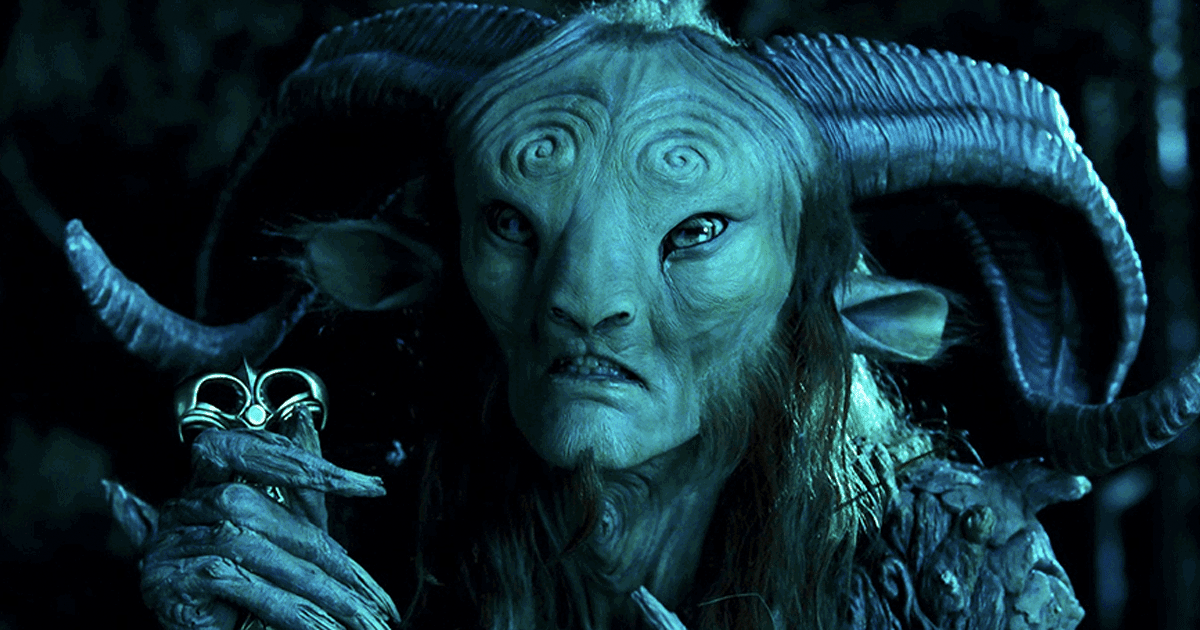
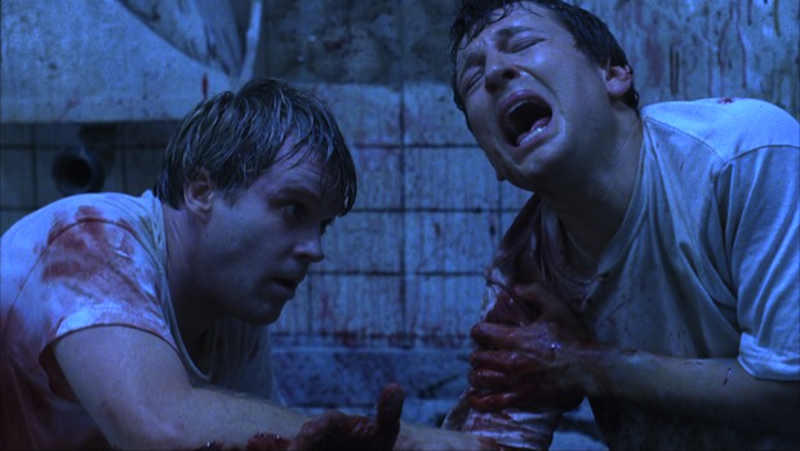


As I mentioned a few moments ago, The Blair Witch Project was a huge influence on the horror genre moving into the new millennium, inspiring something of an explosion in found footage films and amateur media such as alternate reality games and spooky YouTube series. Oddly, though, for the first half of the 2000s, most of the movies that followed in the wake of Blair Witch were parodies, other than the Blair Witch sequel, Book of Shadows: Blair Witch 2, which came out in 2000 and technically wasn’t a true found footage film anyway. There was The Bogus Witch Project (2000), The Bare Wench Project (2000), The Tony Blair Witch Project (2000), and The Erotic Witch Project (2000), among others. Additionally, the meta-horror trend that had become codified with the release of Scream also produced a flood of largely witless horror parodies, such as Scary Movie (the first one was released in 2000, and it would eventually spawn four sequels), and Shriek If You Know What I Did Last Friday the Thirteenth (2000).
In my view, horror was going through a slow evolution in the 1990s and 2000s, and the meta-horror boom was indicative of larger media trends during that era, where the aim of horror was not necessarily to scare you or disturb you; it wasn’t “cool” or “extreme” to admit a horror movie frightened you, after all. You had to keep yourself at one ironic remove from the material, hence the glut of parodies and horror that wasn’t meant to be taken seriously. Please note that I have no problem at all with horror comedies in general, and in fact count some of them among my favorite horror films, but straight parodies have always fallen pretty flat for me, and I admit that I largely prefer serious horror, or at least horror that is actively trying to creep out, provoke, or otherwise unsettle the viewer, rather than trying to make them laugh or feel clever about recognizing horror tropes.
Happily, the latter half of the decade saw a surge in more serious found-footage films, particularly in the wake of Oren Peli’s enormously influential Paranormal Activity (2007), which was actually fairly scary, all things considered, and heralded the rise of Blumhouse, a horror production company we’ll be discussing more when we get to the 2010s.
The best of the late 2000s found footage flicks would include The Poughkeepsie Tapes (2007), [REC], Cloverfield (2008), and Lake Mungo (2008, more of a mockumentary but still found footage adjacent). Even some older franchises attempted to stay relevant by releasing found footage entries in this era, such as George A. Romero’s Diary of the Dead (2008). Found footage would only continue to grow, and would produce many more, and even better, entries in the 2010s.
The remake trend that had begun in the 1990s really hit the gas pedal hard in the 2000s, so much so that it’s the overriding impression I get when I think of horror movies released in that decade. There were new versions of House on Haunted Hill (1999), Thirteen Ghosts (2001), Carrie (2002), The Texas Chainsaw Massacre (2003), Willard (2003), Dawn of the Dead (2004), Toolbox Murders (2004), The Amityville Horror (2005), The Fog (2005), House of Wax (2005), Black Christmas (2006), The Hills Have Eyes (2006), Night of the Living Dead (2006; it had previously been remade in 1990 under the direction of Tom Savini), The Omen (2006), When a Stranger Calls (2006), The Wicker Man (2006), Halloween (2007), The Hitcher (2007), The Wizard of Gore (2007), April Fool’s Day (2008), Day of the Dead (2008), Long Weekend (2008), Prom Night (2008), Children of the Corn (2009), Friday the 13th (2009), It’s Alive (2009), The Last House on the Left (2009), My Bloody Valentine (2009), and House on Sorority Row (though the 2009 remake was simply called Sorority Row).
There was also a new take on I Am Legend in 2007; based on Richard Matheson’s 1954 novel of the same name, the story had been adapted twice before, as 1964’s The Last Man on Earth with Vincent Price, and 1971’s The Omega Man with Charlton Heston. By the same token, there was a fourth version of Invasion of the Body Snatchers released in 2007; simply titled The Invasion, the film was an adaptation of the 1954 novel by Jack Finney, which had previously been adapted in 1956, 1978, and 1993.
Although the length of that list would seem to imply that there was no one making anything original in the 2000s, some big horror names were emerging that would go on to produce influential work in the genre going forward. Ti West came on the scene in 2005 with an independent film called The Roost, but really hit his stride in 2009, with the release of the 80s Satanic Panic throwback film The House of the Devil. West would later go on to further accolades with 2011’s paranormal horror The Innkeepers, the 2013 found-footage film The Sacrament (a reimagining of the Jim Jones cult mass suicide), and the 2022 one-two punch of retro slasher X and its prequel Pearl, both starring 21st-century horror darling Mia Goth.
Additionally, Australian filmmaker James Wan got his start with the unbelievably successful Saw in 2004, which may have been the first volley in the so-called “torture porn” trend we’ll be discussing shortly, and led to five sequels just in the 2000s alone. His supernatural horror Dead Silence from 2007 was also well-received, and Wan would eventually achieve horror superstar status for inaugurating both the Insidious and The Conjuring franchises, two of the most successful horror film series of the 21st century.
Eli Roth got his start in 2002 with the release of the successful horror comedy Cabin Fever, and soon jumped on the emerging torture porn train with 2005’s Hostel and its 2007 sequel. The much-derided torture-porn craze was nothing new, of course, and was mostly hearkening back to the sleazy exploitation films of the 1970s, but with a 21st-century sensibility, much bigger budgets, and better special effects. The films undoubtedly made money, so filmmakers kept trying to push the envelope: musician Rob Zombie channeled his love for trashy, gory, ultraviolent horror flicks of old into his 2003 film House of 1000 Corpses, and then upped the ante with its follow-up, 2005’s The Devil’s Rejects.
The 2005 Australian film Wolf Creek took the real-life backpacker murders committed by Ivan Milat and Bradley Murdoch and distilled them into the terrifying character of Mick Taylor (John Jarratt), who brutally tortures three women over the course of the film. And in 2007, Austrian filmmaker Michael Haneke produced a shot-for-shot remake of his own 1997 film, Funny Games, in which a family is slowly tortured by two young psychopaths. Other similar films released during this period would include Turistas in 2006, and the 2007 films Borderland and Captivity, not to mention the viscerally revolting 2009 film The Human Centipede (First Sequence), an infamous Dutch movie directed by Tom Six which eventually spawned two sequels and concerns a mad scientist who sews people together mouth to anus.
And speaking of torture, it seems that in the 2000s, the French noticed what was going on in the horror genre and told the world to hold their cognac. The wave of French horror films that were released in the 2000s were far more savage and disturbing than almost anything Americans had seen, and flew under the flag of “New French Extremity.” Movies such as 2002’s Irréversible (an experimental rape-revenge film), 2003’s High Tension (about a rampaging serial killer), 2007’s Inside (about a pregnant woman who has her home invaded by a woman who wants to steal the baby from her womb), and 2008’s Martyrs (about a young woman who seeks revenge on the people who abused her as a child) were absolutely unflinching in their portrayals of violence, including graphic depictions of rape, evisceration, and every manner of abuse. The trend also extended to sex, as some of the films featured explicit scenes that bordered on pornography.
While France and the U.S. were trading in torture, there was something of a mini-boom in British horror, some of it centering around zombie films, which took off in a big way in the 2000s. Danny Boyle’s excellent 2002 film 28 Days Later, which popularized fast-moving “zombies” that were actually living people infected with a virus that caused them to go crazy, and 2004’s delightful zombie comedy Shaun of the Dead, directed by Edgar Wright, helped to get the zombie ball shambling, as it were, as did the American Zack Snyder’s popular 2004 remake of George Romero’s Dawn of the Dead. By the end of the decade, in terms of zombies, the Resident Evil franchise had three films under its belt (which would add three more films in the 2010s and a reboot in 2021), George Romero added three more entries to his iconic zombie series, and other films like Fido (2006), 28 Weeks Later (2007), Pontypool (2008), Dead Snow (2009), and Zombieland (2009) would flood the horror landscape with flesh-eating ghouls of all different stripes.
Two other beloved British films of the 2000s included the awesome 2002 British-Army-fighting-werewolves movie Dog Soldiers, and the claustrophobic nightmare of 2005’s The Descent, about a group of cavers who become trapped in a series of tunnels and are set upon by horrific creatures.
Mexican filmmaker Guillermo del Toro, who had thrown his horror hat into the ring with the 1993 vampire film Cronos, made a somewhat big-budget sci-fi horror called Mimic in 1997, but in 2001 returned to his indie, Spanish-language roots with the brutal and eerie ghost story The Devil’s Backbone, set during the Spanish Civil War. Two more Hollywood films followed, Blade II (2002) and Hellboy (2004), but then del Toro crafted what I believe to be his masterpiece, 2006’s dark fairy tale Pan’s Labyrinth, in which a little girl during the Francoist period in Spain discovers a hidden world of fairies and magical creatures, including a mysterious faun and an absolutely terrifying character called the Pale Man, who has his eyes in the palms of his hands rather than on his face.
If 1998’s Ring foreshadowed the Asian horror renaissance to come, then the trend would reach full flower in the early 2000s, producing exceptionally creepy works like the 2002 Hong Kong/Singaporean film The Eye (which got an inferior American remake in 2008), Hideo Nakata’s 2002 Dark Water (which got a decent American remake in 2005), and Takashi Shimizu’s 2002 Ju-On: The Grudge (which got a middling remake in 2004 that was just called The Grudge).
There were many other stellar Asian horror films released during this decade, such as Battle Royale (2000), Pulse (2001), One Missed Call (2003), A Tale of Two Sisters (2003), and Shutter (2004). Several of these also got English-language remakes, including Pulse (remade in 2006), One Missed Call (remade in 2008), A Tale of Two Sisters (remade in 2009 as The Uninvited), and Shutter (remade in 2008).
Though in nearly all the cases listed above, I would argue that the Asian originals of the films listed are superior to their later American counterparts, I will admit that I believe the sole exception to the rule is Gore Verbinski’s 2002 remake of The Ring, which I liked much better than the 1998 Japanese original. Feel free to disagree, but the original Ring just gave me mild heebie-jeebies, while the American version of The Ring scared the absolute crap out of me and gave me nightmares for several days afterward.
More of my favorite films from the 2000s that I’ve yet to mention would include American Psycho (2000), Final Destination (2000), Ginger Snaps (2000), Shadow of the Vampire (2000), Brotherhood of the Wolf (2001), Dagon (2001), From Hell (2001), Jeepers Creepers (2001), Mulholland Drive (2001), The Others (2001), Session 9 (2001), Bubba Ho-Tep (2002), May (2002), Dead End (2003), The Exorcism of Emily Rose (2005), The Skeleton Key (2005), Behind the Mask: The Rise of Leslie Vernon (2006), Cold Prey (2006), Slither (2006), 30 Days of Night (2007), 1408 (2007), The Girl Next Door (2007), The Mist (2007), The Orphanage (2007), The Signal (2007), Teeth (2007), Trick ‘r Treat (2007), Wind Chill (2007), The Children (2008), Eden Lake (2008), I Sell the Dead (2008), Let the Right One In (2008), The Midnight Meat Train (2008), The Ruins (2008), Splinter (2008), The Strangers (2008), All About Evil (2009), Antichrist (2009), The Collector (2009), Drag Me To Hell (2009), Jennifer’s Body (2009), The Loved Ones (2009), Orphan (2009), Pandorum (2009), and Triangle (2009).
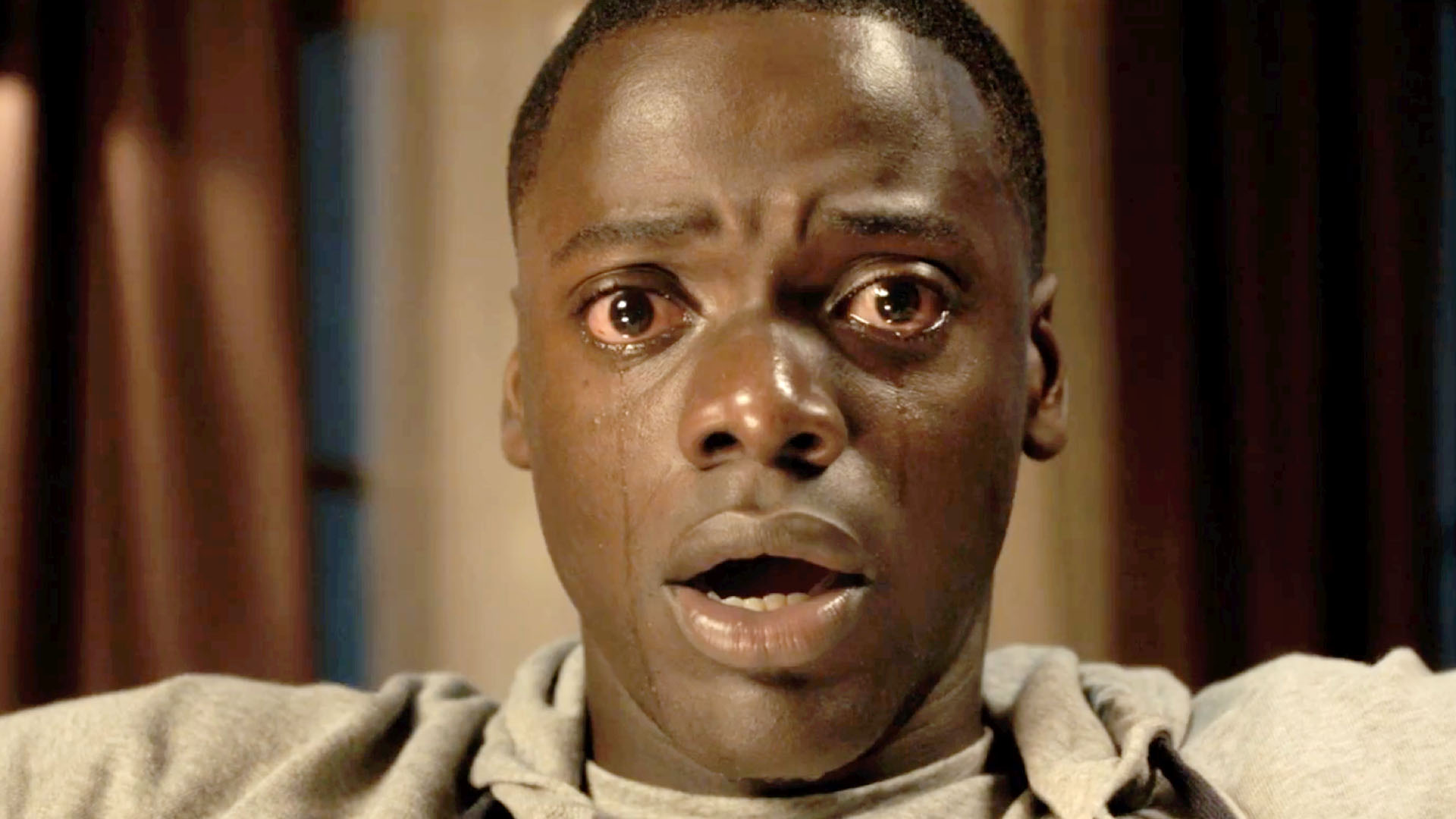




Overall, thankfully, the 2010s seemed to start moving in a much more interesting and serious direction in terms of horror movies, in many ways recalling the more experimental and cerebral filmic landscape of the 1970s and early 1980s. In spite of this general tendency, however, we did still get a shitload more remakes in that decade, though happily not as many as we saw in the 1990s and 2000s. There were, for example, new versions of The Crazies (2010), I Spit on Your Grave (2010), A Nightmare on Elm Street (2010), Fright Night (2011), Maniac (2012), Evil Dead (2013), The Town That Dreaded Sundown (2014), Poltergeist (2015), Cabin Fever (2016), Flatliners (2017), Black Christmas (2019), and Child’s Play (2019), just to name a few.
There were also a handful of American remakes of foreign films, such as Let Me In (a 2010 English-language version of the 2008 Swedish film Let the Right One In), and a 2016 American reboot of the harrowing New French Extremity classic Martyrs. In 2018, Luca Guadagnino had the stones to craft a 21st-century version of Dario Argento’s iconic 1977 Suspiria, but changed the look and story so much that it barely qualified as a remake, though I must admit I loved it anyway, as I felt it was the only way you could do the original justice (save not remaking it at all). In 2012, we also saw a bigger-budget version of The Woman in Black, which was based on Susan Hill’s 1983 gothic novel, but had been adapted to film once before, in 1989.
There were still some torture porn stragglers in the 2010s as well, and as a whole, the decade seemed pretty comfortable with ridiculous levels of gore and disturbing content. The notorious A Serbian Film was released in 2010 and is still considered by many to be the worst of the worst as far as vile content goes. In addition, 2016 saw the popularization of new horror icon Art the Clown in the ultra-gory Terrifier, though the character had actually first been introduced in the 2013 horror anthology All Hallows’ Eve. The sequel, Terrifier 2, was released in 2022 and increased the gore level significantly, though it was still a pretty fun flick all around, if a touch too long.
One of the biggest success stories of the decade was horror production company Blumhouse, which rocketed into the public consciousness in 2007 with their release of the massively lucrative Paranormal Activity and went from strength to strength as the years went on. Their very profitable business model was predicated on producing small to moderately budgeted films, giving directors the freedom to make what they wanted, and then getting the films into wide release through the bigger Hollywood studio system. Using this method, they absolutely dominated the multiplex horror market with the excellent and wildly popular films Insidious (2010) and Sinister (2012); Insidious would later boast four sequels, and Sinister would receive one in 2015.
Blumhouse was responsible for producing far too many films to list, but one of the other successful properties they distributed was The Purge, the first installment of which was released in 2013. The franchise would eventually comprise four additional films and a TV series.
James Wan, who got his start in the mid-2000s with Saw and was also responsible for the aforementioned Insidious films, made an even bigger splash with 2013’s The Conjuring, a creepy supernatural horror loosely based on the supposedly real Perron family haunting from the 1970s. The film introduced Patrick Wilson and Vera Farmiga in their recurring roles as real-life demonologists Ed and Lorraine Warren, and several more interconnecting films would follow in subsequent years, all of them part of the sprawling Conjuring Universe. The first of these to be released following the success of The Conjuring was 2014’s Annabelle, based on a reportedly true story of a possessed or haunted doll, and later films included The Conjuring 2 (2016), Annabelle: Creation (2017), The Nun (2018), Annabelle Comes Home (2019), The Conjuring: The Devil Made Me Do It (2021), and The Nun II (2023).
Another significant trend in the 2010s was the rise of so-called “elevated horror,” a controversial term that simply referred to movies that were more focused on character development, psychological horror, the building of atmospheric dread, and sometimes metaphorical themes. Films of this description had been appearing since the silent era, and indeed many of the films we’ve been discussing this entire time would likely fall into this category, but the style was back in a big way in the 2010s, and got loads of thoughtful media attention.
The first two widely talked-about films associated with the elevated horror tag were probably the Australian film The Babadook (2014), directed by Jennifer Kent and focused on a widowed single mother and her son, who seem to become the target of an unsettling monster from a children’s book; and David Robert Mitchell’s It Follows (2014), a harrowing film about an ever-changing supernatural entity, invisible to everyone but the victim, that is passed from person to person through sexual intercourse. Both movies were wonderfully scary in their own right, but also sparked spirited discussions about the metaphorical meanings of their respective antagonists.
Independent studio A24 is also usually brought up in tandem with this trend; founded in 2012, they weren’t initially focused on horror, though they did release works like Denis Villeneuve’s surrealist psychological horror film Enemy, and Jonathan Glazer’s bizarre sci-fi film Under the Skin, in 2014. But in 2015, the company drew genre fans’ attention when they unleashed Robert Eggers’s brilliant folk horror film The Witch, a critical and financial success that suggested horror fans were open to more “intellectual,” slow-burn fare.
Along these lines, A24 would also release Ari Aster’s 2018 debut Hereditary, a densely-layered and stunningly acted work about a grieving family who seem to be tormented by a demonic cult associated with the deceased grandmother. In my view, Hereditary is unquestionably one of the best horror films of the 21st century, and made me feel things that a horror movie hadn’t made me feel since I was a child. Though brilliant, the film was so anxiety-inducing for me that it took two years for me to gather up the courage to watch it for a second time.
Ari Aster’s second film, a broad-daylight folk-horror freakout called Midsommar (2019) was equally incredible, though completely different than Hereditary; the only similarities being the focus on loss and the mind-boggling array of complex background detail that filled in the rich universe of the story without overt exposition.
Jordan Peele, who got his start in comedy, was another filmmaker closely associated with the elevated horror wave; in 2017, his directorial debut Get Out wowed critics and audiences alike with its disquieting and satirical take on a “post-racial” America, filtered through a tone reminiscent of Ira Levin’s The Stepford Wives. Get Out was one of the few horror movies to be nominated for a Best Picture Oscar (as well as Best Director and Best Actor), though in the end, Peele only won for Best Original Screenplay. His 2019 follow-up, Us, was less praised but still outstanding, a story about creepy doppelgangers that also served as a metaphorical examination of the American underclass and the gap between rich and poor.
Other elevated horror films of the decade would include Julia Ducournau’s Raw (a 2016 film that could also fall into the extreme horror category), Darren Aronofsky’s Mother! (2017), John Krasinski’s A Quiet Place (2018), Robert Eggers’s The Lighthouse (2019), and Rose Glass’s Saint Maud (2019).
Perhaps due to the cultural ubiquity of the 80s-set Netflix series Stranger Things, and the internet proliferation of vaporwave and the visual style known as Hauntology, horror movies that were set in, or mimicked the aesthetic of, the 1980s were also plentiful. 2018’s Summer of 84 went literal with it, presenting an almost Spielbergian tale of a group of teenagers who suspect that their neighbor might be a serial killer; while films like Joe Begos’s Bliss and VFW (both 2019) were set in the present day, but wallowed in saturated neon lights and John Carpenter-esque touchstones.
On a related note, there was a mini-trend in movies based around 60s and 70s psychedelia and acid-trippy visuals, where the plot was secondary to the drug-fueled, color-melting madness. Films of this ilk would include 2012’s Beyond the Black Rainbow and 2019’s Mandy (both directed by Panos Cosmatos), and Gaspar Noé’s Climax (2018). Some of these types of movies also had a Lovecraftian, cosmic horror flair, such as The Void (2016), Annihilation (2018), and Color Out of Space (a 2019 adaptation of an actual Lovecraft story).
Other trippy, retro, or experimental films from this era that I would recommend would include Berberian Sound Studio (2012), The Editor (2014), The Love Witch (2016), The Neon Demon (2016), The Killing of a Sacred Deer (2017), In Fabric (2018), Antrum: The Deadliest Film Ever Made (2018), and Wounds (2019).
David Cronenberg, who had strayed somewhat away from horror in the 1990s and 2000s, helming more dystopian-sci-fi-tinged works like 1996’s Crash (an adaptation of the 1973 J.G. Ballard novel) and 1999’s eXistenZ, or crime thrillers such as 2005’s A History of Violence and 2007’s Eastern Promises, wouldn’t delve back into the body horror that made his name until 2022’s Crimes of the Future. However, his son Brandon Cronenberg proudly picked up the body horror mantle, directing his own disturbing works such as Antiviral (2012), about a future where people can choose to pay to be infected with illnesses from adored celebrities; and Possessor (2020), about an assassin who can possess other people’s bodies in order to discreetly carry out her deadly assignments. Brandon Cronenberg also made the brilliant Infinity Pool in 2023, a bizarre film starring Alexander Skarsgård and Mia Goth, about a couple at an island resort who discover some very strange goings-on with the law after the husband accidentally kills someone in a car accident.
There were also a handful of great found footage movies and mockumentaries released in the 2010s, as the subgenre widened its focus and experimented with new ideas. André Øvredal’s Trollhunter (2010) was particularly delightful, centered around a man who is paid by a secret government agency to keep gigantic trolls in Norway from rampaging around and making themselves known to an oblivious public. Other notable found footage movies of the decade included Grave Encounters (2011), The Bay (2012), V/H/S (the initial 2012 anthology would eventually spawn five further films, a miniseries, and two spinoff films), As Above, So Below (2014), The Taking of Deborah Logan (2014), Creep (2014), and Creep 2 (2017).
As people lived more and more of their lives online, horror stepped up to reflect fears endemic to the internet era and the proliferation of social media, producing films like Megan Is Missing (2011), Unfriended (2014), #Horror (2015), Friend Request (2016), Tragedy Girls (2017), Like Me (2017), Selfie From Hell (2018), Unfriended: Dark Web (2018), and two of my particular favorites, Cam (2018), and The Cleansing Hour (2019).
Universal Studios, in an effort to bring some of their iconic properties into the modern era and rake in the same kind of cash as Marvel had managed to with their sprawling expanded universe, envisioned what they called the “Dark Universe,” a proposed series of interconnected movies utilizing the classic Universal monsters. On its face, this sounded like a pretty cool idea, but from the beginning, there were issues. For example, in 2010, there had already been a modern take on The Wolfman, starring Benicio del Toro, which had been a box office bomb, even though I admit I kinda liked it. In 2014, Dracula Untold, an origin story for the Count based loosely on Vlad the Impaler, was released, and did quite a bit better, but was later discounted as part of this hypothetical universe.
The first film in this new series was set to be 2017’s The Mummy, which was promoted out the wazoo and thought to be a sure thing due to the blazing star power of Tom Cruise. Although the film did end up grossing more than $400 million worldwide, it was still considered a failure due to the ridiculously high production and marketing costs. Critics weren’t kind either, comparing the film unfavorably with the much more fun Brendan Fraser Mummy movie from 1999 and lamenting its lack of originality and a muddled plot that seemed overly focused on trying to set up the extended universe characters. Reaction to the film was so negative that Universal scrapped the entire Dark Universe idea, deciding instead to simply make standalone movies based around the monsters that didn’t have anything to do with one another. The first of these, 2020’s The Invisible Man, was written and directed by James Wan’s frequent collaborator Leigh Whannell (of Saw and Insidious fame), and was a smash hit, drawing loads of critical praise and grossing $145 million worldwide against a $7 million budget. Let horror people do horror, Universal: that’s the lesson there.
Guillermo del Toro spent the first half of the decade working on another big-budget action film, 2013’s giant robot epic Pacific Rim, but afterward, he returned once again to the gothic genre that was his first love, directing the visually stunning Crimson Peak in 2015, then releasing his own romantic take on The Creature from the Black Lagoon, 2017’s The Shape of Water, which won the Oscar for Best Picture. Del Toro also wrote and produced André Øvredal’s 2019 Scary Stories to Tell in the Dark, an anthology film based on the YA book series, and in 2022, would oversee the enjoyable Netflix horror anthology series Guillermo del Toro’s Cabinet of Curiosities.
The increase in the number and reach of streaming options during the 2010s, and specifically the founding of horror-specific platforms like Shudder, was likely a big factor in the parallel increase in the popularity of the horror genre as a whole. No longer did you have to venture out to the theater to see one of maybe a handful of bigger-budget horror movies that actually got a wide release; now you could sit on your couch and have literally thousands of horror movies from all eras and budgetary levels right at the tips of your fingers.
This seismic shift in the manner in which entertainment was dispersed to the public not only helped indie horror filmmakers get their work in front of more eyes but also made a lot more foreign horror easily accessible for anyone who wanted to see it. For example, the outpouring of love for the frenetically entertaining and heart-wrenching South Korean zombie film Train To Busan (2016) was partly due to its ready availability on so many American streaming platforms. Other foreign films that garnered a great deal of buzz from English-speaking horror fans for the same reason included The Wailing (2016; South Korea), Baskin (2016; Turkey), Terrified (2017; Argentina), Tigers Are Not Afraid (2017; Mexico), Verónica (2017; Spain), and Satan’s Slaves (2017; Indonesia).
One individual who arguably benefited a great deal from the rise in streaming horror was filmmaker Mike Flanagan. Though he gained the most public attention with his insanely popular Netflix series The Haunting of Hill House in 2018 (loosely inspired by Shirley Jackson’s classic 1959 novel of the same name), he’d actually had quite a few acclaimed horror films under his belt before that, including Absentia (2011), Oculus (2014), Hush (2016), and Ouija: Origin of Evil (2016). Mike Flanagan would go on to direct two Stephen King adaptations, 2017’s Gerald’s Game and 2019’s Doctor Sleep, a sequel to The Shining, before returning to Netflix to produce several more successful horror series, such as 2020’s The Haunting of Bly Manor (loosely based on Henry James’s 1898 novella The Turn of the Screw); 2021’s Midnight Mass, an original story about supernatural events plaguing a small island community after the arrival of a mysterious priest; and 2023’s The Fall of the House of Usher, a sprawling family tale inspired by several Edgar Allan Poe stories.
Other than Mike Flanagan, several other directors released their own Stephen King adaptations in the 2010s: Mick Garris gave us Bag of Bones in 2011, while yet another version of Carrie, directed by Kimberly Peirce, was released in 2013. 2014’s Mercy, directed by Peter Cornwell, was a loose adaptation of King’s short story “Gramma,” while Tod Williams’s Cell from 2016 was based on King’s 2006 novel of the same name. Netflix gave us Zak Hilditch’s 1922 in 2017, and Vincenzo Natali’s In the Tall Grass in 2019; while Kevin Kölsch and Dennis Widmyer’s Pet Sematary hit theaters in March of 2019.
As far as Stephen King properties went, however, the biggest success story of the decade by far was the two-installment adaptation of IT, the first part of which was released in 2017 and focused on the first half of King’s epic 1986 novel. The new iteration of the terrifying Pennywise the Dancing Clown, played by Bill Skarsgård, became an instant cultural phenomenon and one of the most popular Halloween costumes that year. 2019’s It Chapter 2, while not quite as positively reviewed, still made buckets of dough; both films together raked in over a billion dollars worldwide. Not too shabby for a scary movie about a murderous, shapeshifting clown.
Films from the 2010s that I loved but haven’t discussed so far would include Black Swan (2010), Frozen (2010), The Last Exorcism (2010), The Reef (2010), Tucker & Dale vs. Evil (2010), We Are What We Are (2010), You’re Next (2011), The Cabin in the Woods (2012), Excision (2012), John Dies at the End (2012), The Pact (2012), Would You Rather (2012), Only Lovers Left Alive (2013), The Canal (2014), A Girl Walks Home Alone at Night (2014), Goodnight Mommy (2014), Housebound (2014), Starry Eyes (2014), Tusk (2014), What We Do in the Shadows (2014), The Blackcoat’s Daughter (2015), The Gift (2015), Krampus (2015), Maggie (2015), Tales of Halloween (2015), The Invitation (2015), The Autopsy of Jane Doe (2016), Don’t Breathe (2016), I Am the Pretty Thing That Lives in the House (2016), The Babysitter (2017), The Ritual (2017), Possum (2018), Unsane (2018), Upgrade (2018), The Hole in the Ground (2019), and Ready or Not (2019).


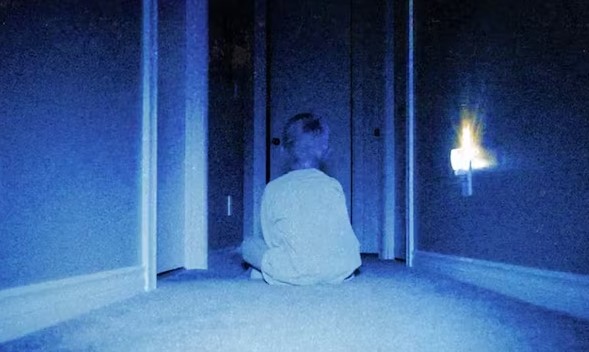


It’s now the end of 2023 as I write this, and it’s probably too early in the decade to determine what new directions, if any, the horror genre will take going forward. Obviously, horror has been affected by the COVID-19 pandemic, as has every other aspect of people’s lives; individuals confined to their homes for long stretches of time tend to watch a lot of streaming media, after all, and for a significant percentage of those people, the anxiety of the outside world draws them to watch more horror.
Though the pandemic disrupted the film industry in ways that will likely never be completely mended (such as the now fairly common practice of releasing films nearly simultaneously in theaters and on streaming platforms), some filmmakers decided to take advantage of the limitations imposed on them and make something that would serve as something of a time capsule of this tumultuous era. Probably the best-known film completely produced during lockdown was 2020’s Host, a decently creepy British found footage film that takes place entirely during a séance conducted via Zoom call. The movie dropped on Shudder in the summer of 2020 and immediately found an appreciative audience.
Other smaller films that attracted a great deal of attention due to their popularity on various streaming platforms included the Taiwanese bloodbath The Sadness (2021), the killer-android film M3GAN (2022), the experimental analog horror Skinamarink (2022), the eerie psychological horror Smile (2022), the contacting-the-dead horror Talk To Me (2022), Ari Aster’s surrealist tragicomedy Beau Is Afraid (2023), the spooky monster horror Cobweb (2023), the alien invasion horror No One Will Save You (2023), and the fun throwback slasher Totally Killer (2023). Another film that drew massive buzz, both during its theatrical release and its subsequent premiere on streaming, was Zach Cregger’s utterly bonkers and exceptionally awesome Barbarian from 2022, a movie that wasn’t afraid to go in completely unexpected directions and trusted its audience to keep up with its wild, ballsy twists.
Internet and social media-based horror also continued unabated, with many of the films focusing on people doing horrible things for likes and follows. Some of the better movies in this vein included Spree (2020), Dashcam (2021), We’re All Going to the World’s Fair (2021), Bodies Bodies Bodies (2022), and Deadstream (2022).
There were also a few lingering remakes in the early 2020s, though it would seem the trend might be petering out. We did, however, see new takes on The Grudge (2020), Candyman (2021), Slumber Party Massacre (2021), Wrong Turn (2021), Firestarter (2022), Goodnight Mommy (2022), and Hellraiser (2022). In 2020, there was also yet another adaptation of The Turn of the Screw, simply called The Turning, which was mostly disappointing and unnecessary in light of Mike Flanagan’s looser but much better Netflix miniseries based on the same work.
The last few years have also seen largely successful and fairly big-budget reboots or continuations of decades-old franchises: the Halloween series continued on from the 2018 sequel (which was just called Halloween, confusingly) with Halloween Kills in 2021 and Halloween Ends in 2022. In addition, Scream (2022) got a fifth installment, which again was just called Scream even though it was a direct sequel to 2011’s Scream 4. Evil Dead Rise (2023), Insidious: The Red Door (2023), Saw X (2023), and The Exorcist: Believer (2023) were the other hyped installments in their respective franchises, though reviews of all of them were somewhat mixed.
A list of films that have come out in just the past four years that I haven’t mentioned yet but would recommend would include The Babysitter: Killer Queen (2020), The Dark and the Wicked (2020), Rent-A-Pal (2020), Underwater (2020), Censor (2021), Come True (2021), Coming Home in the Dark (2021), In the Earth (2021), Jakob’s Wife (2021), Lamb (2021), Last Night in Soho (2021), Malignant (2021), The Black Phone (2021), The Deep House (2021), The Night House (2021), Titane (2021), We Need to Do Something (2021), Willy’s Wonderland (2021), A Wounded Fawn (2022), Fresh (2022), Speak No Evil (2022), Watcher (2022), The Last Voyage of the Demeter (2023), and When Evil Lurks (2023).
I hope you’ve enjoyed this journey through horror’s highways and byways, and I hope you’ll continue to travel along with me as we take the genre into the future to see where it leads. Until next time, keep it creepy, my friends.
 The Scare Salon