

I’ve finally reached the first milestone on this long-ass journey through the horror movies of my lifetime; yep, 1982 marks a decade out from my auspicious birth, and also serves as a spot about a fifth of the way through this project.
1982 was another great year, and even though I didn’t have as many favorites to sort through this time around, some of the films that came out in 1982 are among my favorites of all time. Before I get to the main event, as usual, I’d like to give a brief shoutout to a handful of honorable mentions, including the scuzzy Frank Henenlotter classic Basket Case; the paranormal extravaganza The Entity, which was based on the allegedly real haunting of Doris Bither; the slow-burn Australian psychological horror Next of Kin; Larry Cohen’s nutty Q – The Winged Serpent; and the bizarre British alien flick Xtro. Now, on with the show, in no particular order except alphabetical.
Creepshow
Goddammit, I love Creepshow, and I swear I must have seen it at least a hundred times at this point; so many times, in fact, that I’m pretty sure I have large chunks of the dialogue memorized. Horror anthologies have always been one of my go-to subgenres, and you can’t do much better than this one; directed by George A. Romero, written by Stephen King, featuring effects by Tom Savini, and based around the tone and aesthetic of the classic EC horror comics, everything about Creepshow is absolute perfection. It looks fantastic, it’s gory, it’s fun, it’s creepy, it’s darkly hilarious, and it never fails to entertain the shit out of me whenever I watch it.
All five of the featured stories (as well as the wraparound starring Stephen King’s son Joe Hill as a kid and a deliciously assholish Tom Atkins, who will be appearing again later on this list) are solid, and I’m honestly not sure I’d be able to pick a favorite segment, because every one of the stories has been a favorite at one stage or another. On most days I’d probably single out the first tale, “Father’s Day,” simply because I adore Carrie Nye’s and Viveca Lindfors’s performances as Sylvia and Bedelia Grantham, respectively, and the makeup on the reanimated corpse of their father Nathan is gooey and amazing. Fun fact: although Nathan was played by Jon Lormer in the flashback sequences when he was still alive, his zombified form was played by none other than John Amplas, who played the title character in George Romero’s Martin from 1977! Also, this segment features Ed Harris doing a really dorky disco dance, another definite point in its favor.
The rest of the segments are just as outstanding, from Stephen King playing a yokel getting colonized by a fast-growing space weed (“Meteor shit!”), to a sinister Leslie Nielsen burying his faithless wife and her lover up to their necks on the beach, to Hal Holbrook feeding his shrill wife (played by the always wonderful Adrienne Barbeau) to a monster in a crate, to E.G. Marshall’s germophobic rich douche being swarmed with a bajillion cockroaches, the whole package is just exquisitely realized and strikes a flawless balance between horror and dark comedy. Plus who doesn’t love that awesome, comic-book style and those super-saturated colors? A winner all around, and a movie I never, ever get tired of.
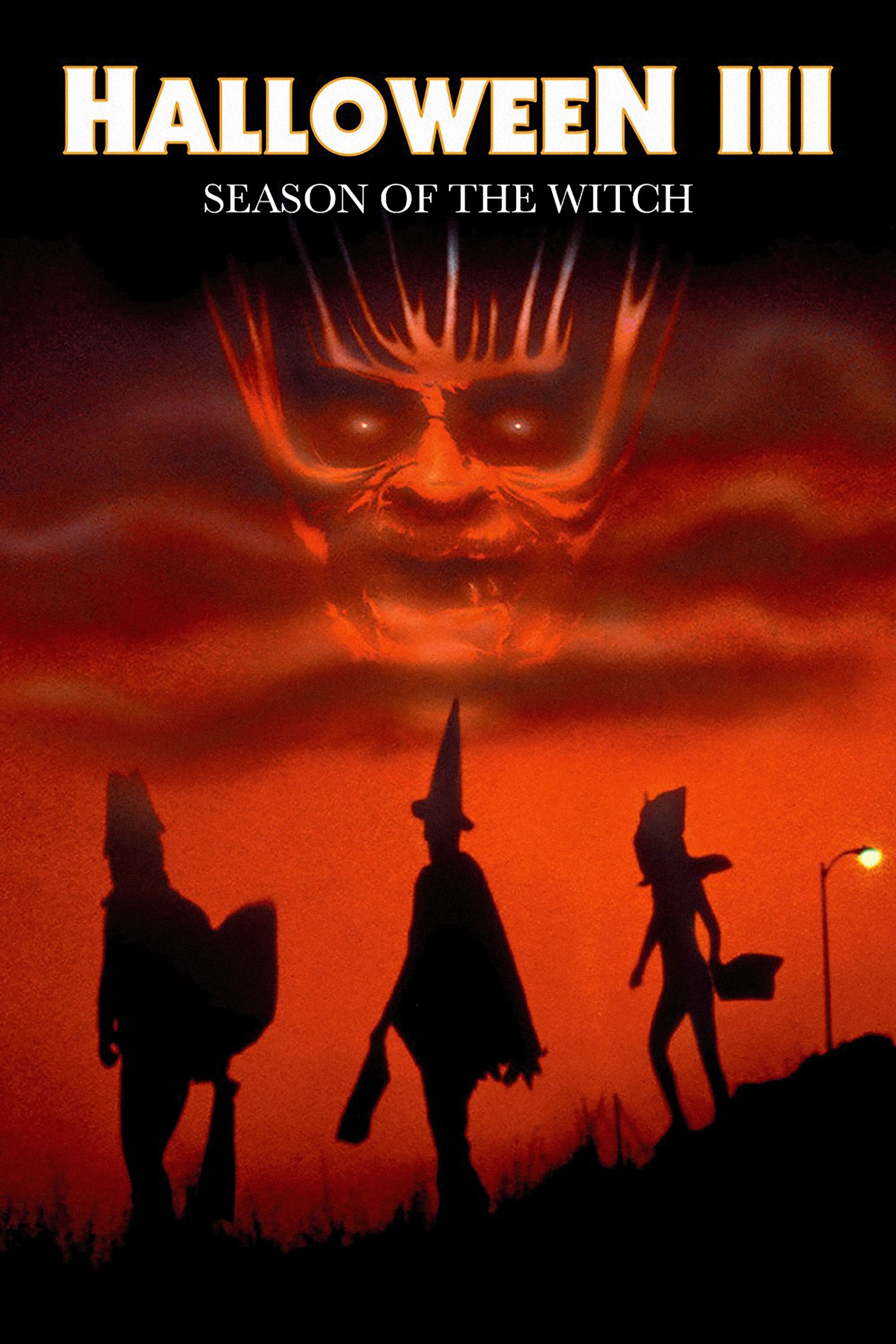
Halloween III: Season of the Witch
Famously shit on in 1982 because it was a completely different story than the first two Halloween movies and didn’t feature Michael Myers, Halloween III: Season of the Witch has thankfully received a critical reassessment over the years, and now holds a deserved place in horror history as a beloved cult classic.
Written by John Carpenter and Debra Hill, and directed by Tommy Lee Wallace, the third installment in the Halloween franchise was meant to herald a change of direction, in which a new Halloween film would come out every October, but they would all be different from one another, more like an anthology series than a single continuing story. Needless to say, this idea was quickly scrapped when horror fans bashed the film, and Halloween 4 brought back the iconic killer from the first two movies. Though I can see why people were upset, I thought the anthology concept totally would have worked had people been more open to it at the time, but oh well, what are you gonna do?
For those unaware, Halloween III starts as something of a murder mystery, as a couple of dudes are killed by some mysterious-looking men in suits. Throughout the story, the daughter of one of the victims (played by Stacey Nelkin), as well as a suspicious doctor (played by the man, the myth, the legend, Tom Atkins) uncover a bizarre conspiracy involving Halloween masks made by a shady corporation called Silver Shamrock Novelties (and yes, I know you have the jingle stuck in your head now; you’re welcome). Turns out that the owner of the company, Conal Cochran (Dan O’Herlihy) has fitted each of the masks with a microchip that contains a tiny piece of Stonehenge (just roll with it), and is attempting to bring back ye olde Samhain traditions of child sacrifice by having kids wear the masks and having the masks interact with a TV commercial that activates the Stonehenge bits, basically making the kids’ brains dissolve into a mush of bugs and snakes, because why not? Oh, and also, the employees of Silver Shamrock are all androids, so there’s that.
The great thing about this movie is just how unapologetically weird the premise is, and how dark its ending is; basically, it’s implied that Cochran’s plan succeeds, as Tom Atkins is last seen at the end of the film screaming into the phone for the station manager to turn off the fatal commercial at the last network where it’s still airing, but it would seem that the damage has already been done. Pagan child murder, robot henchmen, and an absolute earworm of a commercial jingle make this one strange and memorable flick, and always one of my go-to films for the spooky season, as it just oozes nostalgic Halloween atmosphere.
Poltergeist
I have to admit that I’m usually not the biggest fan of big, Hollywood-type spectacle movies, especially regarding horror, but Poltergeist is definitely one of the few exceptions. Although it’s a big-budget, special-effects-laden extravaganza produced (and some say directed) by Steven Spielberg and helmed by Tobe Hooper, there’s just something so alluring about its terrifying tale of a likable middle-class family becoming the target of moppet-stealing spirits.
Everyone and their mom probably know the plot of Poltergeist at this point, but if you don’t, it deals with the Freeling family, a married couple who have three kids and live in a generic California suburb of the type that was solidly aspirational for a large part of the American population at the time this movie was made. A brief period is spent getting to know the family, including the fact that dad Steven (Craig T. Nelson) works for the company that developed and built the neighborhood he and his wife and children now live in.
The Freelings have lived in this house for a while with no problems, but the paranormal activity seems to be kicked off when they start digging a pool in their backyard. At first, mom Diane (JoBeth Williams) thinks the whole thing is neat as hell, what with all the dining room chairs rearranging themselves when one’s back is turned and a mysterious, invisible force pulling daughter Carol Anne (the adorable Heather O’Rourke, who sadly died at the age of twelve from an intestinal disorder during the making of the third film in the franchise) across the kitchen floor.
Soon enough, though, things start getting a lot more sinister: son Robbie (Oliver Robins), for example, has a horrifying clown doll that comes to life and tries to strangle him, and also gets partially eaten by the tree outside his window. Even worse, some unknown “people” that Carol Anne has been talking to via television static snatch her away to the other side, at which point the Freelings have to call up a team of paranormal investigators (including iconic psychic Tangina, played by Zelda Rubinstein) to try to retrieve Carol Anne from beyond the veil.
Everything about this movie just works: the family is realistic and engaging, and Carol Anne in particular is so cute and winning that when she is put in danger, the stakes feel horrifically high. Although the manifestations of the supernatural are way over the top, it somehow never seems excessive, as the film has enough of a sense of humor to keep it grounded. I especially like the way the family becomes inured to the haunting, so much so that when the investigators arrive and shake like leaves at an electrical discharge over the dining room table, Diane just calmly tells them, “There’ll be another one in a few seconds…they always travel in pairs.”
Even though the film does feel very Spielbergian in its tone and many have argued that Spielberg himself was the true director, Tobe Hooper’s fingerprints are all over this thing too, especially during one of my favorite scenes in which one of the investigators sees a steak crawl across the kitchen counter and burst open with gross goo before running to the bathroom and pulling all the flesh of his own face off. The movie was rated PG (well, after an appeal; it initially got an R), and seemed to be aimed toward families, but 80s family movies didn’t really fuck around, and would absolutely show an eight-year-old getting swallowed by a monster tree, rotted corpses popping out of the ground in their coffins, a chicken leg covered in maggots, and a diabolical clown doll trying to murder its child owner.
Another thing I love about Poltergeist is its structure; it does a great job of making you think you’ve seen the climax, when Carol Anne is rescued from the ghost dimension and everything is supposedly okay, but then pulls the rug out from underneath you, as the paranormal shitstorm ramps up to motherfucking eleven before the entire house gets sucked into a vortex and the family has to flee to a Holiday Inn. Great stuff, and proof that even big-budget blockbusters sometimes do horror right.
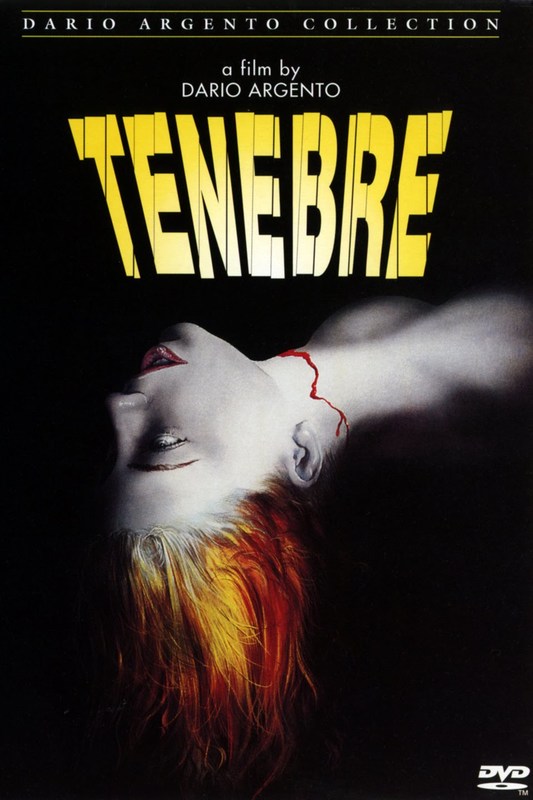
Tenebrae
Easily one of Dario Argento’s best films and his best giallo after Deep Red, Tenebrae is also probably the most meta movie he ever did, as it seemed to be based on criticisms he’d received in the media about the amount of violence against women featured in his work.
Anthony Franciosa plays a successful American murder mystery writer named Peter Neal, who’s doing a book tour in Rome and fielding all kinds of uncomfortable questions about the perceived misogyny in his novels. These questions only become more heated once it becomes clear that a serial killer is running around loose in the city who’s using the murders in Peter Neal’s latest book, Tenebrae, as inspiration for his kills.
In true giallo fashion, there’s a rogue’s gallery of potential suspects for the murderer: could it be Peter’s seemingly unstable ex-wife, who followed him to Rome? Or perhaps journalist Christiano Berti, who appears to have an unhealthy obsession with Peter’s novels? Well, no and kind of…turns out the killer was Berti at first, but after his death, the duties were taken over by Peter Neal himself, who went insane after Berti’s crimes shook loose a repressed memory of being sexually humiliated by a beautiful woman on a beach when Peter was young. The fact that the woman is played by noted trans actress Eva Robin’s adds some of that sexual ambiguity that turns up a lot in giallo films in general and Argento’s films in particular. There’s also a recurring theme of doubling or mirroring of the characters, as Argento plays with duality and identity, a theme that resonates with the plot device of the two murderers.
The kills in this thing are pretty brutal, almost as though Argento was doubling down (heh) on the criticisms of misogyny he’d always received: a lesbian couple gets savagely butchered, for example, and Peter’s ex-wife has her arm graphically chopped off, with the stump subsequently spraying bright red blood all over the walls in a scene that’s so grotesque it’s actually beautiful. But several men get killed horribly too: Berti gets hacked up with an axe, for instance, and Peter’s agent Bullmer (played by the always wonderful John Saxon) is stabbed to death in broad daylight in the middle of a public square.
One of the best giallo films ever made, Tenebrae is a gory, complex, thematically subversive flick that’s required viewing for fans of Italian horror.
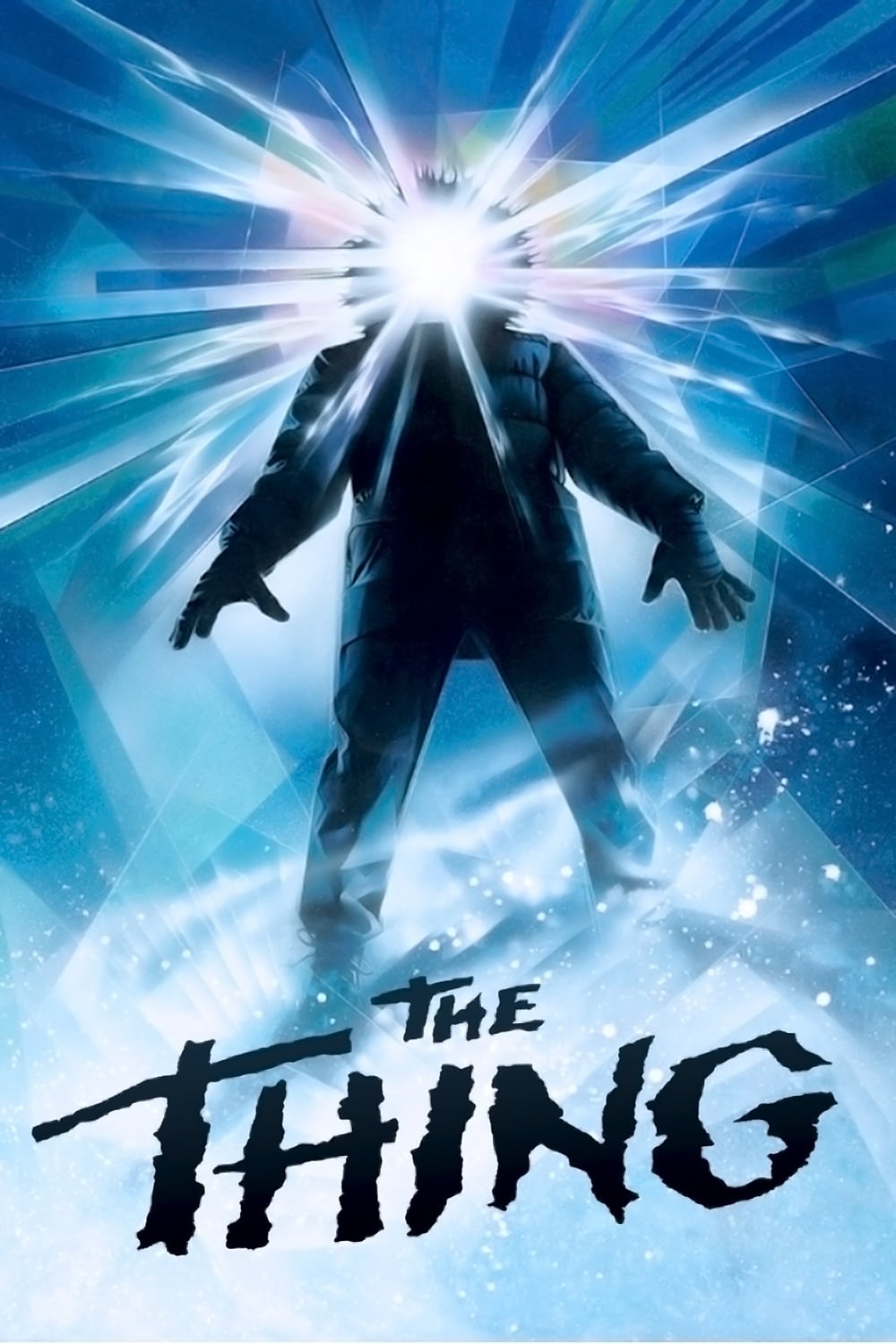
The Thing
Probably the most obvious pick on this list and one of my favorite movies of any genre, John Carpenter’s magnum opus simply gets better and better every single time I watch it. Everything about it is exquisite, from the bleakness of the setting to the richness of the characterization to the steady ratcheting of suspense to the elegant simplicity of the score to the incredible special effects.
Upon its original release, The Thing famously got its ass kicked at the box office by both Poltergeist and E.T.: The Extraterrestrial, and critical response was overwhelmingly negative, with some reviewers accusing the film of being excessive, nihilistic, sterile, boring, moronic trash, which still blows my ever-loving mind this many years later. John Carpenter, who made the film because of his love for its predecessor, 1951’s The Thing from Another World (and basing it on the same novella, John W. Campbell’s Who Goes There? from 1938), suffered a career backlash due to the critical and commercial failure of The Thing; he was kicked off his next project, directing the Stephen King adaptation Firestarter (though he did helm another King tale, Christine, in 1983, which might just make an appearance on next year’s list because I think it’s a wildly underrated film), and also got bought out of his multiple-movie contract at Universal.
Thankfully, critics and audiences eventually pulled their heads out of their asses and realized that The Thing was a fucking masterpiece, and it’s now considered one of the best horror films ever made, frequently appearing in the top five of any reputable list (such as this one).
To be honest, I love everything about this film: the isolated Antarctic setting gives it a palpable claustrophobia, as do the close quarters in which its handful of male characters are obliged to reside. The tension is also off the charts, and I adore the slow rollout of the plot: at the beginning of the movie—surely one of the best opening sequences in cinema history—when the Norwegian guy is shooting at the dog from the helicopter and our heroes can’t understand what the fuck he’s doing or saying and end up shooting him because who in the hell tries to kill a dog…man, that is such a great, compelling set-up, and the fact that the dog turns out not to be a dog at all is just the perfect resolution of that initial incident.
Kurt Russell is also cool as fuck in this film, as he usually is in most of his films, and does a great job conveying the crushing paranoia that would set in if you were trapped in the middle of nowhere with an alien who could replicate whoever it wanted (an organism which, if it really existed, would be the scariest monster ever and one I don’t think humanity would be able to defeat). Really the whole ensemble cast is fantastic here; everyone is spot-on in their roles.
I would also be remiss if I didn’t point out the extraordinary effects work by Rob Bottin, who did some shit in this movie that in my opinion has still never been topped, including all the melded and stretching people, Norris’s head pulling itself off and growing spider legs, and the toothy mouth opening up in Norris’s chest and biting off Dr. Copper’s arms. Great, great practical effects that still look fucking amazing more than forty years later. Suck it, CGI!
This movie is a stone-cold classic, and though I enjoyed the “original” Thing from Another World (even though it’s a lot different than this movie) and didn’t even mind the 2011 prequel, this here is the OG, and a must-see for any burgeoning horror fan.
Ten years down, forty-one to go! Join me next time for 1983, and until then, keep it creepy, my friends.
 The Scare Salon